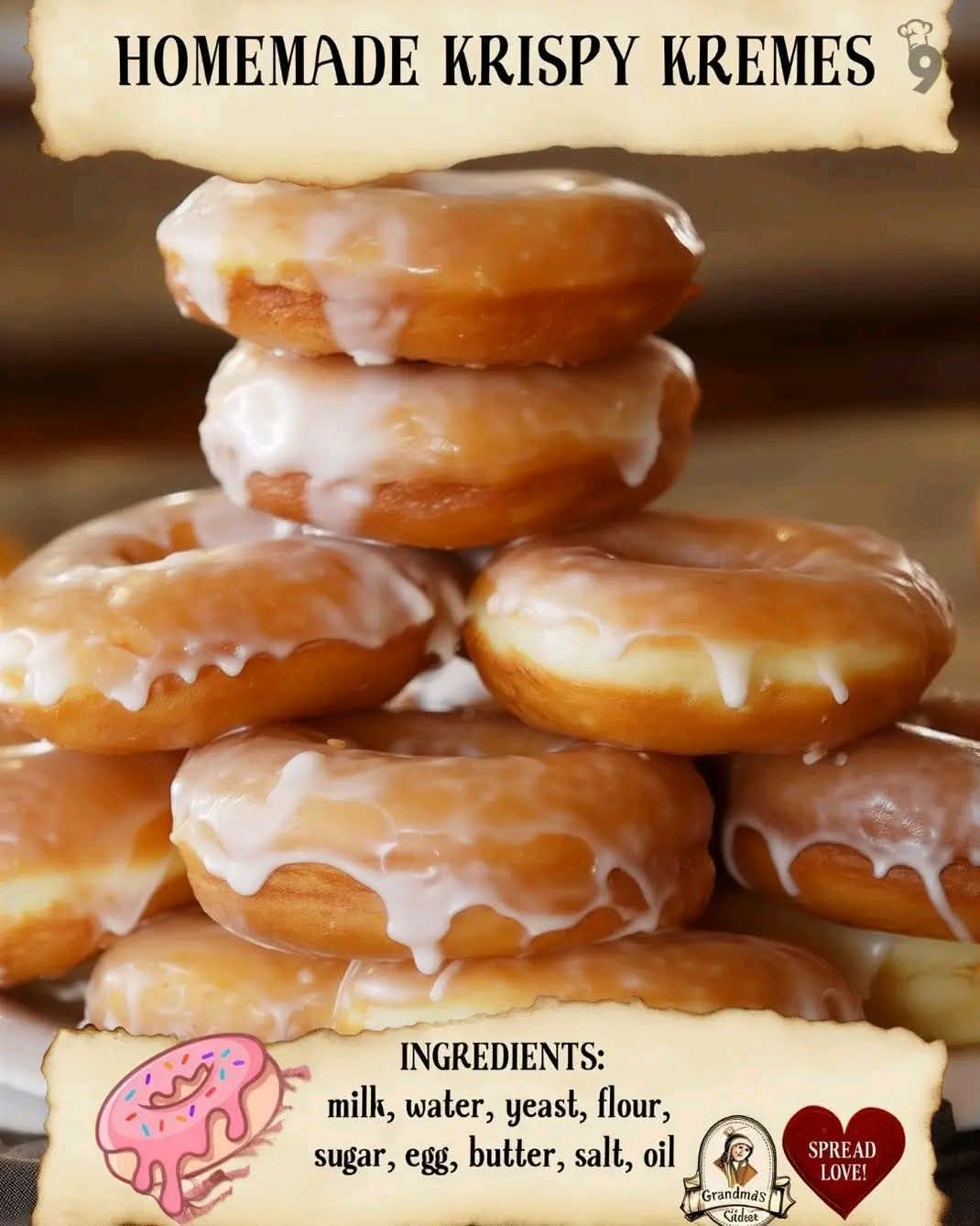
🍩 HOMEMADE GLAZED DONUTS (Soft, Fluffy & Golden Perfection)
There’s something timeless about a warm glazed donut fresh from the fryer. The soft, airy crumb, the slightly crisp golden shell, and that sweet vanilla glaze melting over the top—it’s comfort food in its purest form. Homemade donuts bring bakery magic straight into your kitchen, filling the house with the smell of butter, sugar, and warm dough. These donuts are simple, nostalgic, and incredibly satisfying to make from scratch.
🧾 INGREDIENTS
🥯 Dough:
- 1 cup warm milk (not hot)
- 2¼ tsp active dry yeast (1 packet)
- 2 tbsp sugar (for activating yeast)
- 2 large eggs
- ¼ cup melted butter (cooled slightly)
- 1 tsp salt
- 3½ to 4 cups all-purpose flour
- Oil for frying (sunflower or vegetable oil)
✨ Glaze:
- 2 cups powdered sugar
- ¼ cup milk
- 1 tsp vanilla extract
👩🍳 INSTRUCTIONS (STEP-BY-STEP METHOD)
1️⃣ Activate the Yeast
Warm the milk until lukewarm. Mix in yeast and sugar. Let it sit for 5–10 minutes until it becomes foamy. This step ensures your donuts rise light and fluffy.
2️⃣ Build the Dough
Add eggs, melted butter, and salt to the yeast mixture. Stir well. Gradually add flour, one cup at a time, mixing until a soft dough forms.
3️⃣ Knead to Perfection
Transfer dough to a floured surface. Knead for 8–10 minutes until smooth, elastic, and slightly springy.
4️⃣ First Rise
Place dough in a lightly greased bowl. Cover and let it rise for 1–2 hours until doubled in size.
5️⃣ Shape the Donuts
Roll dough to about ½ inch thickness. Cut into circles using a donut cutter or two round cutters (one for the hole).
6️⃣ Second Rise
Place shaped donuts on a tray. Cover and let rise again for 30–45 minutes until puffy.
7️⃣ Frying Time
Heat oil to 175°C (350°F). Fry donuts in small batches for 1–2 minutes per side until golden brown. Remove and drain on paper towels.
🍯 GLAZE METHOD
- In a bowl, whisk powdered sugar, milk, and vanilla until smooth.
- While donuts are still warm, dip each one into the glaze.
- Place on a rack and let the glaze set into a shiny coating.
🔬 METHOD EXPLANATION (WHY IT WORKS)
- Yeast fermentation produces gas bubbles that make donuts airy and soft.
- Two rises improve texture and prevent dense dough.
- Frying at 175°C ensures crisp outside without absorbing too much oil.
- Glazing while warm helps the coating stick and form a smooth sugar shell.
📜 HISTORY OF DONUTS
Donuts trace back to European settlers who brought fried dough recipes to America. Dutch “olykoeks” (oil cakes) were early versions, often filled with nuts or fruit. Over time, bakers created the ring shape we know today, which cooks evenly in hot oil. The glazed donut became especially popular in the 20th century, turning into an iconic bakery treat worldwide.
🧬 FORMATION (HOW DONUTS COME TO LIFE)
A donut starts as simple dough—flour, milk, sugar, and yeast. As it rises, yeast produces carbon dioxide, creating air pockets. When fried, the outside sets instantly while the inside expands into a soft, pillowy structure. The glaze then crystallizes slightly, locking in sweetness and shine.
💛 CONCLUSION
Homemade glazed donuts are more than just dessert—they’re a warm experience. From kneading the dough to watching them puff in hot oil, every step feels rewarding. The final bite is soft, sweet, and slightly chewy, melting effortlessly on the tongue.
💕 FOR LOVERS OF THIS RECIPE
If you love this recipe, you’ll enjoy:
- Freshly fried breakfast pastries
- Sweet bakery-style desserts
- Soft, fluffy homemade breads
- Classic comfort foods made from scratch
And honestly… anyone who loves warm, sugary treats will fall for these donuts instantly.
If you want, I can also give you: 🍓 Filled donuts (custard, chocolate, jam)
🍩 No-yeast quick donuts
🍫 Chocolate glazed version
🍯 Cinnamon sugar donuts