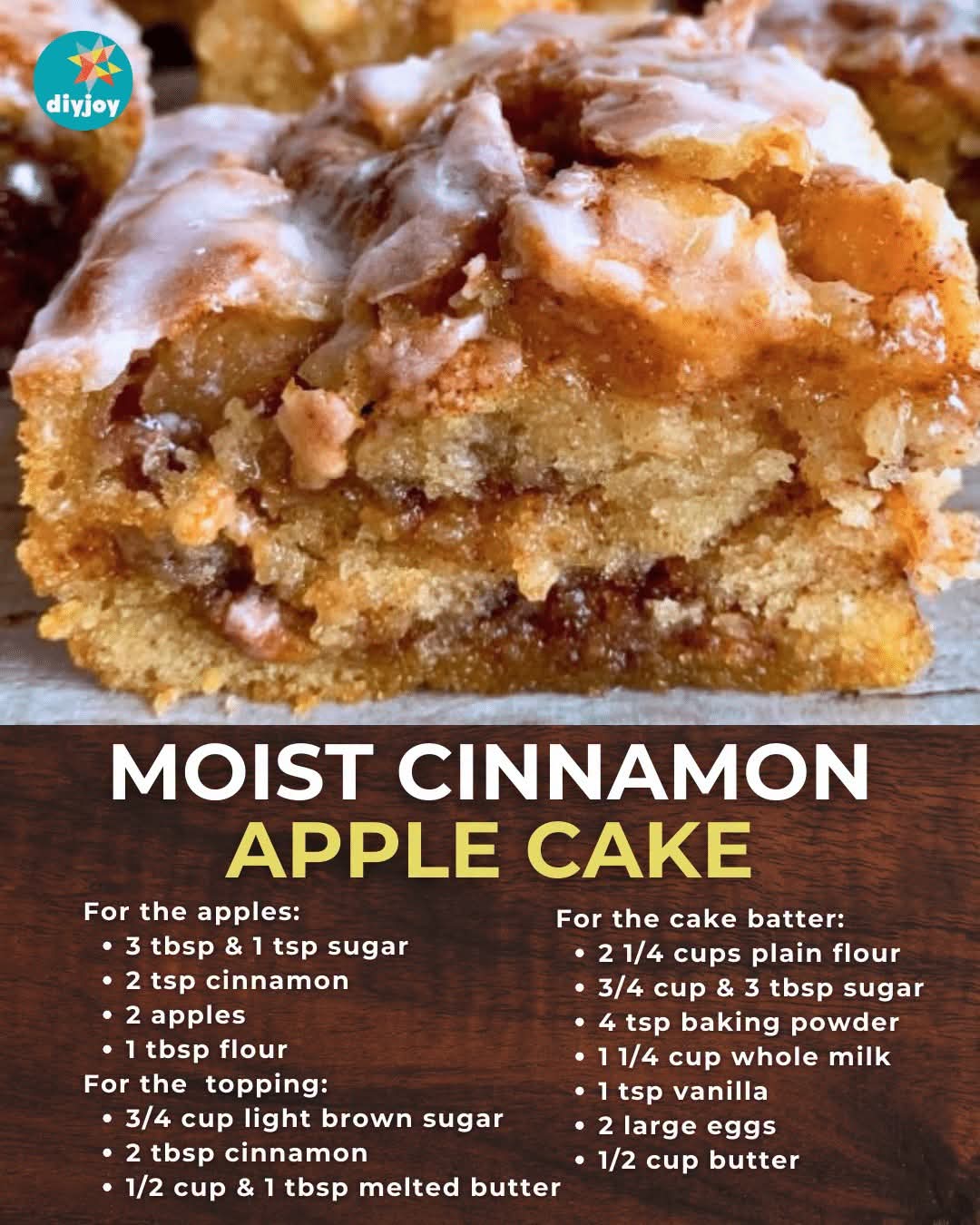
Moist Cinnamon Apple Cake
Introduction
Moist Cinnamon Apple Cake is a comforting homemade dessert filled with warm cinnamon flavor and tender pieces of fresh apple. The cake has a soft, moist crumb, a delicate golden crust, and a wonderful aroma that fills the kitchen while it bakes. It is simple enough for an everyday family dessert yet delicious enough to serve for holidays, gatherings, afternoon tea, or a weekend breakfast.
The combination of apples and cinnamon is especially appealing because the natural sweetness and juiciness of the apples help keep the cake tender. A little vanilla and brown sugar add depth, while a simple cinnamon topping gives the finished cake a beautiful, fragrant crust.
Ingredients
For the Cake
- 2 cups (250 g) all-purpose flour
- 2 teaspoons baking powder
- 1/2 teaspoon baking soda
- 1/2 teaspoon salt
- 2 teaspoons ground cinnamon
- 1/2 teaspoon ground nutmeg, optional
- 1/2 cup (115 g) unsalted butter, softened
- 3/4 cup (150 g) granulated sugar
- 1/2 cup (100 g) light brown sugar, packed
- 2 large eggs, room temperature
- 2 teaspoons vanilla extract
- 3/4 cup (180 ml) buttermilk or whole milk
- 3 medium apples, peeled, cored, and diced
- 1 tablespoon all-purpose flour, for tossing with the apples
For the Cinnamon Apple Topping
- 1 medium apple, peeled, cored, and thinly sliced
- 2 tablespoons brown sugar
- 1 teaspoon ground cinnamon
- 1 tablespoon melted butter
Optional Glaze
- 1 cup (120 g) powdered sugar
- 2 tablespoons milk or heavy cream
- 1/2 teaspoon vanilla extract
Instructions
1. Prepare the Oven and Pan
Preheat the oven to 350°F (175°C). Grease a 9-inch round cake pan or an 8-inch square baking pan. Line the bottom with parchment paper if desired, then lightly grease the parchment.
Allow the butter and eggs to come to room temperature before beginning. Room-temperature ingredients blend more easily and help create a smooth, evenly textured batter.
2. Prepare the Apples
Peel, core, and dice three apples into small pieces. Keep the pieces fairly uniform so they cook evenly throughout the cake.
Place the diced apples in a bowl and toss them with 1 tablespoon of flour. This light coating helps keep the apples distributed throughout the batter instead of allowing them all to sink toward the bottom.
For the topping, thinly slice another apple and set it aside.
3. Combine the Dry Ingredients
In a medium bowl, whisk together the flour, baking powder, baking soda, salt, cinnamon, and nutmeg if using.
Mixing these ingredients together first ensures that the leavening agents and spices are evenly distributed throughout the flour.
4. Cream the Butter and Sugars
In a large mixing bowl, beat the softened butter, granulated sugar, and brown sugar for approximately 2 to 3 minutes.
Continue beating until the mixture becomes lighter and fluffy. This step incorporates air into the butter and contributes to a lighter cake texture.
5. Add the Eggs and Vanilla
Add the eggs one at a time, beating well after each addition. Scrape down the sides of the bowl as needed.
Add the vanilla extract and mix until combined.
The mixture may look slightly creamy or curdled at this stage, but it will come together once the dry ingredients and milk are incorporated.
6. Build the Batter
Add approximately one-third of the dry ingredients to the butter mixture and mix gently.
Add half of the buttermilk or milk and mix until just combined.
Continue alternating the dry ingredients and remaining milk, ending with the dry ingredients.
Do not overmix the batter. Stop mixing as soon as the flour disappears. Overmixing can develop too much gluten and result in a tougher cake.
7. Fold in the Apples
Gently fold the flour-coated diced apples into the batter using a spatula.
Distribute the apples evenly without aggressively stirring the batter.
The finished batter should be thick, soft, and full of apple pieces.
8. Fill the Pan
Transfer the batter to the prepared cake pan and spread it evenly.
Arrange the thin apple slices over the surface in a decorative pattern.
Mix the brown sugar and cinnamon together, then sprinkle the mixture over the apples. Drizzle the melted butter lightly over the top.
This creates a fragrant cinnamon-sugar topping that becomes slightly caramelized as the cake bakes.
9. Bake the Cake
Place the cake in the preheated oven and bake for approximately 45 to 55 minutes.
Begin checking around 45 minutes. Insert a toothpick or wooden skewer into the center. It should come out clean or with a few moist crumbs attached.
Because apples vary in moisture, baking time can differ slightly from one batch to another.
If the top begins to brown too quickly while the center still needs additional baking, loosely cover the cake with aluminum foil and continue baking.
10. Cool the Cake
Remove the cake from the oven and allow it to cool in the pan for approximately 15 to 20 minutes.
Run a thin knife around the edges if necessary, then carefully remove the cake from the pan and place it on a wire rack.
Allow it to cool further before glazing or slicing.
Optional Vanilla Glaze
For a simple finishing touch, whisk together the powdered sugar, milk or cream, and vanilla extract until smooth.
If the glaze is too thick, add a small amount of milk. If it is too thin, add a little more powdered sugar.
Drizzle the glaze over the cooled cake and allow it to set for several minutes before serving.
Method
The key to this cake is the combination of creaming, gentle mixing, and fresh apples.
Creaming the butter and sugars creates air pockets that help give the cake a soft texture. Adding the eggs gradually helps create a smooth batter. Alternating the flour mixture with the milk prevents the batter from becoming overly thick and makes it easier to combine everything without excessive mixing.
The apples provide moisture as they bake, while cinnamon gives the cake its characteristic warm flavor. Brown sugar contributes a deeper caramel-like sweetness that pairs beautifully with the apples.
For the best texture, choose apples that are firm enough to maintain some structure during baking. Apples such as Granny Smith, Honeycrisp, Pink Lady, Braeburn, or Fuji work particularly well.
History of Apple and Cinnamon Cakes
Apples have been used in cakes, puddings, pies, and other baked desserts for centuries. In many European baking traditions, apples were especially valuable because they could be stored for long periods and were readily available during the colder months.
Cinnamon became a beloved baking spice in many cultures because of its distinctive warm fragrance and its ability to complement fruits and sweet doughs. Over time, the pairing of apples and cinnamon became particularly associated with comforting home baking.
Apple cakes developed in many different forms, ranging from rustic European-style cakes to American coffee cakes and modern versions made with butter, oil, brown sugar, and spices. Moist cinnamon apple cake brings together many of these traditions in a simple, family-friendly dessert.
Formation and Texture
The finished cake should have a golden-brown exterior with a soft, moist center.
The diced apples create pockets of tender fruit throughout the crumb, while the cinnamon topping provides a slightly crisp and fragrant surface.
For an especially moist cake, avoid baking it longer than necessary. Once a toothpick inserted into the center comes out with a few moist crumbs rather than wet batter, the cake is ready.
Allowing the cake to rest before slicing also helps the crumb stabilize and allows the apple juices to settle throughout the cake.
Serving Suggestions
This cake can be served warm, at room temperature, or chilled.
For a simple presentation, dust the cooled cake lightly with powdered sugar.
For a richer dessert, serve a warm slice with vanilla ice cream.
Whipped cream also pairs beautifully with the cinnamon and apple flavors. A spoonful of caramel sauce can turn it into an especially indulgent dessert.
For breakfast or afternoon tea, the cake is wonderful served simply with coffee, tea, or warm milk.
Storage
Store the cooled cake in an airtight container at room temperature for up to 2 days.
For longer storage, refrigerate it for up to 5 days. Allow refrigerated slices to come closer to room temperature before serving, or warm individual slices gently in the microwave.
The cake can also be frozen. Wrap individual slices tightly in plastic wrap and place them in a freezer-safe container or bag. Freeze for up to 2 months. Thaw overnight in the refrigerator or at room temperature before serving.
Tips for the Best Moist Apple Cake
Use fresh, firm apples rather than apples that are already soft or bruised.
Do not pack the flour too tightly into the measuring cup if you are not using a kitchen scale. Too much flour can make the cake dry.
Room-temperature butter and eggs help create a smoother batter.
Do not overmix after adding the flour.
Dice the apples fairly small so that every slice of cake contains plenty of apple.
Do not overbake. This is one of the most important steps for maintaining a moist crumb.
Allow the cake to cool before slicing so the structure has time to set.
Conclusion
Moist Cinnamon Apple Cake is the kind of homemade dessert that combines simple ingredients with comforting flavors. Tender apples, fragrant cinnamon, buttery cake, and brown sugar come together to create a dessert that feels both familiar and special.
It is an excellent choice when you want something homemade without an overly complicated preparation. Whether served warm with ice cream, finished with vanilla glaze, or enjoyed simply with a cup of coffee, this apple cake is sure to become a favorite among apple and cinnamon lovers.
For everyone who loves traditional homemade baking, this is a recipe worth keeping and making again whenever fresh apples are available.