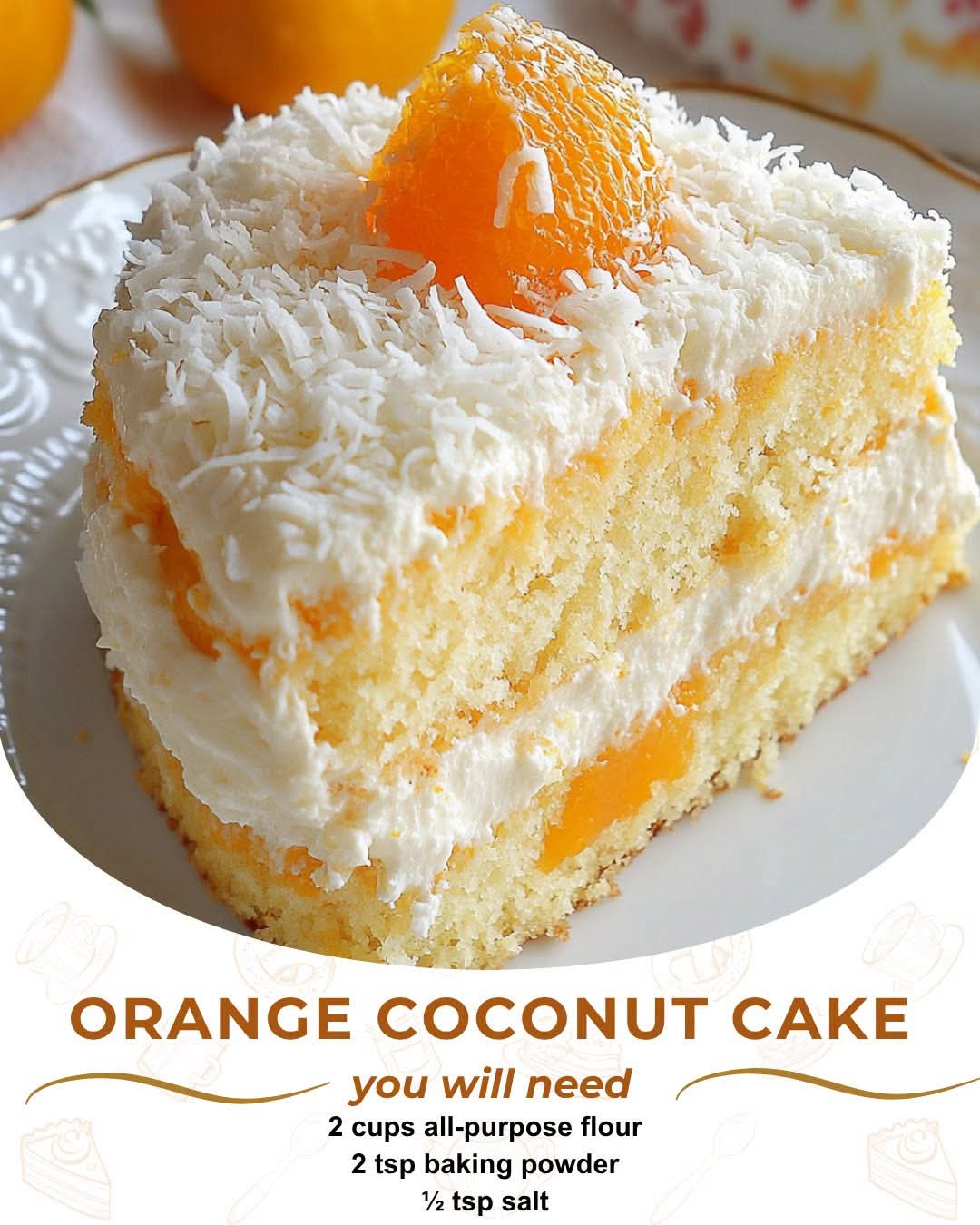
Orange Coconut Cake
Introduction
Orange Coconut Cake is a tender, moist, and fragrant homemade cake that combines the bright, refreshing flavor of fresh oranges with the sweet, delicate taste of coconut. The cake has a soft crumb created by butter, eggs, buttermilk, and fresh orange juice, while shredded coconut adds a pleasant texture throughout.
Finished with a simple orange glaze and, if desired, toasted coconut, this cake is beautiful enough for celebrations but easy enough to make for an afternoon treat. The fresh citrus flavor keeps the cake from feeling overly heavy, making it especially enjoyable with tea or coffee.
Ingredients
For the Orange Coconut Cake
- 2 cups all-purpose flour
- 2 teaspoons baking powder
- 1/2 teaspoon salt
- 3/4 cup unsalted butter, softened
- 1 1/2 cups granulated sugar
- 3 large eggs, preferably at room temperature
- 1 tablespoon finely grated orange zest
- 1/2 cup fresh orange juice
- 1/2 cup buttermilk
- 1 teaspoon vanilla extract
- 1 cup sweetened shredded coconut
For the Orange Glaze
- 1 1/2 cups powdered sugar
- 3 tablespoons fresh orange juice
- 1 teaspoon finely grated orange zest
- 1/2 teaspoon vanilla extract
Optional Topping
- 1/2 cup shredded coconut, toasted
- Thin orange slices
- Additional finely grated orange zest
Preparation
Before beginning, bring the butter, eggs, and buttermilk to room temperature. Room-temperature ingredients blend more easily and help produce a smoother, more evenly textured cake.
Preheat the oven to 350°F (175°C). Grease and flour a 9-inch round cake pan or a 9-by-5-inch loaf pan. You can also line the bottom with parchment paper to make removing the finished cake easier.
Wash and dry the oranges thoroughly before zesting them. When grating the zest, remove only the bright orange outer layer and avoid the white pith underneath, which can have a bitter taste.
Measure the orange juice and set it aside.
Method for Making the Cake
Step 1: Prepare the Dry Ingredients
In a medium bowl, whisk together the all-purpose flour, baking powder, and salt.
Mixing these ingredients separately helps distribute the baking powder and salt evenly throughout the flour. Set the bowl aside.
Step 2: Cream the Butter and Sugar
Place the softened butter and granulated sugar in a large mixing bowl.
Using an electric mixer, beat them together on medium speed for approximately 3 to 5 minutes, until the mixture becomes pale, light, and fluffy.
This step is important because incorporating air into the butter helps give the finished cake a lighter texture.
Step 3: Add the Eggs
Add the eggs one at a time, beating well after each addition.
Scrape down the sides of the bowl as necessary. Add the orange zest and vanilla extract and mix until incorporated.
The orange zest is especially important because it contains aromatic oils that provide a concentrated orange fragrance and flavor.
Step 4: Combine the Wet Ingredients
In a separate measuring jug or bowl, combine the fresh orange juice and buttermilk.
The mixture may look slightly unusual, but this is perfectly normal.
Step 5: Combine Wet and Dry Mixtures
Add approximately one-third of the flour mixture to the butter mixture and mix gently.
Add half of the orange juice and buttermilk mixture and continue mixing.
Repeat with another portion of the flour mixture, followed by the remaining liquid, and finish with the remaining flour.
Mix only until the ingredients are combined. Avoid overmixing, as excessive mixing can develop the gluten in the flour and make the cake less tender.
Step 6: Add the Coconut
Fold the shredded coconut into the batter using a spatula.
Make sure the coconut is distributed evenly without overworking the batter.
The finished batter should be thick, smooth, and fragrant with orange and coconut.
Baking the Cake
Pour the batter into the prepared pan and spread the surface evenly.
Place the cake in the center of the preheated oven.
Bake for approximately 45 to 55 minutes, depending on the type and size of pan used.
Begin checking the cake toward the end of the baking time. Insert a toothpick or thin skewer into the center. If it comes out clean or with only a few moist crumbs attached, the cake is ready.
If the top begins browning too quickly while the center still needs more time, loosely cover the cake with aluminum foil and continue baking.
Once baked, remove the cake from the oven and allow it to cool in the pan for approximately 10 to 15 minutes.
Carefully turn it out onto a wire rack and allow it to cool completely before adding the glaze.
Method for Making the Orange Glaze
Place the powdered sugar in a small bowl.
Add the fresh orange juice a little at a time while whisking.
Add the orange zest and vanilla extract and continue whisking until the glaze is smooth.
The consistency should be thick enough to coat the cake but fluid enough to drizzle.
If the glaze is too thick, add a small amount of orange juice. If it is too thin, add a little more powdered sugar.
Forming and Decorating the Cake
Once the cake has cooled completely, place it on a serving plate.
Slowly drizzle the orange glaze over the top, allowing some of it to naturally run down the sides.
For an elegant finish, sprinkle toasted shredded coconut over the glaze.
You can also decorate the cake with thin orange slices or a small amount of fresh orange zest.
For a more rustic appearance, simply leave the glaze slightly uneven and let it drip naturally over the edges.
How to Toast the Coconut
Spread the shredded coconut in a thin layer on a baking sheet.
Toast it in a 325°F (165°C) oven for approximately 5 to 8 minutes, stirring once or twice.
Watch it carefully because coconut can go from lightly toasted to burned very quickly.
Allow it to cool completely before sprinkling it over the cake.
History and Inspiration
Orange and coconut have long been popular ingredients in cakes, pastries, puddings, and other sweets. Citrus fruits bring brightness and acidity to baked goods, while coconut contributes sweetness, richness, and texture.
The combination is particularly appealing because the two flavors balance each other. Orange provides a fresh and aromatic character, while coconut gives the cake a warm, tropical quality.
Traditional home baking often relies on simple ingredients that are transformed through careful mixing and baking. This cake follows that philosophy, using familiar pantry ingredients together with fresh oranges and coconut to create a dessert with a distinctive flavor.
Why This Cake Is Moist
Several ingredients contribute to the cake’s tender texture.
The butter provides richness, while the eggs help create structure and moisture. Buttermilk adds acidity and tenderness, and fresh orange juice contributes additional moisture and citrus flavor.
The most important technique is avoiding overmixing after the flour has been added. Once the flour is incorporated, mix only until the batter comes together.
Proper baking is equally important. Overbaking can remove too much moisture from the cake, so begin checking it near the end of the recommended baking time.
Serving Suggestions
Orange Coconut Cake is delicious served at room temperature with a cup of tea or coffee.
For a more indulgent dessert, serve individual slices with:
- Whipped cream
- Vanilla ice cream
- Fresh orange segments
- Toasted coconut
- A little additional orange glaze
- Fresh berries
The cake can also be served as a simple afternoon dessert or as the centerpiece of a family gathering.
Storage
Store the completely cooled and glazed cake in an airtight container at room temperature for up to 2 days.
For longer storage, refrigerate it in a well-covered container for approximately 4 to 5 days. Allow refrigerated slices to come closer to room temperature before serving for the best texture and flavor.
The unglazed cake can also be wrapped tightly and frozen for up to approximately 2 months. Thaw it completely before glazing and decorating.
Tips for the Best Results
- Use fresh oranges for both the juice and zest whenever possible.
- Avoid grating the white part of the orange peel because it can taste bitter.
- Use room-temperature butter and eggs for a smoother batter.
- Cream the butter and sugar thoroughly to help create a lighter cake.
- Do not overmix after adding the flour.
- Measure flour accurately, preferably by weighing it or gently spooning it into a measuring cup and leveling it.
- Do not glaze the cake while it is still hot, or the glaze may become excessively thin.
- Toast the coconut carefully and watch it closely.
- Allow the cake to cool completely before slicing for cleaner pieces.
- For an especially strong orange flavor, add a little extra zest to the glaze.
Conclusion
Orange Coconut Cake is a beautiful combination of fresh citrus, sweet coconut, rich butter, and creamy orange glaze. The cake is soft and tender on the inside, lightly textured with shredded coconut, and finished with a bright orange topping that brings all the flavors together.
It is a wonderful recipe for anyone who loves homemade cakes with fresh, natural flavors. Whether served at a family gathering, afternoon tea, holiday table, or simply enjoyed as a homemade treat, this orange and coconut combination makes every slice special.
For Orange Coconut Cake Lovers
If you love cakes that are moist, fragrant, and full of citrus flavor, this recipe is an excellent choice. The sweetness of the coconut complements the freshness of the orange without overpowering it, while the orange glaze adds an extra layer of flavor.
For an even more luxurious version, you can split the cooled cake horizontally and add a thin layer of whipped cream or orange-flavored frosting between the layers before finishing it with the glaze and toasted coconut. This transforms the simple homemade cake into an impressive celebration dessert.