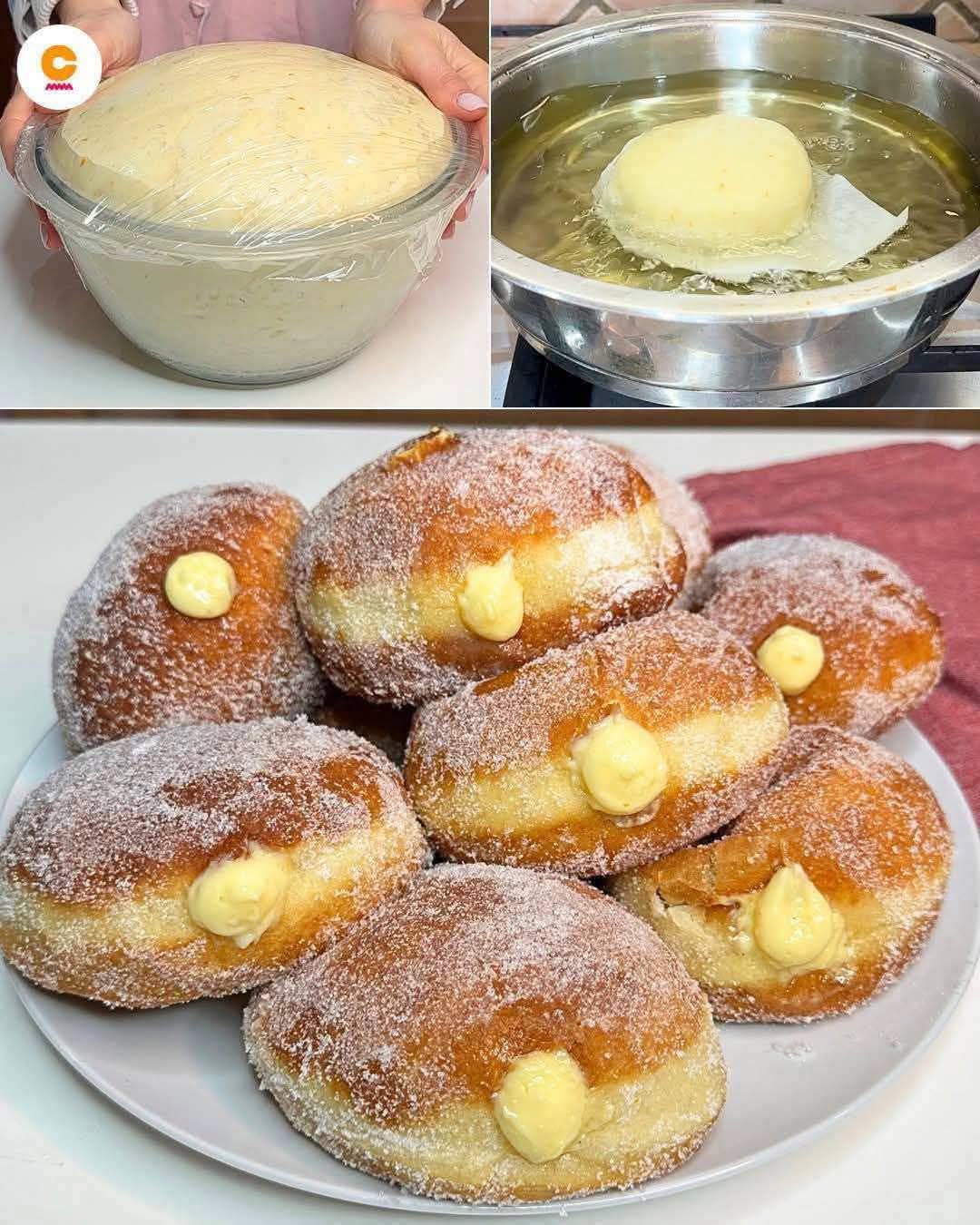
Fried Two-Egg Cake: A Simple Homemade Treat
Introduction
Sometimes the most delicious treats are made with the simplest ingredients. This easy fried cake uses just two eggs as its main ingredient and transforms a few everyday pantry staples into a golden, tender, lightly crisp snack.
Unlike a traditional oven-baked cake, this recipe is prepared in a frying pan, making it especially convenient when you want something sweet without turning on the oven. The outside develops a beautiful golden crust while the inside remains soft and tender.
It is an excellent choice for breakfast, afternoon tea, a quick dessert, or whenever you want a homemade treat with minimal preparation.
Ingredients
For approximately 6 to 8 small cakes:
- 2 large eggs
- 4 tablespoons granulated sugar
- 1 teaspoon vanilla extract
- 1/2 cup milk
- 1 1/2 cups all-purpose flour
- 1 teaspoon baking powder
- 1/4 teaspoon salt
- 2 tablespoons melted butter or vegetable oil
- Vegetable oil, for frying
- Powdered sugar, for serving, optional
- Honey or jam, for serving, optional
Instructions
Step 1: Prepare the Egg Mixture
Crack the two eggs into a medium mixing bowl. Add the sugar and whisk thoroughly until the mixture becomes smooth and slightly lighter in color.
Add the vanilla extract and melted butter or vegetable oil. Continue mixing until everything is well incorporated.
Step 2: Add the Milk
Pour the milk into the egg mixture gradually while whisking. Make sure the ingredients are evenly combined.
The liquid mixture should be smooth without large lumps.
Step 3: Combine the Dry Ingredients
In a separate bowl, combine the flour, baking powder, and salt.
Gradually add the dry ingredients to the egg mixture. Stir gently after each addition.
Do not overmix the batter. Stop as soon as the flour has been incorporated. The finished batter should be thick enough to hold its shape briefly but still soft enough to spoon into the pan.
Step 4: Rest the Batter
Allow the batter to rest for approximately 5 to 10 minutes.
This short resting period allows the flour to absorb some of the liquid and gives the baking powder time to begin working.
Step 5: Heat the Pan
Place a nonstick frying pan or heavy skillet over medium-low heat.
Add enough vegetable oil to lightly coat the bottom of the pan. The oil should be hot but not smoking.
To test the temperature, drop a very small amount of batter into the pan. If it begins to sizzle gently, the pan is ready.
Step 6: Fry the Cakes
Spoon small portions of batter into the hot pan, leaving enough space between them so they do not stick together.
Cook the cakes for approximately 2 to 3 minutes on the first side.
When the edges begin to set and the bottom becomes golden brown, carefully turn each cake using a spatula.
Cook the other side for another 1 to 2 minutes, or until golden and completely cooked in the center.
Keep the heat moderate. If the outside becomes dark too quickly while the inside remains uncooked, reduce the heat.
Step 7: Drain
Transfer the cooked cakes to a plate lined with paper towels to absorb excess oil.
Continue frying the remaining batter in batches.
Method
The basic method is a simple pan-frying technique.
First, the eggs are beaten with sugar to create a smooth base. Milk, vanilla, and butter are then incorporated before the flour, baking powder, and salt are added.
The resulting batter is portioned into a lightly oiled frying pan and cooked slowly over moderate heat. This allows the cakes to become golden on the outside while remaining tender inside.
The most important part of the method is temperature control. Medium-low heat is preferable because these cakes are thicker than ordinary pancakes and need enough time to cook through.
Tips for Perfect Fried Cakes
Keep the Cakes Small
Small cakes cook more evenly than large ones. If the portions are too large, the outside may brown before the center has finished cooking.
Do Not Overmix
Once the flour is added, mix only until the ingredients are combined. Excessive mixing can make the finished cakes dense.
Control the Heat
A moderate temperature produces the best results. If the oil is extremely hot, the cakes can become brown on the outside while remaining raw inside.
Use Fresh Baking Powder
Baking powder helps give the cakes a lighter texture. If it has been sitting in the pantry for a long time, its effectiveness may be reduced.
Avoid Excess Oil
You do not need to deep-fry these cakes. A shallow layer of oil is enough to create a beautiful golden exterior.
Serving Suggestions
These fried cakes are delicious served warm.
For a simple presentation, dust them lightly with powdered sugar.
For a richer dessert, serve them with:
- Honey
- Strawberry jam
- Raspberry preserves
- Caramel sauce
- Chocolate sauce
- Fresh fruit
- Whipped cream
- Cinnamon sugar
- Sweetened condensed milk
They can also be served alongside tea, coffee, hot chocolate, or a glass of cold milk.
Variations
Cinnamon Fried Cakes
Add 1/2 teaspoon of ground cinnamon to the dry ingredients for a warm, spiced flavor.
Lemon Version
Add 1 teaspoon of finely grated lemon zest to the batter. The fresh citrus flavor pairs beautifully with sugar or honey.
Coconut Version
Replace 2 tablespoons of flour with 2 tablespoons of finely shredded coconut.
Chocolate Version
Add 1 to 2 tablespoons of unsweetened cocoa powder to the flour mixture. If desired, add a few chocolate chips to the batter.
Apple Version
Finely dice half an apple and fold it gently into the finished batter. A small pinch of cinnamon makes this variation especially delicious.
A Little History
Simple fried cakes have appeared in many food traditions around the world. Long before modern ovens became common in household kitchens, cooks frequently prepared sweet and savory doughs directly in pans, griddles, or over open fires.
Recipes based on eggs, flour, milk, and sugar became especially popular because these ingredients were widely available and could be transformed into satisfying treats with very little equipment.
This two-egg fried cake follows that same practical tradition. Rather than requiring an oven, it relies on a frying pan and gentle heat, making it an accessible homemade dessert for almost any kitchen.
Formation and Texture
The structure of these cakes comes primarily from the eggs and flour.
The eggs provide moisture, richness, and structure. Flour gives the cake its body, while baking powder helps it rise slightly during cooking.
The sugar contributes sweetness and also encourages the beautiful golden color that develops during frying.
The result should have a lightly crisp, golden exterior with a soft, tender interior.
For Cake Lovers
If you love homemade cakes but do not always have the time or equipment for a traditional baked dessert, this recipe is a wonderful alternative.
It is inexpensive, quick, adaptable, and easy enough for beginners. The basic batter can also be changed according to what you have available in the kitchen.
For a family breakfast, make the cakes slightly larger and serve them with fruit and honey. For a dessert, make them smaller and serve them warm with chocolate, caramel, or powdered sugar.
Storage
These cakes are best when eaten fresh and warm.
If you have leftovers, allow them to cool completely before placing them in an airtight container. They can be kept at room temperature for a short period or refrigerated for longer storage.
To restore some of their original texture, gently warm them in a dry skillet before serving.
Conclusion
This simple fried two-egg cake is proof that a delicious homemade treat does not require complicated ingredients or special equipment.
With two eggs, flour, milk, sugar, and a few basic pantry ingredients, you can create golden, tender cakes directly in a frying pan. The recipe is versatile enough to customize with cinnamon, fruit, chocolate, coconut, or your favorite toppings.
It is a comforting recipe to keep on hand for busy mornings, unexpected guests, afternoon tea, or whenever the family wants something homemade and delicious.
Simple ingredients, gentle cooking, and a little patience are all you need to turn an ordinary batter into a wonderfully satisfying fried cake.