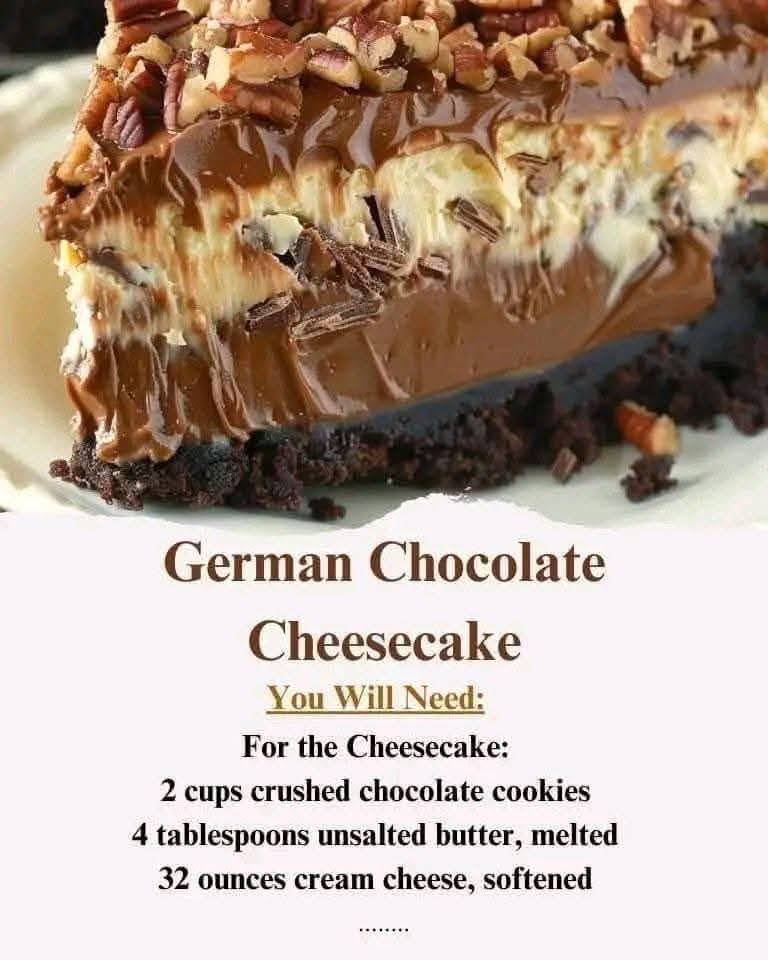
German Chocolate Cheesecake
Introduction
German Chocolate Cheesecake is a rich and luxurious dessert that combines two beloved classics: creamy chocolate cheesecake and the traditional coconut-pecan topping associated with German chocolate cake. A crisp chocolate cookie crust provides the foundation, while the cheesecake filling delivers a smooth, dense, and velvety chocolate flavor. The dessert is finished with a generous layer of sweet coconut and toasted pecans bound together in a buttery, custard-like topping.
This cheesecake is ideal for birthdays, holidays, family celebrations, dinner parties, potlucks, or any occasion when you want a dessert that looks impressive and tastes wonderfully indulgent.
Ingredients
For the Chocolate Cookie Crust
- 2 cups crushed chocolate cookies
- 4 tablespoons unsalted butter, melted
For the Chocolate Cheesecake Filling
- 32 ounces cream cheese, softened to room temperature
- 1 cup granulated sugar
- 4 large eggs, preferably at room temperature
- 1 cup sour cream
- 1 teaspoon vanilla extract
- 1/2 cup semi-sweet chocolate chips, melted and slightly cooled
For the Coconut-Pecan Topping
- 1 cup evaporated milk
- 1 cup granulated sugar
- 3 large egg yolks, lightly beaten
- 1/2 cup unsalted butter
- 1 teaspoon vanilla extract
- 1 cup sweetened shredded coconut
- 1 cup chopped pecans
Equipment
- 9-inch springform pan
- Mixing bowls
- Electric hand mixer or stand mixer
- Spatula
- Saucepan
- Wire cooling rack
- Measuring cups and spoons
- Parchment paper, optional
Preparation
Before beginning, place the cream cheese, eggs, and sour cream at room temperature. Room-temperature ingredients blend more easily and help create a smooth cheesecake without overmixing.
Preheat the oven to 325°F (165°C). Lightly grease a 9-inch springform pan. If desired, line the bottom with parchment paper to make removing the finished cheesecake easier.
Method 1: Making the Chocolate Cookie Crust
Place the chocolate cookies in a food processor and process until they become fine crumbs. You can also place them in a sealed bag and crush them with a rolling pin.
Measure 2 cups of crumbs and combine them with the melted butter. Mix until all the crumbs are evenly moistened and resemble wet sand.
Transfer the mixture to the springform pan. Press it firmly and evenly over the bottom of the pan. The back of a measuring cup works particularly well for creating a compact, level crust.
Set the crust aside while you prepare the cheesecake filling.
Method 2: Preparing the Chocolate Cheesecake
Place the softened cream cheese in a large mixing bowl. Beat on medium speed until smooth and creamy.
Add the granulated sugar gradually and continue mixing until the sugar is incorporated and the mixture is smooth.
Add the eggs one at a time. Mix on low speed after each addition, scraping down the sides of the bowl when necessary. Avoid excessive mixing once the eggs have been incorporated, because too much air can cause the cheesecake to puff and crack during baking.
Add the sour cream and vanilla extract. Mix just until combined.
Melt the semi-sweet chocolate chips gently in the microwave in short intervals or over a double boiler. Stir until smooth, then allow the chocolate to cool slightly so it is warm rather than hot.
Fold the melted chocolate into the cheesecake mixture until the filling is evenly chocolate-colored and completely combined.
Pour the filling over the prepared cookie crust. Smooth the surface gently with a spatula.
Method 3: Baking the Cheesecake
Place the springform pan in the preheated 325°F (165°C) oven.
Bake for approximately 55 to 60 minutes. The cheesecake is ready when the edges appear set while the center still has a slight, gentle jiggle.
Do not wait for the entire cheesecake to become completely firm in the oven. It will continue setting as it cools.
Turn off the oven and, if desired, leave the cheesecake inside for several minutes with the door slightly open. This can help reduce the sudden temperature change that sometimes causes cracks.
Remove the cheesecake from the oven and place it on a wire rack. Allow it to cool for about 10 minutes.
Carefully run a thin knife around the edge of the cheesecake to loosen it from the sides of the pan. Do not remove the springform ring yet.
Allow the cheesecake to cool for approximately another hour at room temperature.
Once cooled, cover it and refrigerate it overnight. Chilling is an important part of the cheesecake-making process because it allows the filling to fully firm and the flavors to develop.
Method 4: Preparing the Coconut-Pecan Topping
While the cheesecake is chilling, prepare the topping.
In a medium saucepan, combine the evaporated milk, granulated sugar, beaten egg yolks, and butter.
Place the saucepan over medium heat. Stir continuously or very frequently, making sure to scrape the bottom and sides of the pan.
Cook for approximately 10 to 12 minutes, or until the mixture becomes noticeably thicker and coats the back of a spoon.
Do not rush this process by using excessively high heat. The egg yolks need to cook gradually so the mixture thickens smoothly without scrambling.
Remove the saucepan from the heat.
Stir in the vanilla extract, shredded coconut, and chopped pecans. Mix thoroughly until the coconut and pecans are evenly distributed throughout the topping.
Allow the mixture to cool until it reaches a thick, spreadable consistency.
Method 5: Forming the Finished Cheesecake
Remove the thoroughly chilled cheesecake from the refrigerator.
Carefully release the springform ring. If necessary, run a thin knife around the edge once more before opening the pan.
Transfer the cheesecake to a serving plate.
Spread the coconut-pecan topping evenly over the surface. You can create a thick, generous layer in the center or spread it all the way toward the edges.
For an especially attractive presentation, leave some of the chocolate cheesecake visible around the outside.
Chill the completed cheesecake for another 30 minutes before slicing if the topping needs additional time to firm.
History and Inspiration
The name German chocolate cake can be misleading because the dessert is not traditionally German. Its history is associated with the United States and with a type of sweet baking chocolate developed by Samuel German for Baker’s Chocolate in the 19th century.
A chocolate cake recipe using this chocolate became especially famous after a recipe for “German’s Chocolate Cake” was published in the United States in the 1950s. The cake became known for its distinctive coconut-pecan filling and topping.
Over time, the flavors of German chocolate cake were incorporated into many other desserts, including brownies, cupcakes, cookies, pies, bars, and cheesecakes.
This cheesecake takes those familiar flavors and transforms them into a rich, creamy dessert. Instead of layers of chocolate cake, the dessert features a smooth chocolate cheesecake filling supported by a crisp chocolate-cookie crust.
Formation and Texture
The dessert is built in three complementary layers.
The first layer is the chocolate cookie crust. Butter binds the crumbs together and creates a firm, slightly crisp foundation.
The second layer is the chocolate cheesecake. Cream cheese provides richness and structure, while sour cream contributes moisture and a subtle tang that balances the sweetness. Melted semi-sweet chocolate gives the filling its deep chocolate character.
The final layer is the coconut-pecan topping. Evaporated milk, sugar, butter, and egg yolks create a rich custard-like base, while coconut adds sweetness and chewiness and pecans provide crunch and a toasted nutty flavor.
Together, these textures create a dessert that is creamy, crunchy, chewy, buttery, and chocolaty in every bite.
Important Baking Tips
Use softened cream cheese
Cold cream cheese can leave small lumps in the filling. Allow it to soften naturally at room temperature before mixing.
Avoid overmixing
Once the eggs have been added, mix only until the ingredients are incorporated. Excessive mixing introduces air, which can contribute to cracking and uneven baking.
Do not overbake
A properly baked cheesecake should still have a slight wobble in the center when removed from the oven. The cheesecake becomes firmer as it cools and chills.
Cool gradually
Sudden temperature changes can cause cheesecakes to crack. Allowing the cheesecake to cool gradually helps maintain its smooth appearance.
Chill overnight
For the best texture, refrigerate the cheesecake overnight. This gives it enough time to become firm enough for clean slices.
Cool the topping before spreading
The coconut-pecan mixture should be thick enough to sit on the cheesecake without running down the sides. If it is too warm or loose, allow it to cool longer.
Toast the pecans if desired
For a deeper nutty flavor, pecans can be lightly toasted before being added to the topping. Allow them to cool completely before incorporating them.
Serving Suggestions
Serve the cheesecake cold or slightly chilled.
For clean slices, use a sharp knife and wipe the blade between cuts. This keeps the chocolate layers and coconut-pecan topping looking neat.
The cheesecake is rich enough to serve on its own, but it can also be accompanied by:
- A small spoonful of lightly sweetened whipped cream
- Chocolate shavings
- A drizzle of melted chocolate
- Extra toasted pecans
- A few curls of toasted coconut
- Fresh berries for a contrasting fruity flavor
Because this is a rich dessert, relatively small slices are usually satisfying.
Storage
Cover the cheesecake tightly and refrigerate it. It should be kept refrigerated because both the cheesecake filling and coconut-pecan topping contain dairy and eggs.
For the best quality, enjoy it within several days.
Individual slices can also be wrapped carefully and frozen for longer storage. Thaw them gradually in the refrigerator before serving.
Preparation and Timing
Prep Time: Approximately 30 minutes
Baking Time: 55–60 minutes
Cooling Time: About 1 hour
Chilling Time: Preferably overnight
Additional Topping Preparation: Approximately 15 minutes
Total Active and Baking Time: About 1 hour 30 minutes, plus chilling
Conclusion
German Chocolate Cheesecake is a wonderful combination of classic American dessert flavors transformed into an elegant cheesecake. The chocolate cookie crust provides a crisp contrast to the creamy chocolate filling, while the buttery coconut-pecan topping brings sweetness, chewiness, and satisfying crunch.
The key to making this cheesecake exceptional is patience. Use softened ingredients, mix the filling gently, avoid overbaking, allow it to cool gradually, and give it plenty of time to chill. The result is a rich, beautifully layered dessert with the familiar flavors of German chocolate cake and the luxurious texture of a classic cheesecake.
For Chocolate and Cheesecake Lovers
This recipe is especially appealing to anyone who loves the combination of chocolate, coconut, and pecans. It is rich enough for special celebrations but comforting enough for a family dessert.
The contrast between the silky cheesecake and the textured coconut-pecan topping makes every bite interesting. For those who already love traditional German chocolate cake, this cheesecake offers a new way to enjoy those familiar flavors while adding the creamy richness of a classic baked cheesecake.