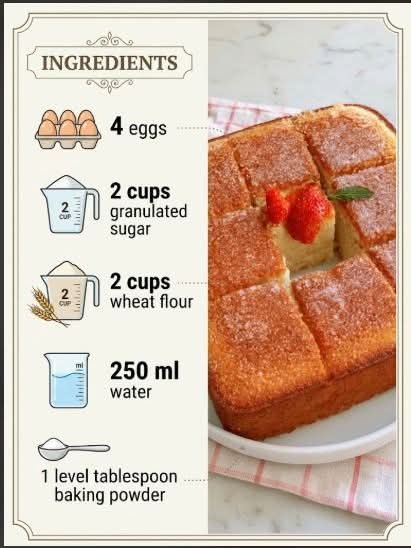
Simple Cake
Introduction
Simple Cake is a classic homemade cake that proves you do not need complicated ingredients to create a delicious dessert. Made with eggs, sugar, wheat flour, water, and baking powder, this cake has a light, tender texture and a pleasantly sweet flavor. It is an excellent everyday cake for breakfast, afternoon tea, family gatherings, or whenever you want something homemade without spending hours in the kitchen.
The recipe is especially useful when you want to prepare a cake with basic pantry ingredients. The eggs provide structure and richness, the sugar adds sweetness and helps create a delicate crumb, while the baking powder gives the cake its characteristic rise.
Ingredients
For the Cake
- 4 large eggs, preferably at room temperature
- 2 cups granulated sugar
- 2 cups wheat flour or all-purpose flour
- 250 ml water
- 1 level tablespoon baking powder
- 1 teaspoon vanilla extract, optional
- 1 small pinch of salt
- 2 tablespoons vegetable oil or melted butter, optional, for a softer cake
- Butter or oil for greasing the cake pan
- A little flour for dusting the pan
Preparation
Before beginning, gather all the ingredients and allow the eggs to come close to room temperature. Measure the flour carefully and preheat the oven so that it reaches the proper temperature before the batter goes inside.
The consistency of the batter is important. It should be smooth and relatively light, without large lumps of flour. Avoid mixing excessively after adding the flour because overmixing can make the finished cake heavier.
Instructions
Step 1: Prepare the Oven and Pan
Preheat the oven to 180°C.
Grease a round cake pan, approximately 22 to 24 cm in diameter, with butter or a little vegetable oil. Dust lightly with flour, then tap out any excess.
You can also line the bottom of the pan with parchment paper for easier removal.
Step 2: Beat the Eggs and Sugar
Place the four eggs in a large mixing bowl.
Add the granulated sugar and beat together for approximately 5 to 8 minutes until the mixture becomes pale, creamy, and noticeably increased in volume.
This step is important because incorporating air into the eggs helps give the cake a lighter texture.
If using vanilla extract, add it during this stage.
Step 3: Add the Water
Gradually add the 250 ml of water while continuing to mix gently.
If you are using the optional vegetable oil or melted butter, add it at this point as well.
Mix until everything is evenly combined.
Step 4: Prepare the Dry Ingredients
In a separate bowl, combine the wheat flour, baking powder, and pinch of salt.
Sifting the flour and baking powder together is recommended. It removes lumps and distributes the baking powder more evenly throughout the flour.
Step 5: Combine the Batter
Gradually add the dry ingredients to the egg mixture.
Use a whisk or spatula and mix gently until the flour has been incorporated.
Do not beat the batter aggressively at this stage. The goal is to maintain as much of the air incorporated into the eggs as possible.
The finished batter should be smooth and pourable.
Step 6: Fill the Cake Pan
Pour the batter into the prepared cake pan.
Gently tap the pan once or twice against the counter to remove any very large air bubbles.
Do not overfill the pan. Leave enough room for the cake to rise during baking.
Step 7: Bake
Place the pan in the center of the preheated oven.
Bake at 180°C for approximately 30 to 40 minutes.
The exact baking time can vary depending on the oven and the size of the pan.
Avoid opening the oven during the first 25 minutes because a sudden change in temperature can cause the cake to collapse.
Step 8: Test for Doneness
After about 30 minutes, insert a wooden toothpick or skewer into the center of the cake.
If it comes out clean or with only a few moist crumbs attached, the cake is ready.
If wet batter remains on the toothpick, continue baking for another 5 to 10 minutes and test again.
The top should be lightly golden and should spring back gently when touched.
Step 9: Cool the Cake
Remove the cake from the oven and allow it to rest in the pan for approximately 10 minutes.
Run a thin knife around the edges if necessary, then carefully remove the cake from the pan.
Place it on a wire rack and allow it to cool completely before slicing.
Method
The main method behind this cake is the careful incorporation of air into the eggs and sugar, followed by gentle addition of the flour.
There are three important stages:
Whipping: The eggs and sugar are beaten until light and fluffy.
Folding and mixing: The flour and baking powder are incorporated gradually without excessive mixing.
Baking: The heat causes the air incorporated into the batter to expand while the baking powder releases carbon dioxide, helping the cake rise and set.
This straightforward method creates a simple cake with a soft interior and lightly golden exterior.
History and Formation
Simple homemade cakes have a long tradition in kitchens around the world. Before modern baking mixes and complicated pastry techniques became common, families often relied on inexpensive staples such as eggs, flour, sugar, water, and a raising agent.
Recipes of this style became particularly popular because they were economical and adaptable. A basic cake could be prepared for ordinary family meals and then transformed for special occasions with ingredients such as fruit, cream, jam, chocolate, nuts, or powdered sugar.
The formation of this particular cake follows the fundamental principles of sponge-style baking. Eggs and sugar create the foundation, flour provides structure, and baking powder assists with leavening. Water keeps the mixture fluid and contributes to the final texture.
How to Make It Even Better
For a more flavorful cake, add one teaspoon of vanilla extract.
For a richer texture, replace part of the water with milk.
For a softer and slightly richer crumb, add two tablespoons of melted butter or vegetable oil.
For a citrus version, add the finely grated zest of one lemon or orange.
For a simple finishing touch, dust the cooled cake with powdered sugar.
You can also slice the cake horizontally and spread it with jam, whipped cream, custard, or chocolate cream.
Serving Ideas
This cake is delicious served plain with tea, coffee, or milk.
It can also be served with:
- Fresh strawberries or other seasonal fruit
- Whipped cream
- Strawberry or raspberry jam
- Chocolate sauce
- Caramel sauce
- Powdered sugar
- Vanilla cream
- Lemon glaze
- Fresh fruit and yogurt
For a celebration, the cake can be divided into two layers and filled with cream and fruit.
Storage
Once completely cooled, store the cake in an airtight container at room temperature for up to 2 days.
For longer storage, keep it refrigerated in a well-covered container for approximately 4 to 5 days. Allow it to come closer to room temperature before serving for the best texture.
The cake can also be frozen. Wrap individual slices tightly and place them in a freezer-safe container or bag. Thaw at room temperature before serving.
Common Mistakes to Avoid
Do not add the flour all at once if it creates lumps. Adding it gradually makes the batter easier to combine.
Do not overmix after adding the flour. Excessive mixing develops gluten and can produce a tougher cake.
Do not open the oven repeatedly during baking.
Do not remove the cake before the center has completely set.
Make sure the baking powder is fresh. Old baking powder may not provide enough lift.
Allow the cake to cool before cutting. Slicing while it is very hot can make the crumb appear gummy or cause the cake to break apart.
Conclusion
This Simple Cake is a wonderful example of how ordinary ingredients can create something comforting and satisfying. With only a few basic ingredients, you can prepare a homemade cake that is soft, lightly sweet, versatile, and suitable for almost any occasion.
Its greatest strength is its simplicity. It can be enjoyed exactly as it comes from the oven or used as a foundation for countless variations. Add vanilla, citrus zest, fruit, cream, chocolate, or jam, and the same basic recipe can become an entirely different dessert.
For Cake Lovers
For anyone who loves traditional homemade baking, this recipe is a useful one to keep close at hand. It is inexpensive, uncomplicated, and easy to adapt. The cake is particularly enjoyable when served slightly warm with a cup of tea or coffee, but it is equally good once completely cooled and decorated.
The simplicity of the recipe is also what makes it special. It brings together familiar ingredients and turns them into a soft, golden cake that can be shared with family and friends.
Final Method at a Glance
- Preheat the oven to 180°C.
- Grease and flour a 22–24 cm cake pan.
- Beat 4 eggs with 2 cups of sugar until pale and fluffy.
- Gradually add 250 ml water and optional vanilla or oil.
- Sift together 2 cups wheat flour, 1 level tablespoon baking powder, and a pinch of salt.
- Gently incorporate the dry ingredients into the wet mixture.
- Pour the batter into the prepared pan.
- Bake for approximately 30–40 minutes.
- Test the center with a toothpick.
- Cool for 10 minutes in the pan, then transfer to a rack.
- Cool completely before slicing.
- Serve plain or decorate with powdered sugar, fruit, cream, jam, or your favorite topping.