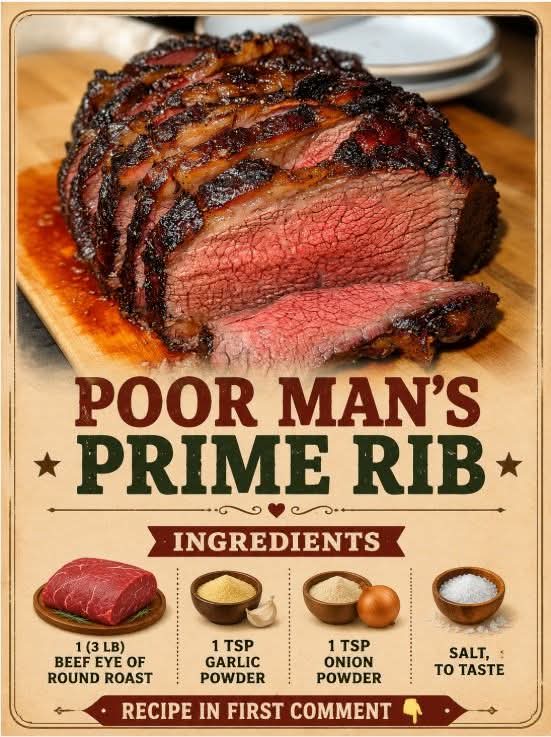
Poor Man’s Prime Rib
Introduction
Poor Man’s Prime Rib is a classic way to turn an economical beef eye of round roast into a tender, flavorful roast that resembles the texture and richness of prime rib when prepared carefully. Eye of round is naturally lean and can become tough if overcooked, so the key to this recipe is using a high-temperature searing stage followed by gentle cooking and, most importantly, allowing the meat to rest before slicing.
This recipe uses simple pantry seasonings: garlic powder, onion powder, and salt. The result is a beautifully browned roast with a savory crust and juicy slices in the center. It is an excellent choice for a Sunday dinner, holiday meal, family gathering, or whenever you want the flavor of a traditional roast without the cost of prime rib.
Ingredients
- 1 (3-pound) beef eye of round roast
- 1 teaspoon garlic powder
- 1 teaspoon onion powder
- 1 to 1½ teaspoons salt, or to taste
- ½ teaspoon freshly ground black pepper, optional
- 1 tablespoon vegetable oil or olive oil, optional, for helping the seasoning adhere and promoting browning
- ½ cup beef broth or water, optional, for the roasting pan
Instructions
Step 1: Prepare the Roast
Remove the beef eye of round roast from the refrigerator approximately 30 to 45 minutes before cooking. Allowing it to lose some of its chill can help it cook more evenly.
Pat the roast thoroughly dry with paper towels. Removing surface moisture is important because a dry surface will brown much better in the oven.
Place the roast on a cutting board or clean work surface.
Step 2: Season the Beef
In a small bowl, combine the garlic powder, onion powder, salt, and black pepper if using.
Rub the roast lightly with oil, then coat the entire surface generously with the seasoning mixture. Make sure to season the top, bottom, and sides.
For even better flavor, you can season the roast several hours ahead of time and refrigerate it uncovered. Take it out about 30 to 45 minutes before roasting.
Cooking Method
Step 3: Preheat the Oven
Preheat your oven to 500°F (260°C).
Place the seasoned eye of round on a rack inside a roasting pan. If desired, add a small amount of beef broth or water to the bottom of the pan, making sure the liquid does not touch the meat.
Step 4: Start at High Heat
Place the roast in the fully preheated oven.
Roast at 500°F (260°C) for 15 minutes. This initial high-temperature cooking helps create a deeply browned exterior and gives the roast the appearance and roasted flavor associated with prime rib.
Step 5: Lower the Temperature
After 15 minutes, reduce the oven temperature to 325°F (165°C).
Continue roasting until the beef reaches your desired internal temperature.
Because eye of round is very lean, an instant-read meat thermometer is strongly recommended.
Approximate final temperatures are:
- Rare: 125°F (52°C)
- Medium-rare: 135°F (57°C)
- Medium: 145°F (63°C)
- Medium-well: 150°F (66°C)
- Well-done: 160°F (71°C) or higher
For the most tender and juicy result, medium-rare to medium is generally preferable for eye of round.
Remember that the internal temperature can rise several degrees while the roast rests, so remove it from the oven slightly before reaching the final temperature you want.
Step 6: Rest the Roast
Remove the roast from the oven and transfer it to a cutting board.
Loosely cover it with aluminum foil and let it rest for 15 to 20 minutes.
Do not skip this step. Resting gives the juices time to redistribute throughout the meat. Cutting immediately into the roast can cause many of those juices to escape onto the cutting board instead of remaining in the slices.
Step 7: Slice Properly
After resting, use a sharp carving knife to slice the roast thinly against the grain.
This is particularly important with eye of round. Cutting against the grain shortens the muscle fibers and makes each bite considerably easier to chew.
Arrange the slices on a serving platter and spoon any flavorful juices from the cutting board over the meat if desired.
The Method Behind the Recipe
The success of Poor Man’s Prime Rib depends on three important techniques.
First, the roast needs a dry surface. Patting the beef dry allows the outside to brown instead of simply steaming.
Second, the recipe begins with very high heat. The initial 500°F oven temperature encourages strong browning and develops the savory roasted crust.
Third, the roast needs controlled cooking and adequate resting. Eye of round contains very little fat, so taking it too far beyond your desired temperature can make it dry. Using a thermometer gives you much more control than relying only on cooking time.
Formation of the Flavorful Crust
The garlic powder and onion powder create a simple but deeply savory coating. As the roast cooks at high temperature, the exterior develops a browned crust with concentrated beef flavor.
Salt plays an especially important role. It enhances the natural flavor of the beef and, when applied ahead of time, can penetrate beyond the very surface of the roast.
Black pepper can be added for a slightly stronger and more traditional roast-beef flavor, although the original recipe can be prepared successfully without it.
A Brief History
The idea behind “Poor Man’s Prime Rib” comes from the tradition of making inexpensive cuts of beef taste luxurious through careful cooking. Prime rib comes from the rib section of the cow and is prized for its tenderness, marbling, and rich flavor.
Eye of round, by comparison, comes from the rear leg area of the animal. It is considerably leaner and generally much less expensive. Because it lacks the generous marbling found in prime rib, it requires more careful preparation.
Home cooks have long used roasting techniques, strong seasoning, high heat, and careful slicing to make economical beef cuts suitable for special family meals. Recipes such as this demonstrate that an affordable roast can still become the centerpiece of an impressive dinner.
How to Make It Even Better
For maximum flavor, season the roast several hours before cooking. Refrigerate it uncovered on a rack or plate, allowing the salt and seasonings to work into the meat while the surface dries.
Bring the roast out of the refrigerator before cooking so it is not extremely cold in the center.
Use a meat thermometer rather than depending entirely on the clock. Roasts vary in shape, thickness, and starting temperature, so cooking time can vary.
Most importantly, slice the finished roast thinly against the grain. Even a perfectly cooked eye of round can seem tough if it is sliced incorrectly.
Serving Suggestions
Poor Man’s Prime Rib pairs beautifully with classic roast-dinner sides such as:
- Creamy mashed potatoes
- Roasted potatoes
- Yorkshire pudding
- Green beans
- Roasted carrots
- Creamed spinach
- Steamed broccoli
- Glazed vegetables
- Dinner rolls
- Homemade gravy
- Horseradish sauce
For a traditional presentation, arrange the thin slices of beef on a large serving platter and surround them with roasted vegetables and potatoes.
Leftovers
Leftover roast beef can be refrigerated in an airtight container for approximately 3 to 4 days.
Thinly sliced leftovers are excellent in roast-beef sandwiches. You can also warm them gently with a little beef broth or gravy, use them in wraps, add them to salads, or serve them over mashed potatoes.
Avoid aggressively reheating the slices because the lean meat can become dry.
Conclusion
Poor Man’s Prime Rib proves that a memorable roast dinner does not require an expensive cut of beef. A simple 3-pound eye of round roast, properly seasoned and carefully cooked, can develop a beautiful browned exterior and delicious beef flavor.
The most important lessons are simple: dry the meat thoroughly, season it generously, begin with high heat, finish at a moderate temperature, monitor the internal temperature, allow the roast to rest, and always slice it thinly against the grain.
With these techniques, an economical eye of round can become a beautiful centerpiece for a comforting family meal that looks and tastes far more expensive than it actually is.
Final Recipe at a Glance
Preparation: 15 minutes, plus optional seasoning time
Resting: 15–20 minutes
Initial roasting: 15 minutes at 500°F (260°C)
Finishing temperature: 325°F (165°C)
Main ingredient: 3-pound eye of round roast
Best texture: Medium-rare to medium
Key technique: Use an instant-read thermometer and slice thinly against the grain
This is the kind of recipe worth keeping: inexpensive ingredients, straightforward preparation, and a classic roast-beef result suitable for both an ordinary Sunday dinner and a special occasion.