What to Do With Puffed Ground Beef Packaging Before the Sell-By Date
Introduction
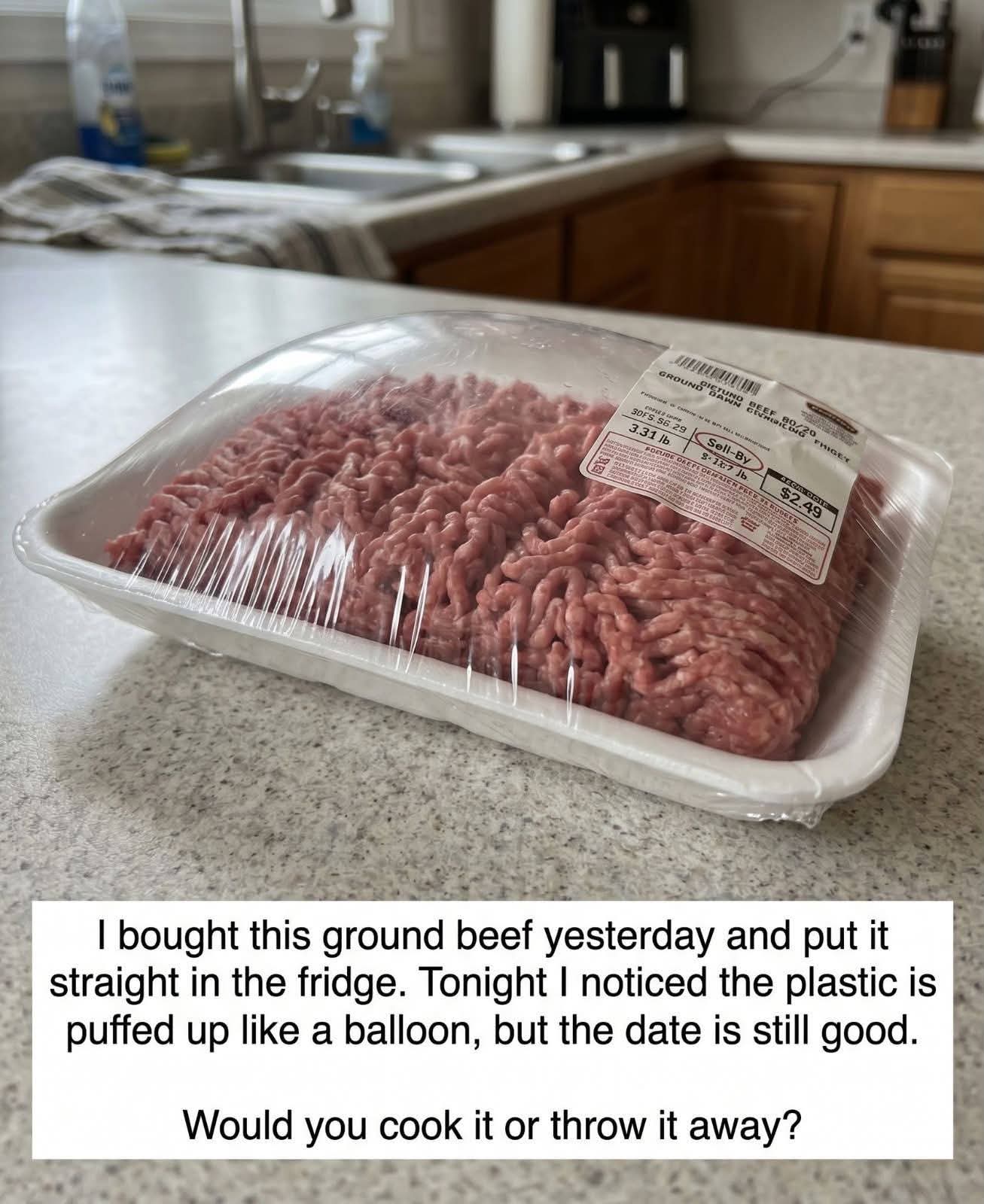
A package of ground beef that has become noticeably puffed, swollen, or inflated should not be treated as ordinary ground beef that simply needs to be cooked before its sell-by date. The swelling can indicate gas production from microbial activity or a problem with the packaging, and the printed date does not override signs that the product may have spoiled.
The safest approach is simple: do not open, taste, smell closely, cook, or sell a ground-beef package that is abnormally swollen. Keep it isolated from other foods and return it to the retailer or dispose of it according to local food-safety guidance. A sell-by date is primarily a retail inventory date, not a guarantee that the food is safe.
For ground beef that is properly packaged and not showing signs of spoilage, refrigeration at 4°C/40°F or below is essential, and USDA guidance recommends using refrigerated ground beef within 1–2 days or freezing it.
Ingredients
For a safe ground-beef meal using a normal, intact package:
- 500 g ground beef
- 1 medium onion, finely chopped
- 2 cloves garlic, minced
- 1 tablespoon cooking oil
- 1 teaspoon salt
- ½ teaspoon black pepper
- 1 teaspoon paprika
- ½ teaspoon dried oregano
- 1 tablespoon tomato paste
- 200 g canned chopped tomatoes
- 1 tablespoon Worcestershire sauce, optional
- ½ cup beef stock or water
- Fresh parsley, optional
- Cooked rice, pasta, potatoes, or bread for serving
Important: These ingredients are for a fresh, properly stored package of ground beef. They are not a way to rescue swollen or spoiled meat.
What a Puffed Package Means
A small amount of air trapped inside packaging is not necessarily unusual. However, if a package that was previously flat or tightly sealed becomes noticeably inflated, treat that as a warning sign.
Spoilage organisms can produce gases as they grow. Ground beef is particularly perishable because grinding spreads bacteria throughout the meat. Harmful bacteria cannot reliably be detected by looking at or smelling the meat.
Other warning signs include:
- A package that is unusually swollen or balloon-like
- Leaking or damaged packaging
- An unpleasant or abnormal odor after appropriate handling
- Meat that is unusually sticky or slimy
- Evidence that the package has not remained properly refrigerated
A change in color alone does not necessarily prove spoilage, but it should be considered together with storage history and other signs.
Instructions for a Safe Package
Step 1: Inspect Before Opening
Look at the package while it is still sealed. Check whether it is properly sealed, leaking, torn, or unusually swollen.
If it is significantly puffed, do not open it simply to investigate.
Step 2: Keep It Away From Other Foods
Place a suspicious package in a separate bag or container so that any leaking juices cannot contaminate other food or refrigerator surfaces.
Raw meat juices can spread bacteria to hands, utensils, countertops, and ready-to-eat foods.
Step 3: Return It to the Store
If you purchased the meat recently, the best option is usually to contact the retailer and explain that the package has become swollen before its sell-by date.
Keep the original label and receipt if available. The retailer may want the package for inspection or may offer a replacement or refund.
Step 4: Do Not Try to “Save” It
Do not:
- Open the package and rinse the meat
- Cook it to see whether it smells better
- Taste a small piece
- Remove the outer portion and use the rest
- Repackage questionable meat for freezing
- Sell or serve it to another person
Cooking is not a reliable solution for food that has already become questionable or spoiled.
Method for Preparing Fresh Ground Beef
If your package is not swollen, is properly refrigerated, and otherwise appears normal, you can prepare it safely.
Method 1: Brown the Beef
Heat a large skillet over medium-high heat.
Add the oil and onion. Cook for approximately 3–4 minutes until softened.
Add the garlic and cook for about 30 seconds.
Add the ground beef and break it apart with a wooden spoon.
Cook until thoroughly browned, stirring frequently.
Method 2: Add the Seasonings
Add the salt, pepper, paprika, oregano, and tomato paste.
Stir thoroughly so the seasonings coat the beef.
Add the chopped tomatoes and Worcestershire sauce.
Pour in the beef stock or water.
Method 3: Simmer
Reduce the heat and simmer for approximately 10–15 minutes, stirring occasionally.
The finished beef should be thoroughly cooked. USDA recommends cooking ground beef to a minimum internal temperature of 160°F/71°C, measured with a food thermometer.
Method 4: Serve
Serve the seasoned beef over rice, pasta, mashed potatoes, baked potatoes, or alongside vegetables.
Storage Method
If you are not cooking the ground beef immediately, refrigerate it at 4°C/40°F or below and use it within 1–2 days, or freeze it. USDA guidance lists 1–2 days for refrigerated ground meat and about 3–4 months in the freezer for best quality.
If you thaw frozen ground beef in the refrigerator, cook it within another 1–2 days. Ground beef thawed in cold water or in the microwave should be cooked immediately.
History of Ground Beef Packaging
Ground beef became increasingly popular as mechanical meat grinding developed and retailers found ways to package portions conveniently for consumers. Modern packaging helps protect meat from contamination, leakage, oxygen exposure, and physical damage.
Packaging also made date labeling practical for retailers. However, a sell-by date is intended primarily to help stores manage inventory. It should not be interpreted as a guarantee that a package showing no visible problems is automatically safe, nor should it be used to ignore obvious spoilage signs.
Formation and Development of the Dish
Ground beef is remarkably versatile because it can be transformed into countless meals. Browning creates savory flavors through the Maillard reaction, while onions, garlic, tomatoes, herbs, and spices build additional layers of flavor.
The basic method can become:
- Hamburger patties
- Meatballs
- Meat sauce
- Chili
- Shepherd’s pie
- Tacos
- Stuffed vegetables
- Casseroles
- Beef and rice bowls
The important distinction is that a recipe can transform safe ground beef, but no recipe can make spoiled ground beef safe.
Food-Safety Rules to Remember
The most important rules are straightforward:
- Keep raw ground beef refrigerated at 4°C/40°F or below.
- Use refrigerated ground beef within 1–2 days or freeze it.
- Do not leave perishable food at room temperature for more than 2 hours, or 1 hour when temperatures exceed 90°F/32°C.
- Wash hands, utensils, and surfaces after handling raw meat.
- Keep raw meat separate from ready-to-eat foods.
- Cook ground beef to 160°F/71°C.
- Do not rely on smell or appearance alone to determine whether dangerous bacteria are present.
- Treat an unusually swollen package as a reason for caution.
- Do not assume that the sell-by date guarantees safety.
Conclusion
If your ground beef package has become noticeably puffed or swollen before the sell-by date, do not turn it into a recipe simply because the date has not passed. The swelling is more important than the printed date when assessing whether the packaging may have developed a problem.
Keep the package contained, avoid opening it unnecessarily, and contact the retailer or dispose of it safely. For a normal, intact package of ground beef, refrigerate it promptly, use it within the recommended time, or freeze it for later use.
The best recipe is always one that begins with safe ingredients. A delicious ground-beef dinner is worth making—but questionable meat is never worth the risk.
For Ground-Beef Lovers
For people who love hearty, comforting meals, ground beef remains one of the most useful ingredients in the kitchen. With properly handled meat, a few simple seasonings, onions, garlic, tomatoes, and your favorite side dish can become a satisfying family dinner.
The real secret is not simply knowing how to cook ground beef. It is knowing when the meat is safe to cook in the first place. When the package looks normal and has been stored correctly, cook it thoroughly and enjoy it. When the package is unusually swollen or otherwise questionable, choose safety over waste and do not use it.