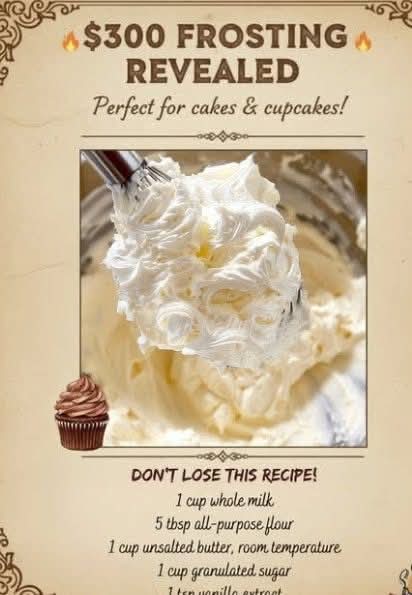
Old-Fashioned Ermine Frosting
Introduction
There are frosting recipes that are simply sweet, and then there are frostings that completely transform a cake. This old-fashioned ermine frosting is one of those special recipes. It is exceptionally light, smooth, silky, and creamy, with a delicate sweetness that makes it wonderfully different from traditional buttercream.
Sometimes called flour frosting, boiled-milk frosting, or ermine frosting, this classic recipe begins with a simple cooked mixture of milk and flour. Once cooled, that mixture is gradually beaten into butter, sugar, and vanilla until it becomes incredibly fluffy and almost cloud-like.
The result is a frosting that spreads beautifully, pipes well when properly chilled, and tastes especially wonderful on chocolate cake, red velvet cake, vanilla cake, spice cake, cupcakes, and layer cakes.
Ingredients
For the Cooked Milk Mixture
- 1 cup whole milk
- 5 tablespoons all-purpose flour
For the Frosting
- 1 cup unsalted butter, softened to room temperature
- 1 cup granulated sugar
- 1 teaspoon pure vanilla extract
- Pinch of salt, optional
For the Cake
This frosting is enough for a generously frosted 8- or 9-inch two-layer cake. If you are making a larger cake or want very thick layers of frosting, prepare one and a half times the recipe.
Instructions
Step 1: Prepare the Milk and Flour Mixture
Place the milk and flour in a medium saucepan while the pan is still cool. Whisk thoroughly until the flour is completely incorporated and there are no visible lumps.
Place the saucepan over medium heat.
Continue whisking constantly as the mixture heats. The flour will gradually thicken the milk. This process usually takes several minutes.
Do not walk away from the saucepan because the mixture can scorch or develop lumps if it is not stirred.
When the mixture becomes very thick and resembles a smooth pudding or paste, remove it from the heat.
Step 2: Cool Completely
Transfer the cooked mixture to a clean bowl.
Press a piece of plastic wrap directly against the surface to prevent a skin from forming.
Allow the mixture to cool completely to room temperature.
This step is extremely important. The cooked flour-and-milk mixture must be completely cool before it is combined with the butter mixture.
If it is warm, it can soften or melt the butter and prevent the frosting from becoming light and fluffy.
Step 3: Whip the Butter
Place the softened butter into a large mixing bowl.
Beat the butter with an electric mixer on medium-high speed until it becomes pale, smooth, and fluffy.
This may take approximately 3 to 5 minutes.
Scrape down the sides of the bowl occasionally so everything mixes evenly.
Step 4: Add the Sugar
Gradually add the granulated sugar to the whipped butter.
Continue beating until the sugar is incorporated and the mixture becomes noticeably lighter and fluffier.
Add the vanilla extract and the optional pinch of salt.
Beat again until well combined.
Step 5: Add the Cooled Milk Mixture
Make sure the cooked milk mixture is completely cool.
Add it to the butter mixture a little at a time while continuing to beat.
Once everything has been added, increase the mixer speed and beat for approximately 5 minutes.
The frosting should become remarkably light, silky, and fluffy.
Do not judge the frosting too quickly. It may look slightly unusual when the ingredients first come together, but continued beating helps create the smooth, airy texture that makes ermine frosting so special.
The Method Behind the Frosting
The secret is the combination of two different preparations.
The first is the cooked milk-and-flour mixture. Heating the flour with milk gelatinizes the starch in the flour, creating a thick base without requiring powdered sugar.
The second is the whipped butter and sugar mixture.
When the two components are combined and beaten thoroughly, the result is a frosting with a surprisingly light texture.
Unlike many traditional American buttercreams, this frosting does not depend on a large quantity of powdered sugar for its structure. Instead, the cooked flour mixture gives the frosting body while the whipped butter provides richness and the air incorporated during mixing creates its characteristic softness.
Formation and Texture
The finished frosting should be:
- Smooth and silky
- Light and fluffy
- Creamy rather than heavy
- Mildly sweet
- Easy to spread
- Rich without being overwhelmingly sugary
The consistency should be thick enough to hold its shape but soft enough to spread easily across a cake.
For the smoothest result, make sure the butter and cooked milk mixture are at approximately the same room temperature before combining them.
Important Tips for Perfect Frosting
Use Room-Temperature Butter
Butter that is too cold will not whip properly. Butter that is melted will also create problems.
The ideal butter should be soft enough to press with a finger while still holding its shape.
Cool the Flour Mixture Completely
This is one of the most important steps.
A warm flour-and-milk mixture can melt the butter and make the frosting loose.
Whisk Constantly
When cooking the milk and flour, keep whisking to prevent lumps and scorching.
If small lumps do appear, you can pass the mixture through a fine-mesh sieve while it is still warm.
Beat Long Enough
The famous silky texture comes from thorough mixing.
Once the cooked mixture has been incorporated, give the frosting several minutes of beating time. Scrape the bowl occasionally to make sure everything is evenly incorporated.
Do Not Rush the Process
Ermine frosting rewards patience. Allow the cooked mixture to cool naturally rather than trying to combine it while warm.
How to Use It
This frosting is especially delicious with:
Red Velvet Cake
Ermine frosting is historically associated with classic red velvet-style cakes and makes an excellent alternative to cream cheese frosting.
Chocolate Cake
The mild sweetness allows the chocolate flavor to remain prominent.
Vanilla Cake
A simple vanilla layer cake becomes wonderfully elegant when covered with this silky frosting.
Spice Cake
The creamy frosting pairs beautifully with cinnamon, nutmeg, cloves, and other warm spices.
Cupcakes
Pipe or spread it over cupcakes for a light and luxurious finish.
Sheet Cakes
Spread a generous layer over a cooled sheet cake and finish with a smooth spatula.
A Brief History
Ermine frosting is an old-fashioned American frosting that became particularly associated with cakes such as red velvet.
Its name is thought to come from its pale, soft appearance, which resembles the luxurious white fur of an ermine. Unlike modern buttercream recipes that commonly use powdered sugar, this traditional frosting uses a cooked flour-and-milk base.
Recipes of this style became popular because the ingredients were relatively simple and accessible. Home bakers could create a rich, creamy frosting without relying on large quantities of confectioners’ sugar.
Over time, the recipe developed many variations, but the fundamental method remained the same: cook the flour with milk, cool it completely, whip butter and sugar, then combine everything until light and fluffy.
Troubleshooting
If the Frosting Is Too Soft
Place it in the refrigerator for about 15 to 20 minutes, then beat it again.
The butter may simply be too warm.
If the Frosting Looks Curds or Lumpy
Keep beating.
If the ingredients were at different temperatures when combined, the frosting may temporarily look separated. Continued beating often brings it together.
If the Frosting Is Too Thick
Allow it to sit at room temperature briefly and beat again.
Avoid adding large amounts of liquid because that can change the texture.
If the Frosting Is Too Sweet
This recipe is already considerably less sugary than many American buttercreams. For an even more delicate flavor, make sure you are using unsalted butter and good-quality vanilla.
Storage
The finished frosting can be refrigerated in an airtight container for several days.
Before using refrigerated frosting, allow it to soften at room temperature and then beat it again until smooth and fluffy.
A frosted cake can also be refrigerated, but allow it some time at room temperature before serving so the butter-based frosting can soften and return to its smooth texture.
Why Bakers Love This Recipe
People who love this frosting usually appreciate it for one simple reason: it does not taste overwhelmingly like sugar.
Instead, you get the richness of butter, the gentle sweetness of sugar, the creaminess of milk, and the warm aroma of vanilla.
It is the kind of frosting that makes a homemade cake taste surprisingly elegant.
Serving and Finishing Ideas
For a classic presentation, frost the cake generously and smooth the sides with an offset spatula.
For a more rustic appearance, leave gentle swirls across the top.
You can also finish the cake with:
- Chocolate shavings
- Fresh berries
- Toasted coconut
- Chopped nuts
- A light dusting of cocoa powder
- Fresh fruit
- Thin chocolate curls
Keep the decorations simple so the silky frosting remains the star.
Conclusion
This old-fashioned ermine frosting is a wonderful example of how a few humble ingredients can create something extraordinary.
Milk, flour, butter, sugar, and vanilla may not sound particularly luxurious on their own, but the technique transforms them into a frosting that is light, creamy, smooth, and beautifully balanced.
The most important secrets are patience, proper temperature, constant whisking, and plenty of beating time.
Once you make it successfully, you may understand why recipes like this have been treasured and passed from one generation of home bakers to another. It is the sort of frosting that turns an ordinary homemade cake into something guests remember long after the last slice has disappeared.
And when someone asks, “You really made this yourself?” you can simply smile and say yes.