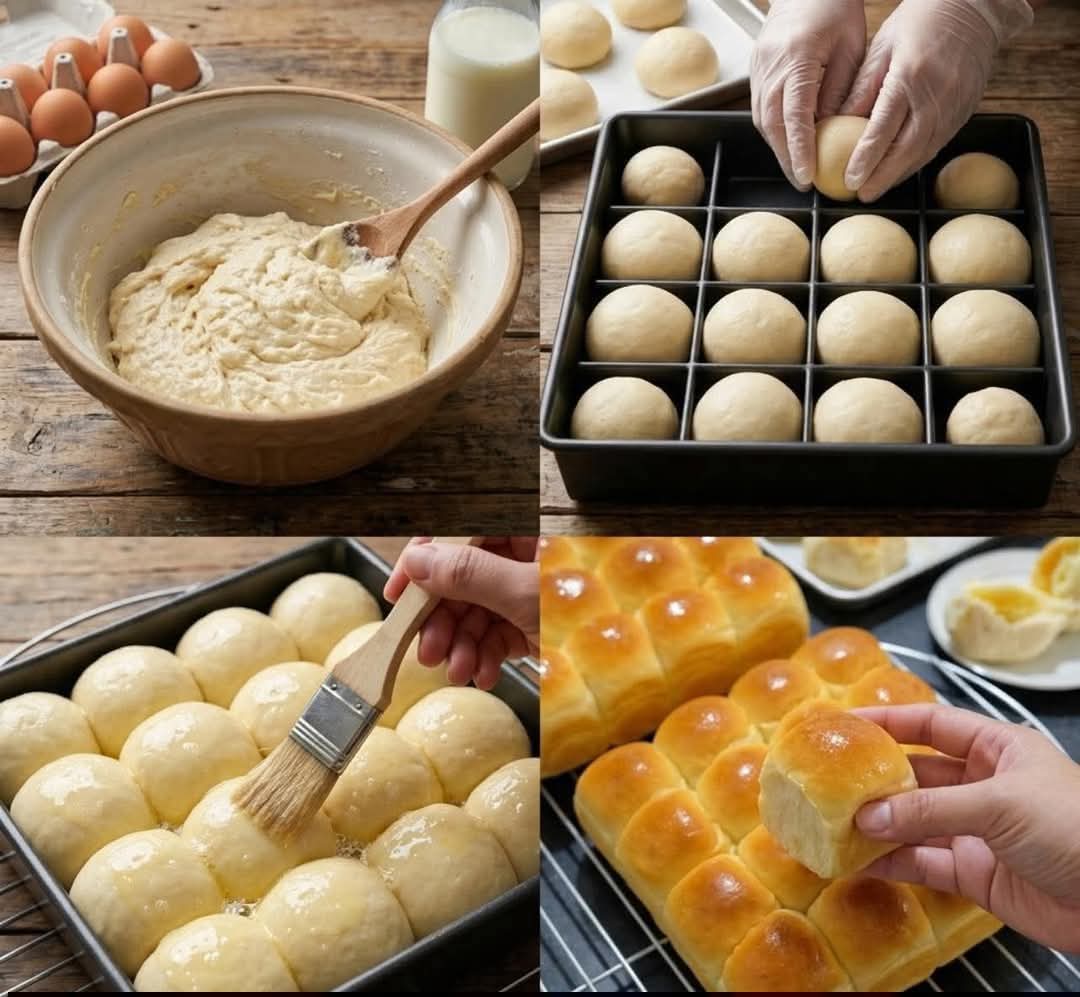
Buttermilk Bread Rolls 🍞✨
Soft, fluffy, buttery, and lightly tangy, Buttermilk Bread Rolls are one of the most comforting homemade breads you can make. These rolls come out golden on the outside and pillow-soft on the inside, making them perfect for breakfast, dinner, holidays, sandwiches, or simply enjoying warm with butter melting into every bite.
The secret ingredient is buttermilk, which gives the rolls a rich flavor, tender texture, and beautiful softness that stays fresh longer than ordinary bread rolls. Whether you are baking for family dinners, special gatherings, or cozy weekends at home, these homemade rolls bring warmth and happiness to every table.
Introduction 📖
Bread rolls have been loved around the world for centuries. From European dinner rolls to Southern-style biscuits and soft milk buns, nearly every culture has its own version of comforting homemade bread. Buttermilk rolls became especially popular because buttermilk was commonly available in farmhouse kitchens after butter was churned from cream.
Adding buttermilk to dough creates rolls that are softer, richer, and slightly tangy. The acidity in buttermilk helps tenderize the gluten, resulting in bread that feels light and fluffy instead of dense.
Today, Buttermilk Bread Rolls are loved for:
- Holiday dinners
- Family meals
- Sandwich buns
- Soup and stew sides
- Breakfast bread
- Party baskets
- Comfort food recipes
These rolls are simple enough for beginners yet delicious enough to impress experienced bakers.
Ingredients 🥣
For the Dough
- 3 cups all-purpose flour
- 2 tablespoons sugar
- 1 teaspoon yeast
- 1/2 teaspoon salt
- 1 cup warm buttermilk
- 2 tablespoons butter, softened
- 1 egg (optional for richer dough)
Optional Toppings
- Melted butter
- Sesame seeds
- Poppy seeds
- Garlic butter
- Honey glaze
Equipment Needed 🍴
- Large mixing bowl
- Measuring cups and spoons
- Baking tray
- Dough scraper (optional)
- Pastry brush
- Kitchen towel or plastic wrap
Step-by-Step Instructions 👩🍳
Step 1: Activate the Yeast
In a bowl, combine:
- Warm buttermilk
- Sugar
- Yeast
Stir gently and let sit for 5–10 minutes until the mixture becomes foamy. This shows the yeast is alive and active.
Important Tip:
The buttermilk should be warm, not hot. Too much heat can kill the yeast.
Step 2: Make the Dough
Add:
- Flour
- Salt
- Butter
- Egg (if using)
Mix until a soft dough forms. The dough should feel slightly sticky but manageable.
Step 3: Knead the Dough
Transfer dough onto a lightly floured surface.
Knead for 8–10 minutes until:
- Smooth
- Elastic
- Soft
Hand Kneading Method
Push dough away with your palm, fold it back, rotate, and repeat.
Mixer Method
Use a dough hook on medium speed for about 6 minutes.
Step 4: First Rise
Place dough into a greased bowl.
Cover with:
- Kitchen towel or
- Plastic wrap
Let rise for 1 hour or until doubled in size.
Best Rising Conditions
- Warm kitchen
- Draft-free area
- Around 24–27°C (75–80°F)
Step 5: Shape the Rolls
Punch down the dough gently to release air.
Divide into equal portions and shape into smooth balls.
Formation Techniques
Classic Round Rolls
Roll dough into tight smooth balls.
Pull-Apart Rolls
Place dough balls close together in a baking pan.
Knot Rolls
Roll dough into ropes and tie into knots.
Slider Buns
Flatten slightly for mini sandwich buns.
Step 6: Second Rise
Place shaped rolls on a baking tray.
Cover lightly and let rise again for 20–30 minutes until puffy.
This second rise gives the rolls their soft airy texture.
Step 7: Egg Wash
Brush tops with beaten egg for:
- Golden shine
- Rich crust
- Bakery-style appearance
Optional: sprinkle seeds on top.
Step 8: Bake
Bake at:
- 180°C (350°F)
Bake for:
- 18–22 minutes
Until:
- Golden brown
- Soft
- Fragrant
Step 9: Finish with Butter
Brush warm rolls with melted butter immediately after baking.
This keeps the crust soft and flavorful.
Methods of Preparation 🍞
Traditional Hand Method
The classic homemade method using hand kneading for the best texture and connection with the dough.
Stand Mixer Method
Faster and easier for busy bakers.
Overnight Refrigerator Method
After first rise, refrigerate dough overnight for deeper flavor.
Sweet Roll Variation
Add:
- Cinnamon
- Honey
- Raisins
For lightly sweet breakfast rolls.
Savory Herb Method
Mix in:
- Garlic powder
- Rosemary
- Cheese
- Herbs
Perfect for dinner sides.
The Science Behind Buttermilk Rolls 🔬
Buttermilk helps:
- Tenderize gluten
- Improve softness
- Add moisture
- Create richer flavor
- Keep rolls fresh longer
The yeast produces gas bubbles that expand during rising and baking, creating fluffy bread.
Butter adds:
- Richness
- Tender crumb
- Better flavor
Egg enriches the dough and improves structure.
History of Bread Rolls 📜
Bread rolls date back thousands of years to ancient civilizations where small individual breads were baked in clay ovens.
Buttermilk breads became especially popular in:
- Rural Europe
- Southern United States
- Farmhouse kitchens
Before refrigeration, buttermilk was a practical ingredient that bakers used daily. Over time, these soft rolls became staples at:
- Holiday feasts
- Church gatherings
- Family dinners
- Sunday meals
Today they remain one of the world’s favorite comfort breads.
Serving Ideas 🍽️
These rolls pair beautifully with:
- Soups
- Stews
- Roast chicken
- BBQ
- Holiday turkey
- Breakfast eggs
- Jam and butter
They can also be used for:
- Mini sandwiches
- Sliders
- Garlic bread
- Burger buns
Why People Love Buttermilk Bread Rolls ❤️
Bread lovers adore these rolls because they are:
- Soft and fluffy
- Rich but light
- Easy to make
- Perfectly golden
- Comforting and homemade
- Great for every occasion
The smell alone makes kitchens feel warm and welcoming.
Common Mistakes to Avoid ⚠️
Using Hot Liquid
Hot buttermilk kills yeast.
Too Much Flour
Adding excess flour can make rolls dry and dense.
Skipping the Second Rise
This reduces softness and volume.
Underbaking
Rolls should be fully golden for best texture.
Storage Tips 🥡
Room Temperature
Store in airtight container for 2–3 days.
Refrigerator
Keeps fresh for up to 1 week.
Freezer
Freeze for up to 2 months.
Reheat gently before serving.
Conclusion 🌟
Buttermilk Bread Rolls are the perfect combination of simplicity, comfort, and homemade goodness. Their fluffy texture, rich flavor, and beautiful golden tops make them irresistible fresh from the oven.
Whether served beside a hearty dinner, filled with sandwich ingredients, or enjoyed with butter and jam, these rolls bring warmth and joy to every meal. Once you make homemade buttermilk rolls, bakery rolls may never taste the same again.
Fresh bread, warm butter, and soft fluffy rolls — few things in life are more comforting. 🍞💛