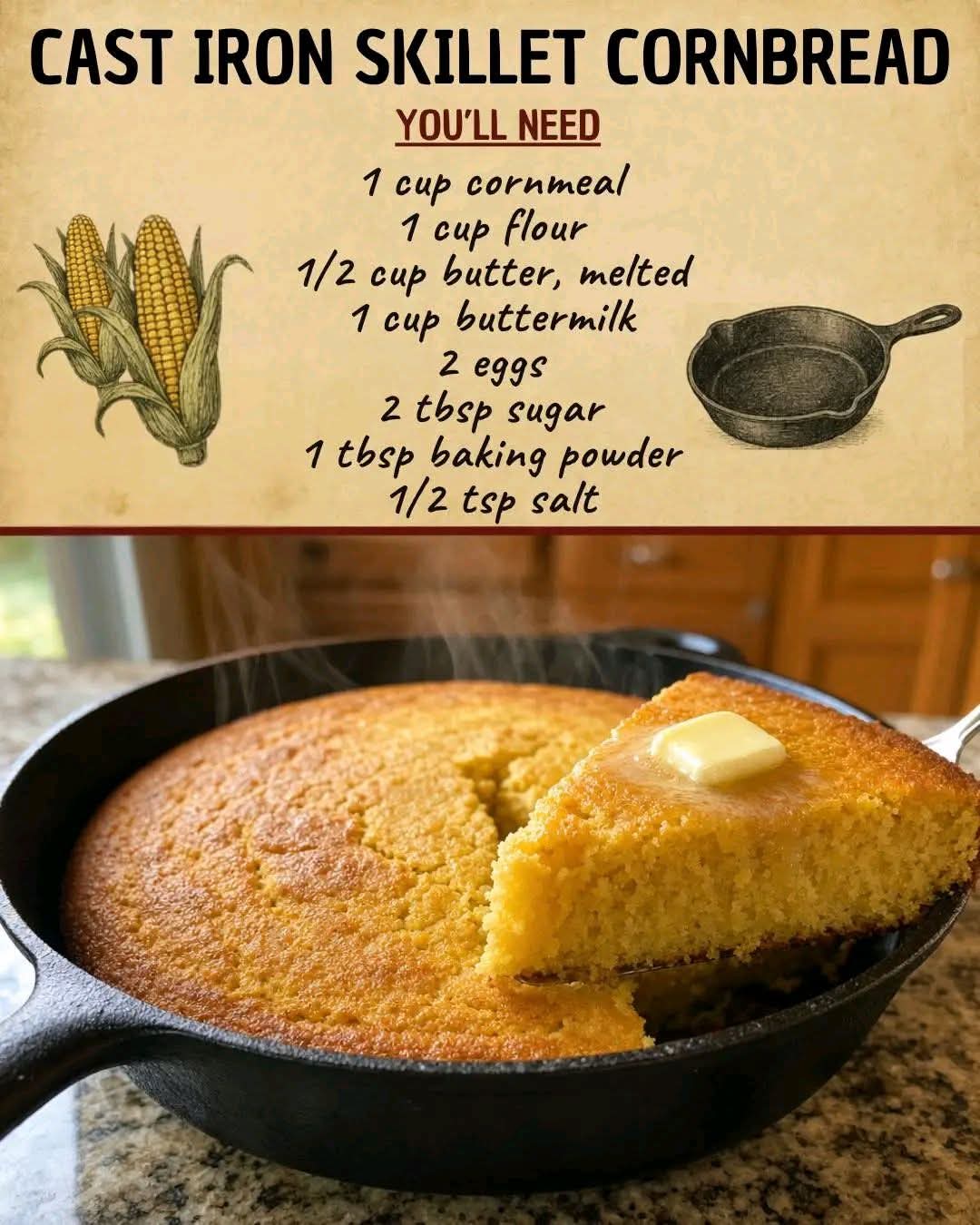
Here’s a full diner-style cast iron cornbread recipe with that crispy, golden bottom everyone talks about.
🌽 Classic Diner Cast Iron Cornbread (Crispy Bottom Method)
🟡 Introduction
Diner cornbread has a very specific personality: slightly crunchy edges, a deep golden crust on the bottom, and a tender, moist crumb inside. The difference isn’t fancy ingredients—it’s heat, fat, and timing. The secret is a blazing hot cast iron skillet that “sears” the batter the moment it hits the pan, creating that signature crust you can’t get from a cold pan or baking dish.
This is simple food with diner-level results—rustic, fast, and deeply satisfying.
🧾 Ingredients
Dry ingredients
- 1 cup yellow cornmeal
- 1 cup all-purpose flour
- 2–3 tbsp sugar (optional, diner-style is lightly sweet)
- 1 tbsp baking powder
- 1/2 tsp baking soda
- 1 tsp salt
Wet ingredients
- 1 cup buttermilk
- 2 large eggs
- 1/3 cup melted butter (plus extra for skillet)
- 1/4 cup neutral oil (or bacon grease for authentic diner flavor)
🔥 Instructions
1. Preheat the skillet (the key step)
Place a cast iron skillet in the oven at 220°C (425°F) while you prepare the batter. Let it heat for at least 10–15 minutes until it is smoking hot.
2. Make the batter
In one bowl, mix all dry ingredients.
In another bowl, whisk buttermilk, eggs, melted butter, and oil.
Combine wet and dry ingredients just until mixed. Do not overmix—lumps are fine.
3. Prepare the hot skillet
Carefully remove the hot skillet from the oven. Add 1–2 tablespoons butter or oil. It should sizzle immediately.
Swirl it around to coat the bottom and sides.
4. Pour and bake
Immediately pour the batter into the hot skillet. You should hear a gentle sizzle—that’s the crust forming.
Bake for 20–25 minutes, until:
- Top is golden brown
- Edges pull away from the pan
- Toothpick comes out clean
5. Rest before serving
Let it cool for 5–10 minutes before slicing. This helps the crust set.
🧑🍳 Methods (Why This Works)
- Preheated cast iron creates instant caramelization on the bottom.
- Fat + heat contact forms a fried-like crust instead of a soft baked base.
- Buttermilk acidity reacts with baking soda for a lighter crumb.
- Minimal mixing prevents gluten from making it dense.
- High heat start locks structure quickly, then gentle baking finishes the inside.
📜 History & Formation
Cornbread has deep roots in Native American cooking, where ground corn was a staple long before wheat flour became common. Early versions were simple mixtures of ground corn and water cooked on hot stones.
Over time, Southern U.S. cuisine evolved cornbread into a skillet-baked staple, especially in rural kitchens where cast iron was essential. The “diner style” version comes from mid-20th century American diners—quick batters, hot skillets, and consistent results for high-volume cooking.
The crispy bottom tradition likely came from necessity: hot pans reused throughout the day created naturally caramelized crusts that became a signature texture people loved.
💛 Conclusion
This isn’t just cornbread—it’s texture engineering. The contrast between a crunchy, almost fried bottom and a soft, buttery interior is what makes it unforgettable. Once you try it in a preheated cast iron skillet, regular pan cornbread starts to feel flat.
It’s fast comfort food, built on one simple idea: heat the pan first, not the batter.
🍽️ For the Lovers of Cornbread
For those who love:
- Crispy edges over soft cake-like texture
- Southern diner-style comfort food
- Butter melting into warm slices
- That first crunchy bite straight from the skillet
This version hits exactly where it matters.
And for those who prefer softer cornbread, this will still win you over—because the inside stays tender while the crust does all the talking.
If you want, I can also , , or even a .