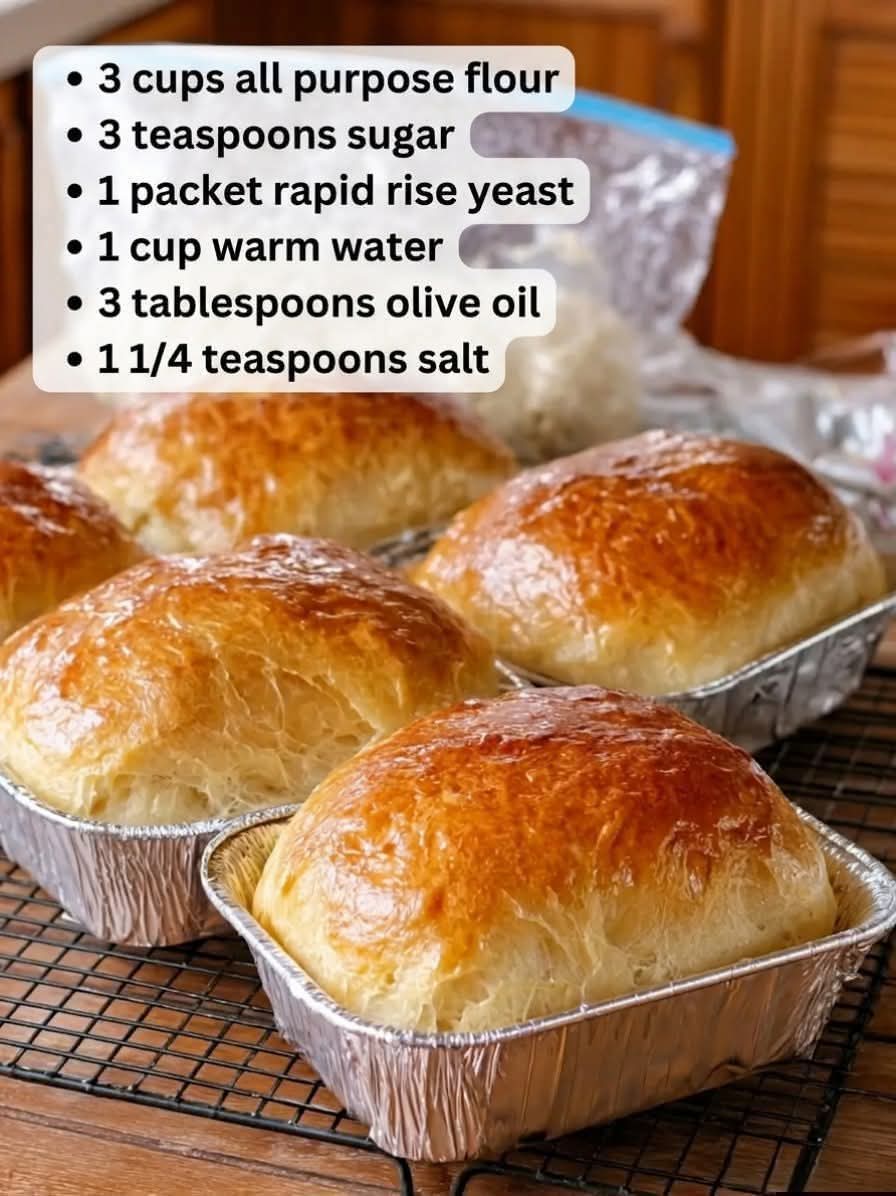
🥖 Bread in a Bag (No-Mess Homemade Bread)
Homemade bread doesn’t have to mean flour-covered counters, sticky hands everywhere, or a full kitchen cleanup afterward. Bread in a Bag is a simple, fun, and surprisingly effective method where you mix, knead, and prep your dough all inside a single bag. It’s especially great for beginners, kids, or anyone who just wants fresh bread without the mess.
This method has become popular in home kitchens and classrooms because it removes intimidation from bread baking and makes the process more hands-on and playful.
🧂 Ingredients
- 3 cups all-purpose flour (plus a little extra for dusting)
- 2 tbsp sugar
- 1 packet (2 1/4 tsp) active dry yeast
- 1 tsp salt
- 1 cup warm water (about 110°F / 43°C)
- 2 tbsp vegetable oil or melted butter
Optional:
- 1 tbsp milk powder (for softer bread)
- 1 egg (for richer dough)
👩🍳 Instructions (Step-by-Step)
1. Activate the yeast
In a small bowl or directly in your bag, combine warm water, sugar, and yeast. Let it sit for 5–10 minutes until it becomes foamy.
2. Start the bag mix
Use a large, sturdy zip-top bag. Add flour and salt inside, then pour in the yeast mixture and oil.
3. Seal and mix
Seal the bag tightly, removing excess air. Squish and knead the bag with your hands for 5–8 minutes until a soft dough forms.
👉 Tip: If dough is too sticky, add a tablespoon of flour at a time inside the bag.
4. First rise
Leave the dough in the bag (loosely opened) or transfer to a lightly oiled bowl. Let it rise for 45–60 minutes, until doubled in size.
5. Shape the dough
Remove dough from the bag, place on a floured surface, and gently shape into a loaf or rolls.
6. Second rise
Place shaped dough in a greased loaf pan or tray. Cover and let rise again for 20–30 minutes.
7. Bake
Bake at 375°F (190°C) for 25–30 minutes, or until golden brown and hollow-sounding when tapped.
8. Cool and enjoy
Let it cool slightly before slicing for best texture.
🔧 Methods & Technique
The “bag method” works because it:
- Keeps moisture and warmth trapped for better yeast activity
- Reduces flour mess and cleanup
- Encourages gentle kneading without overworking dough
- Makes gluten development easier for beginners
This is basically a simplified version of traditional hand-kneading, but contained in a sealed environment.
📜 History & Formation
While not a centuries-old tradition, Bread in a Bag emerged from modern educational cooking methods in schools during the late 20th century. Teachers used it to demonstrate bread-making without needing large prep areas or messy surfaces.
It evolved from basic yeast bread recipes into a hands-on teaching tool that quickly became popular in home kitchens and parenting blogs. The concept reflects a broader trend in cooking: simplifying traditional techniques for accessibility.
🍞 Formation of the Dough
Inside the bag, something magical happens:
- Yeast consumes sugar → produces carbon dioxide
- Gas bubbles get trapped in gluten network
- Dough expands and becomes airy
- Kneading aligns gluten strands for structure
This is what gives bread its soft inside and golden crust outside.
💛 Conclusion
Bread in a Bag is proof that baking doesn’t have to be complicated. With just a few ingredients and a single bag, you get warm, fresh bread with minimal cleanup and maximum satisfaction.
It’s perfect for:
- Beginners learning baking
- Kids’ cooking activities
- Quick homemade bread cravings
- Stress-free kitchen days
😋 Lovers of This Bread
People who tend to love this style of bread include:
- Busy home cooks who want simplicity
- Parents baking with children
- Beginners learning yeast dough
- Anyone who enjoys soft, homemade sandwich bread
- Fans of rustic, no-fuss baking methods
🔄 Extra Tips (for better results)
- Don’t over-knead in the bag (8 minutes is enough)
- Keep water warm, not hot, or yeast will die
- Let it rise in a warm, draft-free place
- Brush top with butter after baking for softness
- Add herbs or garlic powder for savory versions
If you want, I can also turn this into a , , or .