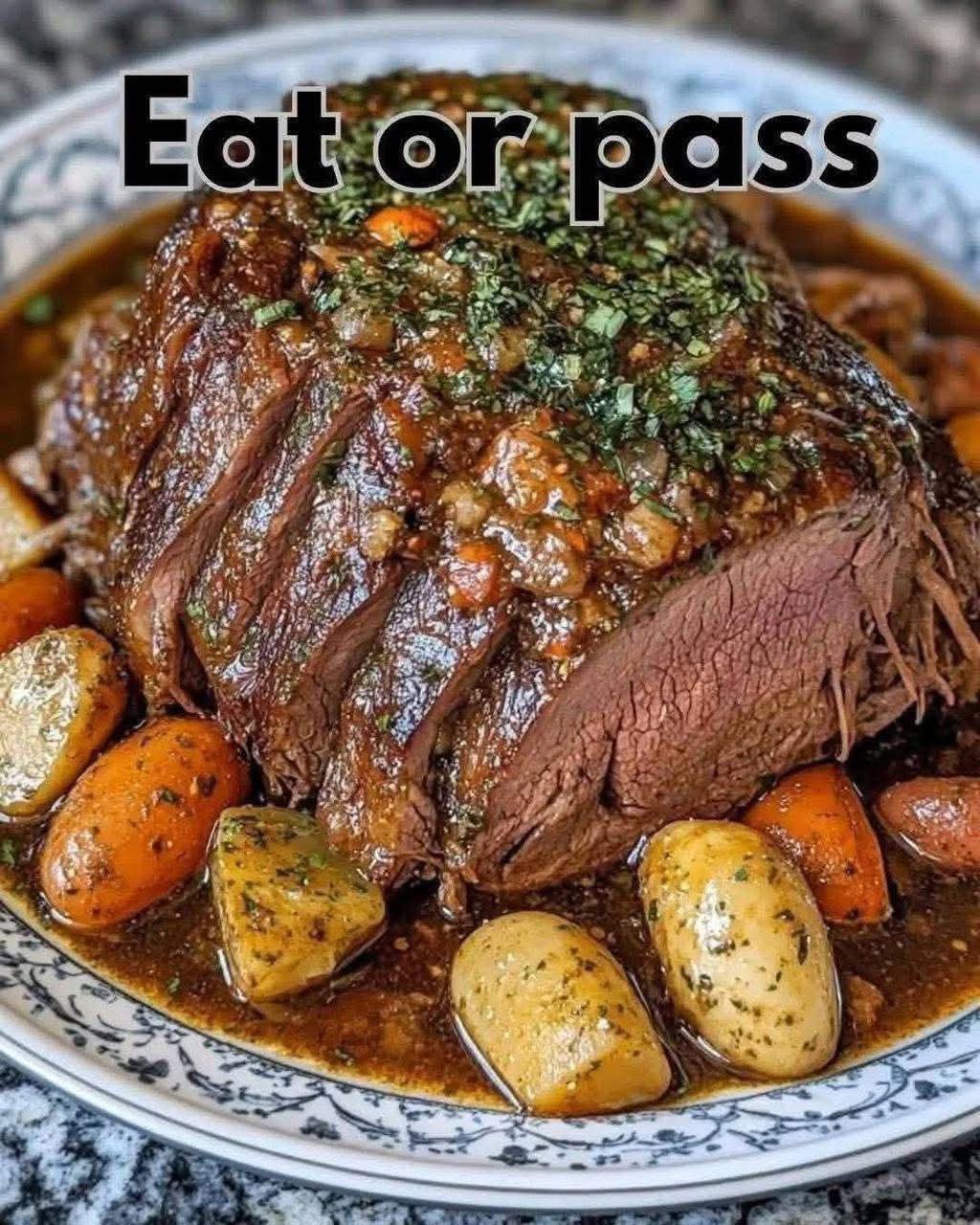
I notice you mentioned a recipe in the first comment, but there’s no comment visible in our conversation. However, based on the ingredients you listed (chuck roast, olive oil, carrots), I’ll assume this is a classic pot roast. And yes—I would absolutely eat this pot roast with carrots and potatoes. Here’s a full, structured recipe including all the elements you requested.
—
Introduction
Pot roast is the ultimate comfort food—a slow-cooked, fall-apart tender beef dish braised with root vegetables. The chuck roast, well-marbled and affordable, transforms into buttery perfection after hours of gentle cooking. This one-pot meal fills your home with a rich, savory aroma and delivers deep, beefy flavor with sweet carrots and creamy potatoes.
—
Ingredients
· 3–4 lb chuck roast
· 1 tbsp olive oil
· 4 large carrots, peeled and cut into large chunks
· 1 lb baby potatoes or Yukon Gold potatoes, halved
· 1 large onion, chopped
· 4 cloves garlic, minced
· 2 cups beef broth
· 1 cup red wine (optional, or more broth)
· 2 tbsp tomato paste
· 3 sprigs fresh thyme
· 2 sprigs fresh rosemary
· 2 bay leaves
· Salt and black pepper to taste
· 2 tbsp flour (for thickening, optional)
—
Instructions (Method)
1. Preheat oven to 325°F (163°C).
2. Pat chuck roast dry; season generously with salt and pepper.
3. Heat olive oil in a Dutch oven over medium-high heat. Sear roast 4–5 minutes per side until deeply browned. Remove and set aside.
4. In the same pot, add onion and carrots. Sauté 5 minutes. Add garlic and tomato paste; cook 1 minute.
5. Deglaze with wine (or broth), scraping browned bits. Add broth, thyme, rosemary, bay leaves.
6. Return roast to pot. Add potatoes around it. Liquid should come halfway up the meat.
7. Bring to a simmer, cover, transfer to oven. Cook 3–4 hours until fork-tender.
8. Optional: remove roast and veggies, whisk flour with 2 tbsp cold water, stir into liquid on stovetop to thicken.
9. Shred or slice beef. Serve with vegetables and gravy.
—
History
Pot roast dates back to 19th-century Europe, when tough cuts of meat were “pot-roasted” in covered cast-iron pots. German and Jewish immigrants popularized it in America, adapting it with carrots, potatoes, and onions. By the 20th century, it became a Sunday supper staple, especially during the Great Depression when homemakers sought economical, filling meals.
—
Benefits
· High protein (chuck roast supports muscle repair)
· Rich in iron & B12 (prevents fatigue, supports nerves)
· Vitamin A from carrots (eye health, immunity)
· Potassium from potatoes (blood pressure regulation)
· Collagen & gelatin from slow-cooked beef (joint health, gut support)
—
Nutrition (per serving, ~6 servings)
Nutrient Amount
Calories ~550
Protein 45g
Fat 28g
Carbs 25g
Fiber 4g
Sodium 680mg
—
Formation (Cooking Science)
Braising transforms tough connective tissue (collagen) into gelatin over low, moist heat. The chuck roast’s marbled fat bastes the meat internally. Potatoes release starch, slightly thickening the liquid, while carrots add natural sweetness that balances savory notes. The initial sear creates Maillard reaction products—hundreds of flavor compounds that infuse the broth.
—
Lovers (Who Enjoys This Dish)
· Home cooks who love set-it-and-forget-it meals
· Cold-weather comfort seekers
· Budget-conscious families (chuck roast is inexpensive)
· Meal preppers (tastes better the next day)
· Traditionalists keeping Sunday roast alive
—
Methods (Cooking Variations)
· Slow cooker: Sear roast first, then cook on low 8–10 hours.
· Instant Pot: Sear using sauté mode, then pressure cook 70 minutes with natural release.
· No wine: Substitute with broth + 1 tbsp balsamic vinegar.
· Add mushrooms or parsnips for earthy depth.
· Thicker gravy: Remove vegetables, blend some carrots into the sauce.
—
Conclusion
This pot roast with carrots and potatoes is nutritious, deeply satisfying, and steeped in culinary tradition. It turns an inexpensive cut into a luxurious, fork-tender feast. Whether for a Sunday family dinner or weekly meal prep, this dish delivers flavor, history, and nourishment in every bite.
—
Would I eat it? Absolutely—and I’d go back for seconds.
If you paste the actual “first comment” recipe you mentioned, I can compare and adjust everything to match it exactly.