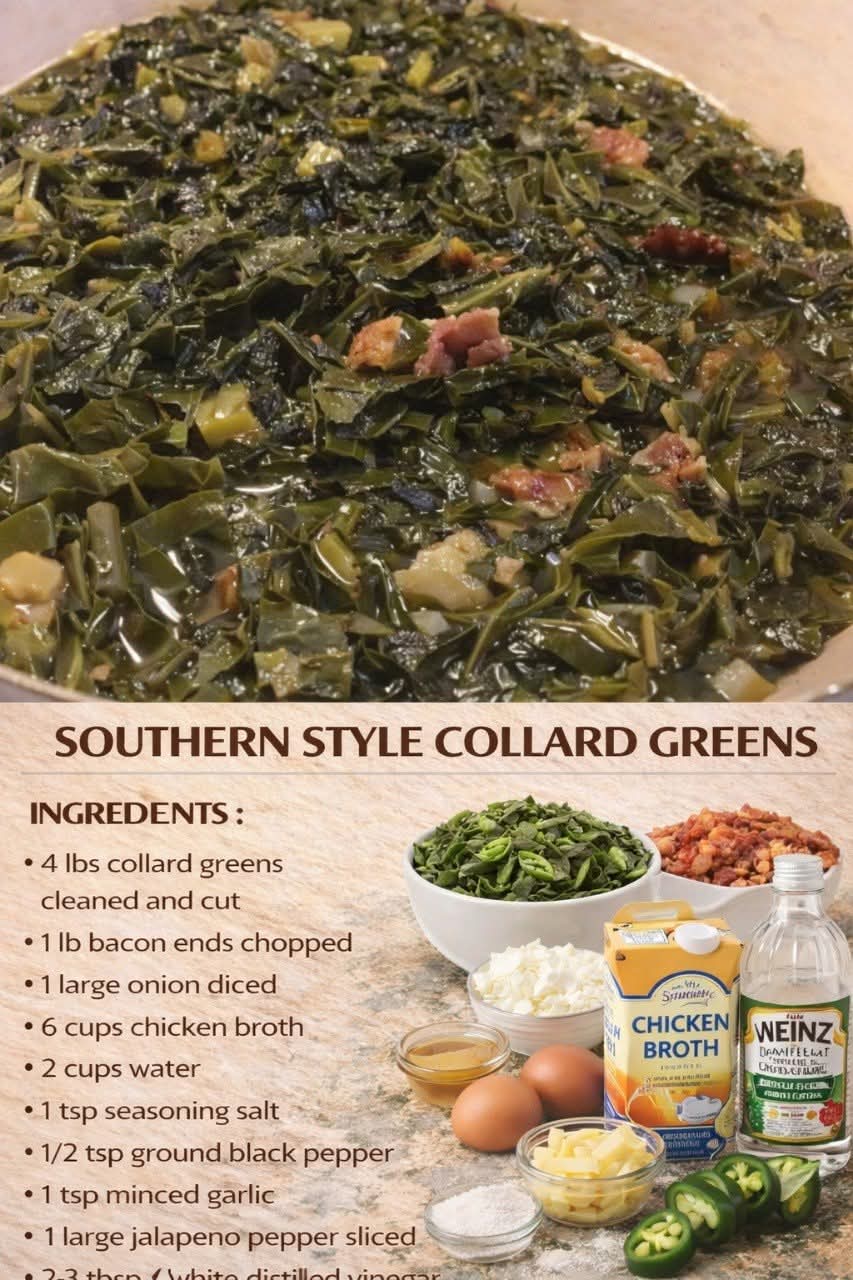
Here is the full Southern Style Collard Greens recipe you asked for—complete with history, nutrition, methods, and everything you need to cook it like a true Southern kitchen.
—
Introduction
Collard greens are a cornerstone of Southern cuisine, with roots tracing back to West Africa, enslaved people in the American South, and the resourcefulness of cooking “every part of the pig and the plant.” Slow-simmered with smoked or cured meat, they become tender, savory, and deeply comforting. This recipe honors that tradition—hearty, flavorful, and meant to be shared with cornbread and pot likker.
—
Ingredients
· 4 lbs collard greens (cleaned, stems removed, leaves chopped)
· 1 lb bacon ends (or smoked turkey legs / ham hocks)
· 1 large onion (diced)
· 6 cups chicken broth
· 2 cups water
· 3 cloves garlic (minced)
· 1 tbsp sugar (optional, to reduce bitterness)
· 1 tsp red pepper flakes (optional, for heat)
· Salt & black pepper to taste
· 2 tbsp apple cider vinegar (for finishing)
—
Instructions / Method
1. Prepare the greens – Fill a sink with cold water. Soak collard leaves, swishing to remove grit. Rinse, strip stems from leaves, roll leaves, and chop into 1–2 inch pieces.
2. Cook the meat – In a large heavy pot (Dutch oven), cook bacon ends over medium heat until browned and rendered. Remove and set aside, leaving drippings.
3. Sauté aromatics – Add diced onion to pot. Cook 5 minutes until soft. Add garlic and red pepper flakes; cook 1 minute.
4. Add liquids & meat – Pour in chicken broth and water. Return bacon to pot. Bring to a boil.
5. Add collards – Add greens in batches, stirring as they wilt. Once all greens are in, add sugar (if using), salt, and pepper.
6. Simmer low & slow – Reduce heat to low, cover, and simmer for 1.5 to 2 hours, stirring occasionally. The greens should be tender and deeply flavored.
7. Finish – Stir in apple cider vinegar. Taste and adjust seasoning.
8. Serve – With a slotted spoon, serve alongside cornbread, rice, or fried chicken. Don’t forget to spoon pot likker (broth) over top.
—
History
Collard greens are native to the eastern Mediterranean but were brought to Africa and later to America through the transatlantic slave trade. Enslaved people cultivated them in gardens and cooked them with leftover pork scraps, creating the low-and-slow method that defines Southern cooking. Over generations, collards became a symbol of resilience, family gatherings, and New Year’s luck (paired with black-eyed peas).
—
Nutrition (per 1 cup serving, approx.)
· Calories: ~120
· Protein: 8g
· Fiber: 5g
· Vitamin K: >400% DV
· Vitamin A: 80% DV
· Vitamin C: 35% DV
· Calcium: 15% DV
Note: Lower sodium by using low-sodium broth and less bacon.
—
Benefits
· High in fiber – Supports digestion and fullness.
· Rich in antioxidants – Vitamin C and beta-carotene fight inflammation.
· Bone health – Massive amount of vitamin K aids calcium absorption.
· Iron source – Especially when paired with vitamin C from vinegar or hot sauce.
· Heart health – Can be heart-friendly if made with smoked turkey instead of bacon.
—
Lovers
This dish is beloved by:
· Southern home cooks passing down family recipes.
· Soul food enthusiasts who crave deep, smoky flavor.
· Health-conscious eaters loving leafy greens (when modified).
· Anyone who grew up eating “pot likker” with cornbread.
—
Formation (How to think like a pro)
· Balance bitterness – A pinch of sugar or longer cooking mellows collards.
· Don’t skip the vinegar – It brightens the richness.
· Low and slow is key – Rushing makes them tough and astringent.
· Batch cooking – Collards taste even better the next day.
—
Conclusion
Southern-style collard greens are more than a side dish—they’re history on a plate. This recipe gives you the authentic, slow-simmered flavor that turns skeptics into lovers. Serve them with pride, and always keep a spoon ready for that pot likker.
To keep getting my recipes, please like, comment, or share your favorite way to eat collards! THANK YOU and enjoy this beautiful meal 😋