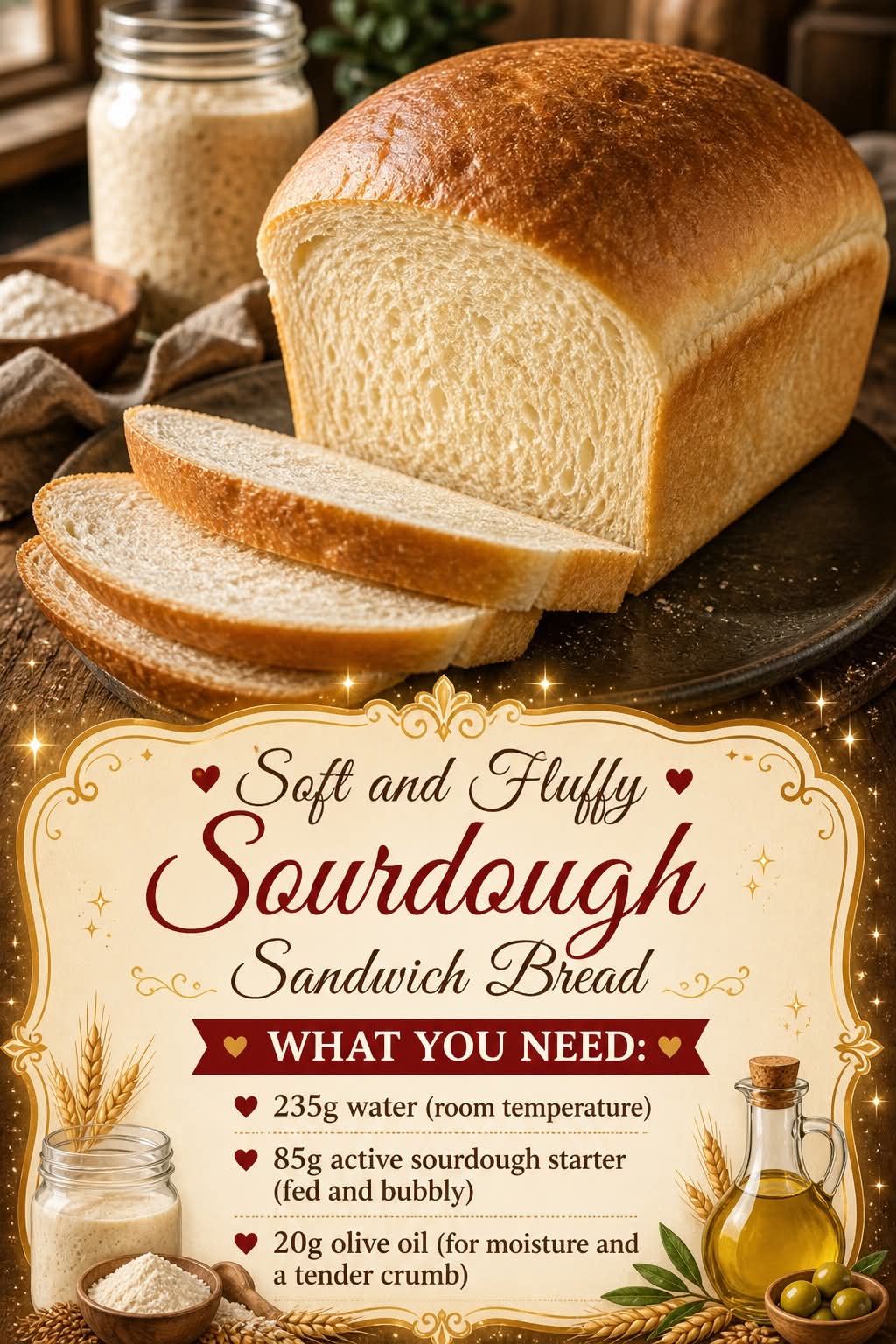
Soft and Fluffy Sourdough Sandwich Bread 🍞
Introduction
This soft and fluffy sourdough sandwich bread is the kind of everyday loaf that bridges comfort and craft. It keeps the gentle tang of natural fermentation while staying light enough for sandwiches, toast, and even French toast. Unlike rustic sourdough boules with thick crusts, this version is designed for softness, tenderness, and a fine crumb—perfect for daily use.
The beauty of this bread is balance: the wild yeast from your sourdough starter gives flavor and structure, while a touch of olive oil and careful hydration create that pillowy texture.
Ingredients
- 235g water (room temperature)
- 85g active sourdough starter (fed, bubbly, and at peak activity)
- 20g olive oil (for moisture and softness)
- 400g all-purpose flour (or bread flour for slightly stronger structure)
- 8–10g salt
- 15–20g honey or sugar (optional, for a softer crumb and mild sweetness)
Method & Instructions
1. Mixing the Dough
In a large bowl, combine:
- water
- sourdough starter
- olive oil
- honey/sugar (if using)
Stir until the starter dissolves.
Add flour and salt, then mix until a shaggy dough forms. Let it rest for 30–45 minutes (this is the autolyse stage where gluten begins to develop naturally).
2. Developing Strength
Over the next 2–3 hours, perform stretch and folds every 30–45 minutes:
- Grab one side of the dough
- Stretch it upward
- Fold it over itself
- Rotate and repeat
Do this 3–4 times until the dough becomes smoother and elastic.
3. First Rise (Bulk Fermentation)
Cover the bowl and let the dough rise at room temperature for 4–6 hours (depending on warmth and starter strength).
It should become:
- puffy
- slightly jiggly
- increased by about 50–70% in volume
4. Shaping the Loaf
Turn the dough onto a lightly floured surface. Gently flatten it into a rectangle, then roll it tightly into a log shape.
Place it into a greased loaf pan with the seam side down.
5. Final Proof
Cover and let it rise again for 2–4 hours, or refrigerate overnight for deeper flavor and easier scoring.
The dough should rise just above the rim of the pan before baking.
6. Baking
Preheat oven to 190–200°C (375–390°F).
Bake for:
- 35–40 minutes total
- Optional: cover loosely with foil halfway through to prevent over-browning
The bread is done when:
- golden brown on top
- sounds hollow when tapped
- internal temperature reaches ~93°C (200°F)
7. Cooling
Remove from the pan and cool completely on a rack for at least 1 hour before slicing. This step is essential for a soft, non-gummy crumb.
Methods Explained
- Autolyse improves gluten development without kneading overload
- Stretch & fold builds structure gently while keeping the dough airy
- Bulk fermentation is where flavor develops through natural yeast activity
- Shaping tension ensures the loaf rises upward instead of spreading
- Final proof control determines softness vs. density
A Brief History
Sourdough bread is one of the oldest forms of leavened bread, dating back thousands of years. Before commercial yeast existed, bakers relied entirely on wild fermentation captured from the environment. This natural process not only helped dough rise but also developed complex flavors and improved preservation.
Sandwich-style sourdough is a modern evolution—blending ancient fermentation with the soft texture demanded by contemporary daily eating habits.
Formation of Texture
The soft crumb in this bread comes from three key factors:
- Hydration balance (not too wet, not too dry)
- Enriched dough (oil + optional sweetener)
- Gentle handling (preserving gas bubbles instead of deflating them)
The result is a loaf that slices cleanly, bends without breaking, and toasts beautifully.
Serving & “Lovers” of This Bread ❤️
This bread has its own following among:
- sandwich lovers who want homemade quality
- toast enthusiasts who enjoy crisp edges and soft centers
- families who prefer preservative-free bread
- sourdough bakers who want a practical everyday loaf
It pairs beautifully with butter, jam, eggs, cheese, or even simple olive oil and salt.
Conclusion
Soft and fluffy sourdough sandwich bread proves that sourdough doesn’t have to be rustic or heavy. With the right balance of fermentation, fat, and technique, you get a loaf that is both artisanal and everyday-friendly.
It’s the kind of bread that disappears quickly—slice by slice, sandwich by sandwich.
If you want, I can also give you a 100% beginner version, a no-knead overnight version, or a whole wheat soft sourdough sandwich loaf.