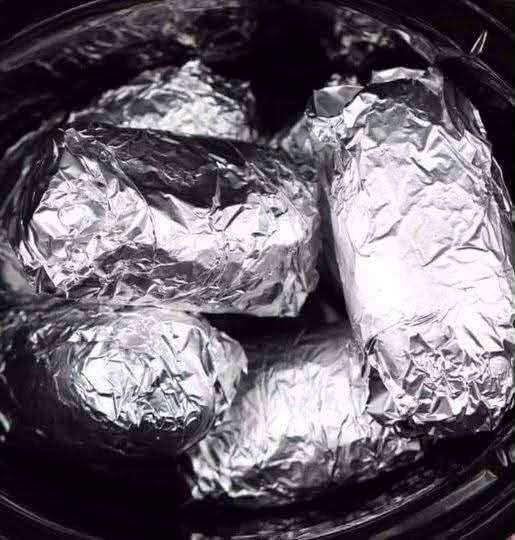
Slow Cooker Foil-Wrapped Baked Potatoes
Introduction
There is something wonderfully comforting about a perfectly baked potato: a crisp, flavorful exterior, a steaming and fluffy center, and endless possibilities for toppings. Traditionally, baked potatoes are prepared in the oven, but the slow cooker offers an incredibly simple alternative.
By wrapping the potatoes in aluminum foil and allowing them to cook slowly for several hours, you can prepare tender, fluffy potatoes without heating the entire kitchen. This method is especially convenient when you are preparing a large meal, entertaining guests, or simply want an easy side dish waiting for you at dinnertime.
These slow cooker baked potatoes are delicious on their own with a little butter and salt, but they can also become a complete meal when topped with cheese, sour cream, crispy bacon, green onions, chili, pulled meat, or your favorite vegetables.
Ingredients
Basic Ingredients
- Desired number of large baking potatoes
- Olive oil, enough to lightly coat the potatoes
- Salt, to taste
- Aluminum foil
Optional Toppings
- Butter
- Shredded cheddar cheese
- Sour cream
- Cooked and crumbled bacon
- Chopped green onions
- Chives
- Black pepper
- Garlic butter
- Shredded mozzarella
- Ranch dressing
- Chili
- Pulled pork or shredded chicken
- Steamed broccoli
- Sautéed mushrooms
- Caramelized onions
Choosing the Potatoes
For the best results, choose potatoes that are similar in size so they finish cooking at approximately the same time. Russet potatoes are particularly well suited to this recipe because they have a naturally fluffy, starchy interior.
Look for potatoes that are firm, dry, and free from major bruises, soft spots, or signs of spoilage. Medium-to-large potatoes work especially well because they provide a generous amount of fluffy potato for toppings.
Preparation
Begin by thoroughly washing and scrubbing the potatoes under cool running water. Potatoes grow in soil, so cleaning the skin carefully is important, especially if you plan to eat the skin.
Pat each potato completely dry with a clean kitchen towel or paper towel.
Inspect the potatoes and remove any eyes, sprouts, or damaged areas with a small knife or vegetable peeler.
Using a fork, pierce each potato several times around its surface. The holes allow steam to escape while the potatoes cook and help prevent pressure from building inside the potato.
Lightly brush each potato with olive oil. Make sure the oil is distributed over the entire surface.
Sprinkle the potatoes with salt according to your preference.
Wrapping the Potatoes
Tear off individual sheets of aluminum foil large enough to completely surround each potato.
Place one potato in the center of each sheet of foil and wrap it tightly. Make sure the potato is completely enclosed.
Repeat the process with all the potatoes.
Once wrapped, arrange the potatoes in the slow cooker.
For best results, keep the potatoes in a reasonably even layer rather than tightly packing the cooker beyond its capacity.
Slow Cooker Method
Place the lid securely on the slow cooker.
Cook the potatoes on the LOW setting for approximately 7 to 8 hours.
If you need them sooner, cook them on HIGH for approximately 4 to 5 hours.
Cooking times can vary depending on the size of the potatoes, the number of potatoes in the slow cooker, and the individual slow cooker.
The potatoes are ready when a fork or thin knife slides easily into the center without resistance.
For very large potatoes, additional cooking time may be necessary.
How to Tell When They Are Done
The easiest way to test a potato is to carefully remove one from the slow cooker and unwrap it.
Insert a fork into the thickest part of the potato. If the fork passes easily through the center, the potato is cooked.
If you encounter significant resistance, carefully rewrap the potato and continue cooking.
Avoid judging doneness solely by the cooking time because potatoes vary considerably in size.
Finishing the Potatoes
Once the potatoes are tender, carefully remove them from the slow cooker. Be cautious when opening the foil because the potatoes and trapped steam will be very hot.
Allow them to rest for a few minutes.
Carefully unwrap each potato and place it on a serving plate.
For a classic presentation, cut a deep slit lengthwise across the top of the potato. Gently press the ends toward the center to open the potato and expose the fluffy interior.
Add a small amount of butter and allow it to melt into the hot potato.
Finish with salt and freshly ground black pepper.
Classic Loaded Potato Method
For a hearty loaded baked potato, add:
- A generous spoonful of butter
- Shredded cheddar cheese
- Sour cream
- Crispy cooked bacon
- Chopped green onions
- Freshly ground black pepper
The heat from the potato melts the cheese and creates a rich, creamy topping that pairs beautifully with the fluffy potato.
Cheesy Potato Method
For cheese lovers, add shredded cheddar, Monterey Jack, mozzarella, or a combination of your favorite cheeses.
Place the opened potatoes on a baking sheet and briefly place them under a broiler or in a hot oven until the cheese melts and becomes bubbly.
Top with chopped green onions or chives before serving.
Garlic Butter Potato Method
Combine softened butter with a small amount of minced garlic, salt, black pepper, and chopped parsley.
Place a spoonful of the garlic butter inside each hot potato and gently fluff the potato with a fork.
The butter melts through the potato, creating a rich and savory side dish.
Chili-Topped Potato Method
Turn the baked potato into a complete and satisfying meal by topping it with warm chili.
Add shredded cheese and sour cream, followed by chopped green onions.
This combination is particularly good for a casual family dinner or a comforting cold-weather meal.
Vegetable-Topped Potato Method
For a lighter option, top the potatoes with steamed broccoli, sautéed mushrooms, caramelized onions, or roasted vegetables.
Add a little shredded cheese or Greek-style yogurt for additional creaminess.
History of the Baked Potato
Potatoes have a long culinary history that began in the Andes region of South America, where Indigenous communities cultivated them for centuries.
After potatoes were introduced to Europe, they gradually became an important food crop and eventually spread throughout much of the world.
The baked potato became particularly popular because it is inexpensive, filling, versatile, and relatively simple to prepare. Baking a whole potato allows the natural starches to transform into a soft, fluffy interior while the outer skin develops a pleasant texture.
The slow cooker represents a modern adaptation of this traditional preparation. Instead of relying on a conventional oven, the potatoes can slowly cook over several hours while requiring very little attention.
Formation and Texture
The magic of a baked potato comes from the transformation that takes place during cooking.
As the potato heats, the starches absorb moisture and soften. The interior gradually becomes tender and fluffy while the potato’s natural flavor becomes more pronounced.
Because the slow cooker uses gentle, prolonged heat, the potato cooks gradually from the outside toward the center.
Wrapping the potato in foil helps retain moisture and prevents the skin from becoming as dry as it would during traditional oven baking.
It is important to remember that foil-wrapped slow cooker potatoes will generally have softer skins rather than the crisp skins associated with oven-baked potatoes.
Important Cooking Notes
Do not overcrowd the slow cooker. Leave enough space for the potatoes to sit comfortably.
Try to use potatoes of similar size so they cook evenly.
Always wash potatoes thoroughly before preparation.
Piercing the potatoes with a fork is a useful preparation step because it creates small openings for steam to escape.
Cooking times are estimates. Always check the potatoes for tenderness before serving.
Use clean utensils when handling cooked potatoes and toppings.
Be careful when opening the foil because steam can escape and cause burns.
Make-Ahead Method
These potatoes can be prepared in advance for busy meals.
Cook the potatoes until tender, then allow them to cool appropriately and refrigerate them in a covered container.
When you are ready to serve them, reheat them thoroughly and add fresh toppings.
For the best texture, avoid leaving cooked potatoes sitting at room temperature for extended periods.
Serving Suggestions
These slow cooker baked potatoes make an excellent side dish for:
- Grilled chicken
- Roast beef
- Steak
- Pork chops
- Barbecue chicken
- Pulled pork
- Grilled vegetables
- Roasted meats
- Chili
- Soups and stews
- Salads
They can also be transformed into a main course simply by adding substantial toppings such as chili, shredded chicken, cheese, vegetables, or beans.
For Potato Lovers
This recipe is especially appealing to potato lovers because it provides a simple foundation that can be customized in countless ways.
One person can enjoy a traditional potato with butter and salt while another can build an enormous loaded potato with cheese, bacon, sour cream, and green onions.
The same basic cooking method can therefore serve an entire family with completely different preferences.
For a gathering, prepare a selection of toppings and allow everyone to build their own potato. This creates an easy and interactive meal with very little additional preparation.
Troubleshooting
Potatoes are still firm
If the center is not tender, continue cooking until a fork passes easily through the thickest portion.
Potatoes are different sizes
Smaller potatoes may finish before larger ones. Remove the smaller potatoes when they are fully tender and allow the larger ones to continue cooking.
The skins are not crisp
This is normal with the foil-wrapped slow cooker method. If you prefer crisp skins, unwrap the cooked potatoes and place them in a hot oven for several minutes before serving.
Potatoes seem too wet
The slow cooker retains moisture, so the skin will naturally be softer than an oven-baked potato. Allowing the potato to rest briefly after cooking can improve the texture.
Conclusion
Slow cooker foil-wrapped baked potatoes are a simple, practical, and comforting addition to any meal. With only a few basic ingredients and several hours of gentle cooking, you can create tender potatoes that are ready to receive almost any topping you can imagine.
Whether served simply with butter and salt or transformed into a fully loaded meal with cheese, sour cream, bacon, vegetables, or chili, these potatoes offer plenty of room for creativity.
The beauty of this method is its simplicity. Prepare the potatoes, season them, wrap them, place them in the slow cooker, and let time do most of the work.
For busy families, casual dinners, gatherings, and anyone who loves a good baked potato, this is a dependable recipe worth keeping in your kitchen collection.
And for all the potato lovers out there, this may quickly become one of those recipes you make again and again.