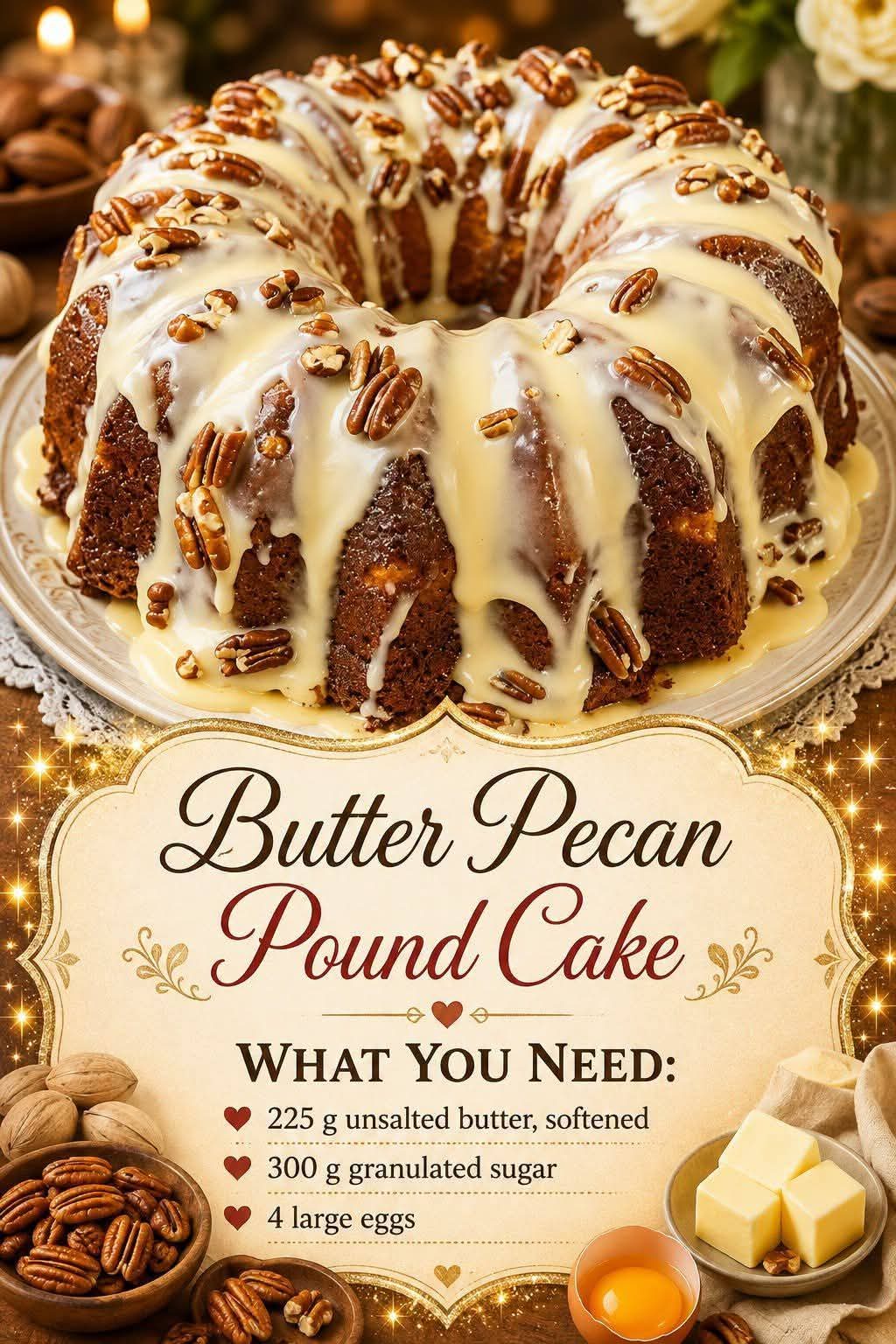
Butter Pecan Pound Cake
Introduction
Butter Pecan Pound Cake is the kind of classic dessert that fills the kitchen with the irresistible aroma of butter, toasted pecans, and vanilla. It has a rich, tender crumb with a beautifully buttery flavor, while sour cream keeps the cake exceptionally moist and soft.
This cake is perfect for family gatherings, holidays, afternoon coffee, church suppers, bake sales, or simply when you want a comforting homemade dessert. The toasted pecans add a wonderful nutty crunch throughout the cake, while a simple butter-pecan glaze can make it even more decadent.
Unlike many cakes that are light and airy, a pound cake is intentionally rich and substantial. When prepared correctly, it should still feel tender rather than heavy or dry.
Ingredients
For the Cake
- 225 g unsalted butter, softened
- 300 g granulated sugar
- 4 large eggs, room temperature
- 240 g sour cream, room temperature
- 2 teaspoons vanilla extract
- 300 g all-purpose flour
- 1 teaspoon baking powder
- 1/2 teaspoon baking soda
- 1/2 teaspoon salt
- 180 g pecans, finely chopped
- 1 tablespoon all-purpose flour, for coating the pecans
For the Butter Pecan Glaze
- 60 g unsalted butter
- 100 g light brown sugar, packed
- 60 ml heavy cream or whole milk
- 1 teaspoon vanilla extract
- 1/4 teaspoon salt
- 80 g pecans, finely chopped
For Finishing
- A few extra toasted pecans, optional
- A light dusting of powdered sugar, optional
Equipment
- 10-inch Bundt pan or large tube pan
- Electric hand mixer or stand mixer
- Large mixing bowl
- Medium bowl
- Whisk
- Rubber spatula
- Cooling rack
- Small saucepan
Preparation
Begin by bringing the butter, eggs, and sour cream to room temperature. Room-temperature ingredients blend together much more easily and help create a smooth, consistent batter.
Preheat the oven to 165°C (325°F).
Generously grease a 10-inch Bundt pan, making sure to coat all the grooves and corners. Lightly dust the pan with flour, then tap out any excess. A well-prepared pan is especially important with pound cakes because of their rich, dense structure.
Toasting the Pecans
Toasting the pecans before adding them to the batter is one of the best ways to develop their flavor.
Place the chopped pecans in a dry skillet over medium-low heat. Stir frequently for approximately 4 to 6 minutes, until they become fragrant and lightly toasted.
Do not let them become dark or burnt. Pecans can go from perfectly toasted to bitter very quickly.
Remove them from the heat and allow them to cool completely.
Reserve approximately 80 g of the toasted pecans for the glaze and use the remaining 180 g for the cake.
Making the Cake Batter
In a medium bowl, whisk together the flour, baking powder, baking soda, and salt.
Take the 180 g of cooled pecans and toss them with 1 tablespoon of flour. This light coating helps distribute the pecans throughout the cake rather than allowing them to sink toward the bottom.
Set the dry ingredients and pecans aside.
In a large mixing bowl, beat the softened butter and granulated sugar together on medium speed for approximately 4 to 6 minutes.
This creaming step is important. The butter should become noticeably lighter in color and fluffy in texture. Properly creamed butter helps give the pound cake its delicate structure.
Add the eggs one at a time. Beat well after each addition, scraping down the sides of the bowl as necessary.
Add the vanilla extract and mix until incorporated.
Reduce the mixer speed to low.
Add approximately one-third of the flour mixture, followed by half of the sour cream. Mix just until combined.
Add another third of the flour mixture, followed by the remaining sour cream.
Finish with the remaining flour mixture.
Do not overmix the batter. Once the flour has disappeared, stop mixing.
Fold in the toasted pecans gently with a rubber spatula.
Forming the Cake
Transfer the batter into the prepared Bundt pan.
Use the spatula to spread the batter evenly and gently press it into the grooves of the pan. Smooth the top.
Tap the pan lightly against the counter once or twice to remove any large air pockets.
Place the pan in the center of the preheated oven.
Baking Method
Bake at 165°C (325°F) for approximately 65 to 80 minutes.
Because ovens vary, begin checking the cake around the 60-minute mark.
The cake is ready when:
- The top is golden brown.
- The cake has pulled slightly away from the sides of the pan.
- A wooden skewer inserted into the thickest part comes out clean or with a few moist crumbs.
- The center springs back lightly when gently touched.
If the top begins browning too quickly before the center is finished, loosely cover the cake with aluminum foil during the final portion of baking.
Do not remove the cake from the oven based solely on time. The skewer test is a much better indicator of doneness.
Cooling the Cake
Allow the cake to cool in the pan for approximately 15 to 20 minutes.
Do not leave it in the pan for too long, because the sugar and butter can cause the cake to stick as it cools.
Place a cooling rack over the Bundt pan and carefully invert the cake.
Allow the cake to cool completely before adding the glaze.
Making the Butter Pecan Glaze
Place the butter in a small saucepan over medium-low heat.
Once melted, add the brown sugar, heavy cream or milk, and salt.
Stir continuously until the sugar dissolves and the mixture becomes smooth.
Bring the mixture to a gentle simmer and cook for approximately 2 to 3 minutes, stirring frequently.
Remove the saucepan from the heat.
Stir in the vanilla extract and toasted pecans.
Allow the glaze to cool for several minutes. It will thicken slightly as it cools.
Glazing the Pound Cake
Place the completely cooled cake on a serving plate.
Slowly spoon the warm butter pecan glaze over the top of the cake, allowing it to flow naturally down the sides.
For an especially beautiful presentation, sprinkle additional toasted pecans over the glaze while it is still slightly warm.
If desired, finish with a very light dusting of powdered sugar.
Important Baking Methods
Cream the Butter and Sugar Properly
The butter should be softened but not melted. If the butter is too warm, it will not hold air properly.
Creaming the butter and sugar for several minutes creates tiny air pockets that contribute to the cake’s texture.
Use Room-Temperature Ingredients
Cold eggs and sour cream can cause the creamed butter mixture to become uneven and curdled.
Room-temperature ingredients combine more smoothly and produce a more uniform batter.
Do Not Overmix
Once the flour is incorporated, excessive mixing can develop too much gluten.
That can make the pound cake tougher and heavier than desired.
Toast the Pecans
Toasting brings out the natural oils and nutty flavor of pecans. It gives the cake considerably more depth than using raw pecans.
Prepare the Bundt Pan Carefully
Make sure every groove is properly greased and lightly floured. A Bundt cake can look perfect in the oven and still stick if the pan was not prepared thoroughly.
The History of Pound Cake
Pound cake is one of the oldest and most recognizable European-style cakes. Traditional pound cake recipes were famously based on equal weights of butter, sugar, eggs, and flour.
The name “pound cake” comes from this original method, in which approximately one pound of each major ingredient was used.
Over time, bakers adapted the basic recipe by changing the proportions and adding ingredients such as vanilla, citrus zest, milk, cream, sour cream, spices, chocolate, and nuts.
Butter pecan became a particularly beloved flavor combination in American baking. The pairing of rich butter with toasted pecans eventually found its way into cookies, ice cream, cakes, pies, and other desserts.
This Butter Pecan Pound Cake combines the traditional richness of pound cake with the warm, toasted flavor of pecans and the tenderness provided by sour cream.
Texture and Flavor
A properly baked Butter Pecan Pound Cake should have a golden exterior with a rich, tender interior.
The crumb should be moist but not wet, dense but not heavy, and soft enough to slice cleanly.
The butter provides the foundation of the flavor, while vanilla enhances the sweetness. Sour cream adds moisture and a subtle tang that balances the richness.
The toasted pecans provide a deep, nutty flavor and small bursts of crunch throughout every slice.
The brown-sugar butter pecan glaze adds another layer of caramel-like sweetness and makes the cake especially luxurious.
Serving Suggestions
Serve the cake at room temperature with a cup of coffee or tea.
For a more indulgent dessert, serve a warm slice with a scoop of vanilla ice cream.
It can also be served with:
- Whipped cream
- Caramel sauce
- Additional toasted pecans
- Fresh berries
- Vanilla custard
- A light dusting of powdered sugar
For breakfast or brunch, the cake is delicious without the glaze or with only a small amount drizzled over the top.
Storage
Store the completely cooled cake in an airtight container at room temperature for up to 3 days.
For longer storage, refrigerate it for up to 5 days. Allow refrigerated slices to sit at room temperature before serving for the best texture.
The cake can also be frozen.
Wrap individual slices tightly in plastic wrap and place them in a freezer-safe container or bag. Freeze for up to 2 to 3 months.
Thaw overnight in the refrigerator or for several hours at room temperature.
Make-Ahead Method
This cake is excellent for preparing ahead of time.
The cake can be baked one day before serving. Allow it to cool completely, wrap it tightly, and store it at room temperature.
Prepare the glaze shortly before serving and drizzle it over the cake.
For special occasions, bake the cake the evening before, then glaze and decorate it the following day.
Troubleshooting
Cake is Dry
The most common causes are overbaking or measuring too much flour.
Use a kitchen scale when possible and begin checking the cake before the maximum baking time.
Cake Sticks to the Pan
Make sure the Bundt pan is thoroughly greased and lightly floured before adding the batter.
Allow the cake to rest for approximately 15 to 20 minutes after baking before turning it out.
Pecans Sink
Tossing the pecans with a small amount of flour before folding them into the batter can help them remain distributed throughout the cake.
Cake Is Too Dense
Make sure the butter is properly softened rather than melted, cream the butter and sugar thoroughly, and avoid overmixing once the flour is added.
Cake Falls in the Center
The cake may have been underbaked, the oven door may have been opened too early, or the batter may have been overmixed.
Make sure the center is fully baked before removing the cake from the oven.
Conclusion
Butter Pecan Pound Cake is a timeless dessert that brings together everything people love about traditional homemade baking: real butter, vanilla, toasted pecans, and a tender, satisfying crumb.
The secret to an exceptional cake is not complicated. Use room-temperature ingredients, cream the butter and sugar properly, toast the pecans, measure the flour accurately, and avoid overmixing the batter.
Once cooled and covered with the warm butter pecan glaze, the cake becomes wonderfully rich and fragrant. Every slice offers buttery cake, toasted pecans, and a sweet brown-sugar finish.
For the Lovers of Classic Homemade Cakes
If you love old-fashioned pound cakes, buttery desserts, toasted nuts, and recipes that taste like they came from a family kitchen, this is a cake worth keeping in your recipe collection.
It is elegant enough for a celebration but comforting enough for an ordinary afternoon.
Slice it thick, pour yourself a cup of coffee, and enjoy one of those desserts that reminds us why classic baking never goes out of style.