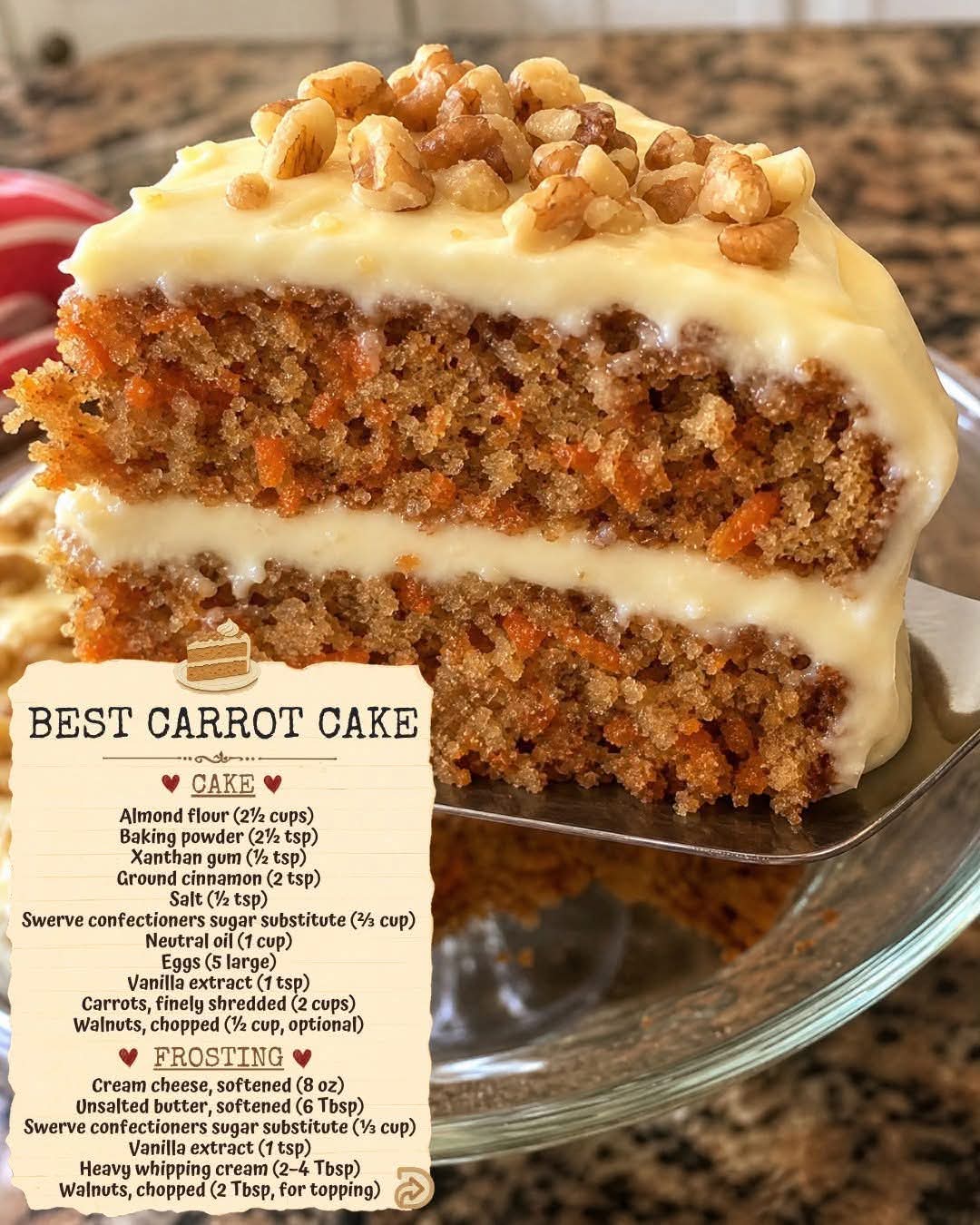
Moist and Tender Homemade Carrot Cake
Introduction
A truly memorable carrot cake should be moist, tender, warmly spiced, and rich without feeling heavy. One of the most important secrets is surprisingly simple: do not squeeze or dry out the grated carrots. Fresh carrots naturally contain a great deal of moisture, and that moisture becomes part of the cake as it bakes, helping create a soft, delicate crumb.
This recipe is designed to produce generous, beautifully moist layers that remain tender even after refrigeration. The combination of freshly grated carrots, brown sugar, warm spices, oil, and a luscious cream cheese frosting makes this a classic dessert for birthdays, holidays, family gatherings, or simply an afternoon treat.
Ingredients
For the Carrot Cake
- 2 1/2 cups finely grated fresh carrots, about 300 g
- 2 cups all-purpose flour, about 250 g
- 1 1/2 teaspoons baking powder
- 1 teaspoon baking soda
- 1/2 teaspoon salt
- 2 teaspoons ground cinnamon
- 1/2 teaspoon ground nutmeg
- 1/4 teaspoon ground ginger
- 1/4 teaspoon ground cloves
- 1 cup granulated sugar
- 1 cup packed light brown sugar
- 1 cup neutral vegetable oil
- 4 large eggs, at room temperature
- 2 teaspoons vanilla extract
- 1/2 cup buttermilk, about 120 ml
- 1 cup chopped pecans or walnuts, optional
- 1/2 cup crushed pineapple, well drained, optional
- 1/2 cup sweetened shredded coconut, optional
For the Cream Cheese Frosting
- 8 ounces cream cheese, softened
- 1/2 cup unsalted butter, softened
- 4 cups powdered sugar, sifted
- 2 teaspoons vanilla extract
- 1 to 2 tablespoons heavy cream or milk, if needed
- Pinch of salt
Optional Decoration
- Chopped toasted pecans or walnuts
- Fine carrot curls
- A light dusting of cinnamon
- Small walnut or pecan pieces around the edge
Preparation
Begin by preparing the carrots. Peel and finely grate fresh carrots using the smaller side of a box grater or a food processor with a fine shredding attachment.
Do not squeeze the carrots. Do not press them dry with paper towels. Do not remove their natural moisture.
If the carrots have an unusually large amount of liquid, simply allow them to sit in a fine-mesh strainer for a few minutes without pressing them. You want moist grated carrots, not dripping carrot juice.
Preheat the oven to 350°F (175°C).
Grease two 9-inch round cake pans. Line the bottoms with parchment paper and lightly grease the parchment as well. You can also flour the sides lightly.
Method for Making the Cake
In a medium bowl, whisk together the flour, baking powder, baking soda, salt, cinnamon, nutmeg, ginger, and cloves.
Set the dry ingredients aside.
In a large mixing bowl, combine the granulated sugar, brown sugar, and vegetable oil. Whisk until the mixture is smooth and evenly combined.
Add the eggs one at a time, whisking well after each addition. Stir in the vanilla extract.
Add the buttermilk and mix gently until incorporated.
Gradually add the dry ingredients to the wet ingredients. Mix only until the flour disappears. Do not overmix the batter.
Fold in the freshly grated carrots.
If using pineapple, coconut, or nuts, gently fold them in at this stage.
The finished batter will be fairly thick and moist. That is exactly what you want.
Divide the batter evenly between the prepared cake pans. Smooth the tops gently with a spatula.
Place the pans in the preheated oven and bake for approximately 30 to 38 minutes.
Begin checking around the 30-minute mark. Insert a wooden toothpick into the center of the cake. It should come out with a few moist crumbs attached, but without wet batter.
Avoid overbaking. This is one of the most important details for keeping carrot cake moist.
Remove the cakes from the oven and allow them to cool in their pans for approximately 10 to 15 minutes. Carefully turn them onto cooling racks and allow them to cool completely before frosting.
Making the Cream Cheese Frosting
Place the softened cream cheese and butter in a large bowl.
Beat until smooth, creamy, and completely combined.
Gradually add the sifted powdered sugar, mixing at low speed at first to prevent a cloud of sugar from escaping.
Add the vanilla extract and a small pinch of salt.
Beat the frosting until light and creamy. If it seems too thick, add heavy cream or milk one tablespoon at a time until you reach a spreadable consistency.
Do not make the frosting too thin. It should be soft enough to spread but firm enough to hold between the cake layers.
Forming the Cake
Place the first completely cooled cake layer on a serving plate or cake board.
Spread a generous layer of cream cheese frosting across the top.
Place the second cake layer on top, making sure it is centered.
Cover the top with more frosting, then frost the sides of the cake.
For a rustic appearance, use a spatula to create gentle swirls in the frosting. For a more polished appearance, smooth the frosting completely.
Finish with chopped toasted pecans or walnuts if desired.
A light sprinkle of cinnamon can also give the finished cake a beautiful warm appearance.
The Secret to the Moist Crumb
The carrots are not simply an ingredient for flavor. They contribute moisture to the entire cake.
When grated carrots are squeezed aggressively, some of that natural moisture is removed before the baking process even begins. The result can be a drier, more compact cake.
Keeping the carrots naturally moist allows their water content to interact with the flour and other ingredients during baking. The oil also helps create a tender texture because it coats the flour proteins and limits excessive gluten development.
The brown sugar contributes moisture and depth of flavor, while the buttermilk adds tenderness and a subtle tang that works beautifully with the spices.
The result is a cake that is soft without being soggy and rich without becoming overly dense.
A Brief History of Carrot Cake
Carrot-based sweet cakes have a long history because carrots were an accessible and naturally sweet ingredient. During periods when refined sugar was expensive or difficult to obtain, naturally sweet vegetables and fruits were sometimes incorporated into desserts.
Carrot pudding traditions existed in Europe long before the modern layer cake became popular. Over time, carrot desserts evolved, particularly in Britain and North America.
The modern carrot cake became especially popular during the twentieth century. Its reputation grew because carrots provided sweetness, moisture, and texture while allowing bakers to create a substantial dessert from relatively simple ingredients.
Cream cheese frosting eventually became one of the most recognizable companions to carrot cake, creating the familiar combination enjoyed today.
How to Keep the Cake Moist
The first rule is not to squeeze the grated carrots.
The second is to avoid overmixing the batter. Once flour becomes hydrated, excessive mixing can develop gluten and make the cake tougher.
The third is to avoid overbaking. A few extra minutes in the oven can make a significant difference.
The fourth is to let the cake cool completely before frosting it. Frosting a warm cake can cause the cream cheese frosting to melt and slide.
For an especially moist cake, you can wrap the cooled cake layers tightly in plastic wrap and refrigerate them for several hours or overnight before assembling. This allows the moisture to distribute throughout the crumb.
Storage
Because the cake contains cream cheese frosting, store it covered in the refrigerator.
It will generally keep well for several days when properly covered.
For the best texture, remove the cake from the refrigerator approximately 20 to 30 minutes before serving. This allows the frosting to soften and the cake to become tender again.
The cake can also be prepared a day ahead, making it an excellent dessert for celebrations and gatherings.
For Carrot Cake Lovers
This is the kind of cake for people who love desserts that taste homemade rather than overly sweet.
The carrots provide natural sweetness and moisture, the brown sugar gives the cake a deeper flavor, and the cinnamon and other spices create that familiar warm character associated with traditional carrot cake.
For lovers of texture, toasted pecans or walnuts add a wonderful contrast to the soft crumb and creamy frosting.
For those who prefer a simpler cake, leave out the pineapple, coconut, and nuts. The basic recipe is delicious on its own.
For an extra-special version, lightly toast the nuts before adding them to the batter. Toasting intensifies their flavor and gives the finished cake a more sophisticated taste.
Serving Method
Serve generous slices at room temperature with a cup of coffee, tea, or cold milk.
For a celebration, decorate the cake with toasted nuts and small carrot-shaped decorations made from frosting.
For a more elegant presentation, keep the sides smoothly frosted and decorate only the top with a ring of finely chopped pecans.
You can also make this recipe as cupcakes. Divide the batter among lined muffin cups and bake until the centers spring back lightly when touched.
Conclusion
The greatest lesson from this carrot cake is simple: the moisture in the carrots belongs in the cake.
Freshly grated carrots should remain naturally moist so they can contribute to the soft, tender crumb that makes homemade carrot cake so special. Combined with oil, brown sugar, buttermilk, warm spices, and rich cream cheese frosting, this recipe creates layers that remain wonderfully tender even after chilling.
Once you discover how much difference properly prepared carrots can make, you may never want to squeeze them dry again. This is a classic, comforting cake that deserves a permanent place in every baker’s recipe collection.