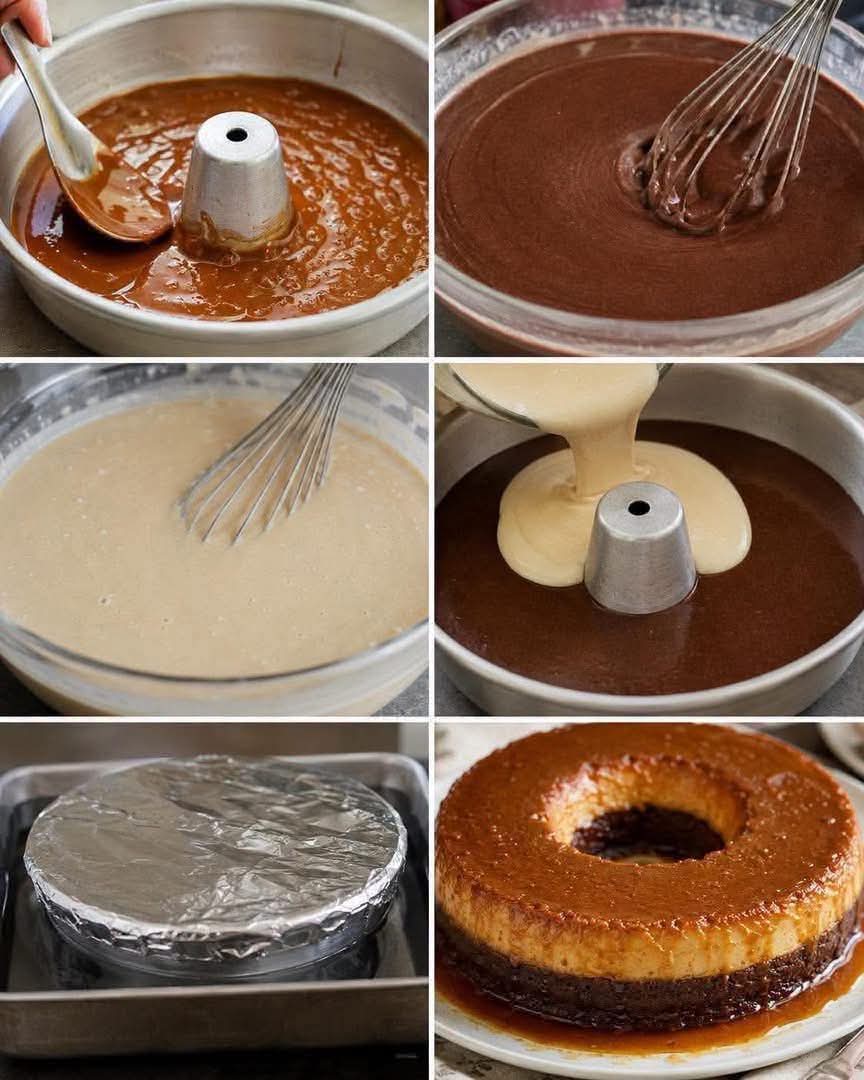
Creamy Chocoflan with Cajeta
Introduction
Creamy Chocoflan with Cajeta is a spectacular Mexican-inspired dessert that brings together two beloved favorites in one beautiful cake: a rich, moist chocolate cake and an incredibly smooth, creamy flan. The magic happens during baking, when the layers settle and transform into a dessert with contrasting textures and flavors.
The chocolate cake is deep, tender, and lightly bittersweet from the cocoa, while the flan is silky, rich, and delicately flavored with vanilla. Sweetened condensed milk adds richness and sweetness, while cream cheese gives the custard a wonderfully creamy body. A layer of caramelized cajeta or condensed milk at the bottom becomes a glossy topping when the finished chocoflan is inverted.
This is an excellent dessert for birthdays, family gatherings, holidays, dinner parties, and any occasion when you want to serve something that looks impressive but can be prepared ahead of time.
Yield
10–12 servings
Pan Size
22–24 cm round cake or flan mold
Ingredients
For the caramelized topping
- 3/4 cup sweetened condensed milk
- 1 tablespoon unsalted butter, for greasing the mold
- Optional: 1/2 cup cajeta for serving or drizzling
- Optional: chopped walnuts or pecans for decoration
For the chocolate cake
- 1 cup (125 g) all-purpose flour
- 1/3 cup (30 g) unsweetened cocoa powder
- 3/4 cup (150 g) granulated sugar
- 1 teaspoon baking powder
- 1/2 teaspoon baking soda
- 1 large egg
- 1/2 cup (120 ml) milk
- 1/3 cup (80 ml) vegetable oil
- 1 teaspoon vanilla extract
For the creamy flan
- 1 can (10 oz) sweetened condensed milk
- 1 can (10 oz) evaporated milk
- 190 g cream cheese, softened to room temperature
- 4 large eggs
- 1 tablespoon vanilla extract
Preparation
1. Prepare the mold
Preheat the oven to 180°C.
Generously grease the inside of a 22–24 cm round mold with the softened butter. Make sure to coat the bottom, sides, and especially the corners or edges thoroughly. This will make unmolding much easier.
Pour the sweetened condensed milk over the bottom of the mold and spread it gently into an even layer.
If you are using cajeta, you can also add a layer of cajeta to the bottom for a deeper caramel flavor.
2. Prepare the chocolate cake batter
In a large mixing bowl, combine the flour, cocoa powder, granulated sugar, baking powder, and baking soda.
Whisk the dry ingredients until evenly combined and there are no visible lumps of cocoa.
Add the egg, milk, vegetable oil, and vanilla extract.
Mix just until the ingredients come together and the batter becomes smooth. Do not overmix, because excessive mixing can make the chocolate cake dense rather than tender.
The finished batter should be smooth and pourable.
3. Prepare the flan mixture
Place the sweetened condensed milk, evaporated milk, softened cream cheese, eggs, and vanilla extract into a blender or large mixing bowl.
Blend or mix until completely smooth.
Avoid excessive whipping. You want a creamy custard without incorporating too much air. Too many air bubbles can create holes in the finished flan.
If necessary, allow the mixture to rest for several minutes and gently skim any large bubbles from the surface.
4. Assemble the chocoflan
Pour the chocolate cake batter carefully into the prepared mold, spreading it into an even layer.
Slowly pour the flan mixture over the chocolate batter. Pour it gently, preferably over the back of a spoon, so that the custard enters the mold gradually without disturbing the cake batter too much.
Do not worry if the layers appear to mix slightly. During baking, the structure of the cake and custard will change, creating the characteristic chocoflan layers.
5. Prepare the water bath
Cover the mold tightly with aluminum foil.
Place the covered mold inside a larger, deep baking dish.
Carefully pour hot water into the larger baking dish until it reaches approximately halfway up the sides of the chocoflan mold.
The water bath is important because it provides gentle, even heat and helps the flan cook slowly without becoming rubbery or cracking.
6. Bake
Carefully place the water bath in the preheated oven.
Bake at 180°C for approximately 70–85 minutes.
Because ovens and molds vary, begin checking toward the end of the baking time.
The chocoflan is ready when the flan appears set around the edges and the center has only a slight, gentle wobble. The chocolate cake should also feel set when lightly touched.
Do not bake until the flan is completely rigid, because it will continue to firm as it cools.
7. Cool completely
Remove the mold from the water bath and carefully remove the aluminum foil.
Allow the chocoflan to cool at room temperature.
Once it has cooled, cover it and refrigerate for at least 6 hours. For the best texture and easiest unmolding, refrigerate it overnight.
This chilling period allows the custard to fully set and gives the chocolate cake time to develop its moist, tender texture.
8. Unmold the chocoflan
When you are ready to serve, carefully run a thin knife around the edges of the mold.
If the caramelized topping is sticking, place the bottom of the mold in lukewarm water for a few seconds. Do not leave it in the water too long.
Place a large serving plate over the top of the mold.
Holding the plate and mold firmly together, carefully turn everything upside down in one smooth motion.
Lift the mold slowly.
The glossy caramel topping should flow over the top of the creamy flan and gently run down the sides of the chocolate cake.
The Best Serving Method
For the most beautiful presentation, serve the chocoflan with the creamy flan on top and the chocolate cake underneath.
Drizzle additional warm cajeta over the top if desired.
Finish with chopped walnuts or pecans around the edges.
For an elegant presentation, you can also add a few thin caramelized nuts or a light dusting of cocoa powder immediately before serving.
How the Layers Form
One of the most fascinating things about chocoflan is the transformation that occurs during baking.
Although the chocolate cake batter is placed into the mold before the flan mixture, the two mixtures behave differently as they bake. The custard is heavier and moves through the cake batter during the cooking process, while the cake develops its structure as the baking powder and baking soda react with heat.
The water bath keeps the temperature gentle and helps the flan cook slowly.
After cooling and refrigeration, the dessert becomes firm enough to unmold. When turned upside down, the caramelized layer that was originally on the bottom becomes the beautiful glossy topping.
The result is a dessert with a smooth custard layer, moist chocolate cake, and rich caramel topping.
Important Tips for Perfect Chocoflan
Use room-temperature cream cheese
Softened cream cheese blends much more easily into the flan mixture. Cold cream cheese can leave small lumps.
Do not overmix the flan
Excessive blending introduces air. A smooth custard with minimal bubbles produces a more attractive and creamy finished layer.
Do not skip the water bath
The water bath helps prevent the flan from cooking too aggressively. It contributes to the smooth, delicate texture that makes chocoflan special.
Grease the mold thoroughly
Pay special attention to the sides and edges. Even a well-chilled chocoflan can be difficult to release if the mold was not properly prepared.
Refrigerate overnight when possible
Six hours is the minimum recommended chilling time, but overnight refrigeration is ideal. The dessert becomes firmer, easier to slice, and more flavorful.
Use a warm knife for clean slices
Dip a sharp knife in hot water, dry it, and slice. Wipe the blade clean between cuts. This helps create beautiful layers without dragging the flan across the chocolate cake.
History and Tradition
Chocoflan is closely associated with Mexican dessert traditions and is often called a “magic cake” because of the remarkable way its layers transform during baking.
Flan itself has a much older history, with custard desserts having deep roots in European cooking. Over time, variations of flan became especially popular throughout Latin America, where ingredients such as sweetened condensed milk, evaporated milk, vanilla, and caramel became common components.
Chocolate cake represents another beloved baking tradition, and combining it with flan created a dessert that is both familiar and spectacular.
The addition of cajeta gives the dessert an especially Mexican character. Cajeta is a caramel-like confection traditionally made from goat’s milk and sugar. Its rich, toasted sweetness pairs beautifully with chocolate and creamy custard.
Today, chocoflan is commonly served at celebrations, family gatherings, restaurants, bakeries, and holiday tables.
Formation and Texture
A successful chocoflan should have three distinct sensations when you take a bite.
First comes the glossy caramel or cajeta topping.
Next is the smooth, creamy flan, which should be delicate but firm enough to hold its shape.
Finally comes the moist chocolate cake, which should be tender, rich, and soft rather than dry.
The combination of these textures is what makes chocoflan so memorable.
Make-Ahead Instructions
Chocoflan is an excellent make-ahead dessert.
Prepare and bake it one day before serving. Allow it to cool completely, then refrigerate it overnight while still in the mold.
Unmold it shortly before serving.
Keep leftovers refrigerated in a covered container or tightly covered with plastic wrap. For the best quality, enjoy within several days.
Variations
Cajeta Chocoflan
Add a generous drizzle of cajeta over the finished dessert for an extra caramel flavor.
Nut-Topped Chocoflan
Decorate with toasted pecans or walnuts immediately before serving.
Coffee Chocolate Chocoflan
Add a small amount of instant espresso powder to the chocolate cake batter. Coffee intensifies the flavor of the cocoa without making the dessert taste strongly of coffee.
Cinnamon Chocoflan
Add a small amount of ground cinnamon to the chocolate cake batter for a warm, aromatic flavor that pairs beautifully with cajeta.
Chocolate Cajeta Chocoflan
Add extra cajeta between the cake and caramel topping or drizzle it over individual slices just before serving.
Troubleshooting
The flan has holes
This usually happens because too much air was incorporated into the custard. Blend only until smooth and avoid excessive whipping.
The cake is dry
Overbaking is the most common reason. Start checking the chocoflan toward the end of the suggested baking time and remove it once the custard is set and the cake is cooked.
The chocoflan will not release
Make sure the mold was generously greased. Running a thin knife around the edges and briefly warming the bottom of the mold can help release the caramel.
The center is still very loose
Allow the chocoflan to cool completely and refrigerate it for the full recommended time. If it remains genuinely liquid after chilling, it may have needed additional baking time.
Conclusion
Creamy Chocoflan with Cajeta is the kind of dessert that turns an ordinary meal into a celebration. Its combination of moist chocolate cake, silky vanilla flan, cream cheese richness, and glossy caramel makes every slice both beautiful and satisfying.
The best part is that it can be prepared ahead of time, allowing you to focus on your guests rather than dessert when serving day arrives.
For chocolate lovers, flan lovers, caramel lovers, and anyone who enjoys classic Mexican-inspired desserts, this chocoflan is a truly special recipe. The dramatic presentation, contrasting textures, and rich flavors make it a dessert worth saving and making again and again.