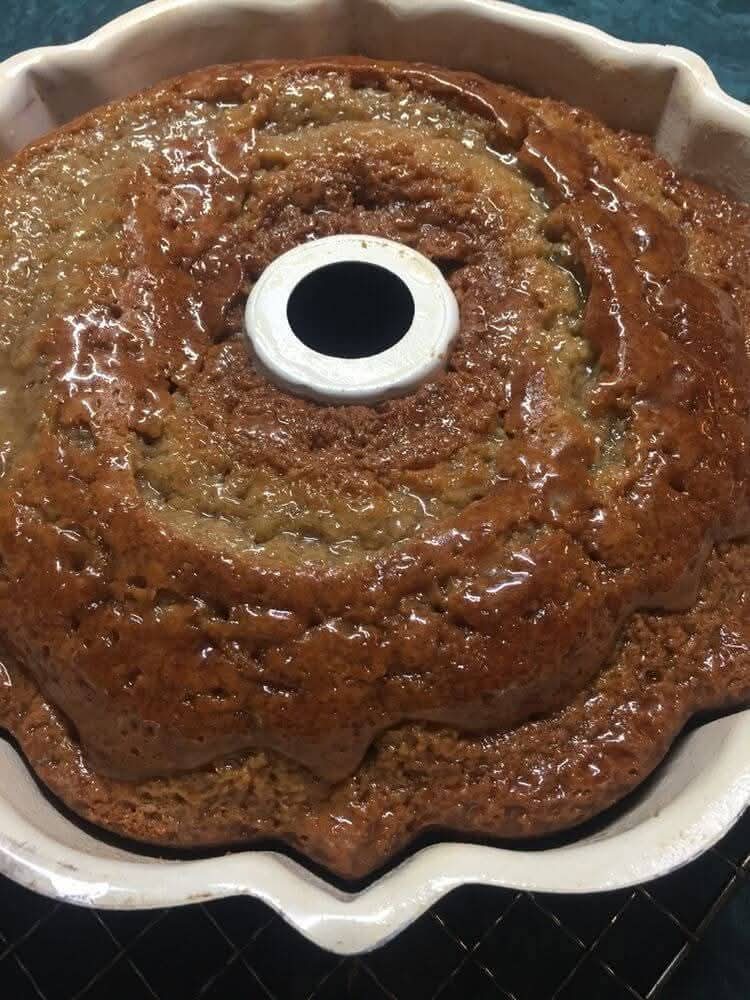
Moist and Delicious Homemade Cake
Introduction
This is the kind of cake that quickly becomes a family favorite. It is wonderfully moist, rich without being overly heavy, and filled with comforting flavors that make every bite feel homemade. The recipe is straightforward enough for a beginner, yet the finished cake tastes like something that took much longer to prepare.
If your husband loves a soft, flavorful cake, this is an excellent recipe to add to your regular baking collection. It is especially good for family dinners, weekend baking, birthdays, holidays, or simply when you want something sweet to enjoy with coffee or tea.
Ingredients
For the Cake
- 2 cups all-purpose flour
- 1 1/2 cups granulated sugar
- 1 cup unsalted butter, softened
- 4 large eggs, room temperature
- 1 cup buttermilk
- 2 teaspoons vanilla extract
- 2 teaspoons baking powder
- 1/2 teaspoon baking soda
- 1/2 teaspoon salt
- 1/2 cup sour cream
- 1 teaspoon ground cinnamon
- 1/4 teaspoon ground nutmeg
For the Simple Glaze
- 1/2 cup unsalted butter
- 1 cup packed light brown sugar
- 1/4 cup heavy cream or milk
- 1 teaspoon vanilla extract
- 1/4 teaspoon salt
Optional Topping
- 1/2 cup chopped pecans or walnuts
- A light dusting of powdered sugar
Instructions
Preparing the Cake Pan
Preheat the oven to 350°F (175°C). Grease and flour a 9-by-13-inch baking pan, or line the bottom with parchment paper and lightly grease the sides.
Allow the butter, eggs, buttermilk, and sour cream to come close to room temperature. This helps the ingredients combine smoothly and produces a more even cake.
Preparing the Dry Ingredients
In a medium bowl, whisk together the flour, baking powder, baking soda, salt, cinnamon, and nutmeg.
Mixing the dry ingredients separately helps distribute the leavening agents and spices throughout the flour so that the cake rises evenly and has consistent flavor.
Creaming the Butter and Sugar
Place the softened butter and granulated sugar into a large mixing bowl. Beat for approximately 3 to 5 minutes, until the mixture becomes pale, light, and fluffy.
This step is important because incorporating air into the butter helps create a tender cake.
Add the eggs one at a time, beating well after each addition. Scrape down the sides of the bowl as needed. Add the vanilla extract and mix until incorporated.
Combining the Batter
Add approximately one-third of the dry ingredients to the butter mixture and mix gently.
Add half of the buttermilk and sour cream mixture. Continue alternating the dry ingredients and liquid ingredients, beginning and ending with the dry ingredients.
Mix only until everything is combined. Avoid overmixing because excessive mixing can make the finished cake dense rather than soft and tender.
Pour the batter into the prepared pan and smooth the surface with a spatula.
Baking
Place the cake in the preheated oven and bake for approximately 35 to 45 minutes.
The cake is ready when the center springs back lightly when touched and a toothpick inserted into the middle comes out clean or with a few moist crumbs attached.
Do not overbake. Removing the cake as soon as it is properly baked is one of the most important secrets to keeping it moist.
Allow the cake to cool in the pan for approximately 15 to 20 minutes.
Preparing the Glaze
While the cake is cooling, prepare the glaze.
Melt the butter in a small saucepan over medium-low heat. Add the brown sugar, heavy cream or milk, and salt.
Stir continuously until the sugar dissolves and the mixture becomes smooth. Bring it to a gentle simmer and cook for approximately 2 minutes.
Remove the saucepan from the heat and stir in the vanilla extract.
Allow the glaze to cool slightly so that it thickens but remains pourable.
Forming the Finished Cake
Using a wooden skewer or the handle of a small spoon, make several small holes across the surface of the warm cake.
Slowly drizzle part of the glaze over the cake, allowing it to soak into the holes and penetrate the crumb.
Spread the remaining glaze over the top.
If desired, sprinkle chopped pecans or walnuts over the glaze. For a simpler presentation, allow the glaze to set and finish with a light dusting of powdered sugar.
Let the cake rest for at least 30 minutes before slicing. This gives the glaze time to settle into the cake and allows the flavors to develop.
Method for the Best Texture
The key to achieving an exceptionally moist cake is balancing the ingredients and avoiding overbaking.
Room-temperature ingredients blend more easily and help create a smooth batter. The sour cream and buttermilk provide moisture while also contributing tenderness. The butter gives the cake a rich flavor, while the eggs help provide structure.
Another important technique is to mix the batter gently once the flour has been added. The batter should be mixed only until no obvious streaks of flour remain.
For the glaze, pouring it over the cake while the cake is still warm allows it to absorb beautifully. This creates a soft, flavorful interior while adding a sweet finish to the top.
A Brief History of Homemade Cakes
Cakes have been part of celebrations and family traditions for centuries. Early cakes were generally much simpler than the layered and decorated cakes commonly made today. As refined sugar, butter, baking powder, and other ingredients became more widely available, home bakers developed softer and more elaborate cakes.
Buttermilk cakes became especially popular in American home baking because buttermilk was a practical ingredient in many kitchens and helped produce tender baked goods. Cakes made with butter, eggs, cultured dairy, and simple spices became treasured recipes that were frequently passed from one generation to another.
This style of moist, glazed cake reflects that tradition: simple ingredients transformed into a comforting dessert meant to be shared.
Serving Suggestions
Serve slices at room temperature for the fullest flavor and softest texture.
The cake is delicious with:
- Fresh berries
- Whipped cream
- Vanilla ice cream
- A cup of coffee
- Hot tea
- Caramel sauce
- Toasted pecans
- A small spoonful of whipped topping
For an especially indulgent dessert, warm a slice for a few seconds and serve it with a scoop of vanilla ice cream.
Storage
Store the cooled cake tightly covered at room temperature for up to 2 days.
For longer storage, refrigerate it in an airtight container for up to 5 days. Allow individual slices to come to room temperature before serving, or warm them gently for a few seconds.
The cake can also be frozen. Wrap individual slices tightly in plastic wrap and place them in a freezer-safe container. Freeze for up to 2 months. Thaw overnight in the refrigerator or at room temperature before serving.
Why Cake Lovers Will Love This Recipe
Cake lovers appreciate this recipe because it combines simplicity with a homemade flavor that feels special. The crumb is soft and moist, the spices add warmth, and the buttery brown-sugar glaze gives every slice an irresistible finish.
It is also a forgiving recipe for home bakers because it does not require complicated decorating techniques. The glaze provides most of the visual appeal while also adding extra moisture and flavor.
Conclusion
This moist homemade cake is exactly the sort of dessert that earns a permanent place in a family recipe collection. It is easy enough for an ordinary afternoon but delicious enough for celebrations and special occasions.
The combination of buttery cake, creamy buttermilk, warm spices, and brown-sugar glaze creates a dessert that is comforting, tender, and deeply satisfying. Once you make it, do not be surprised if everyone asks when you are making it again.
For cake lovers, this is a recipe worth saving, sharing, and making again and again.