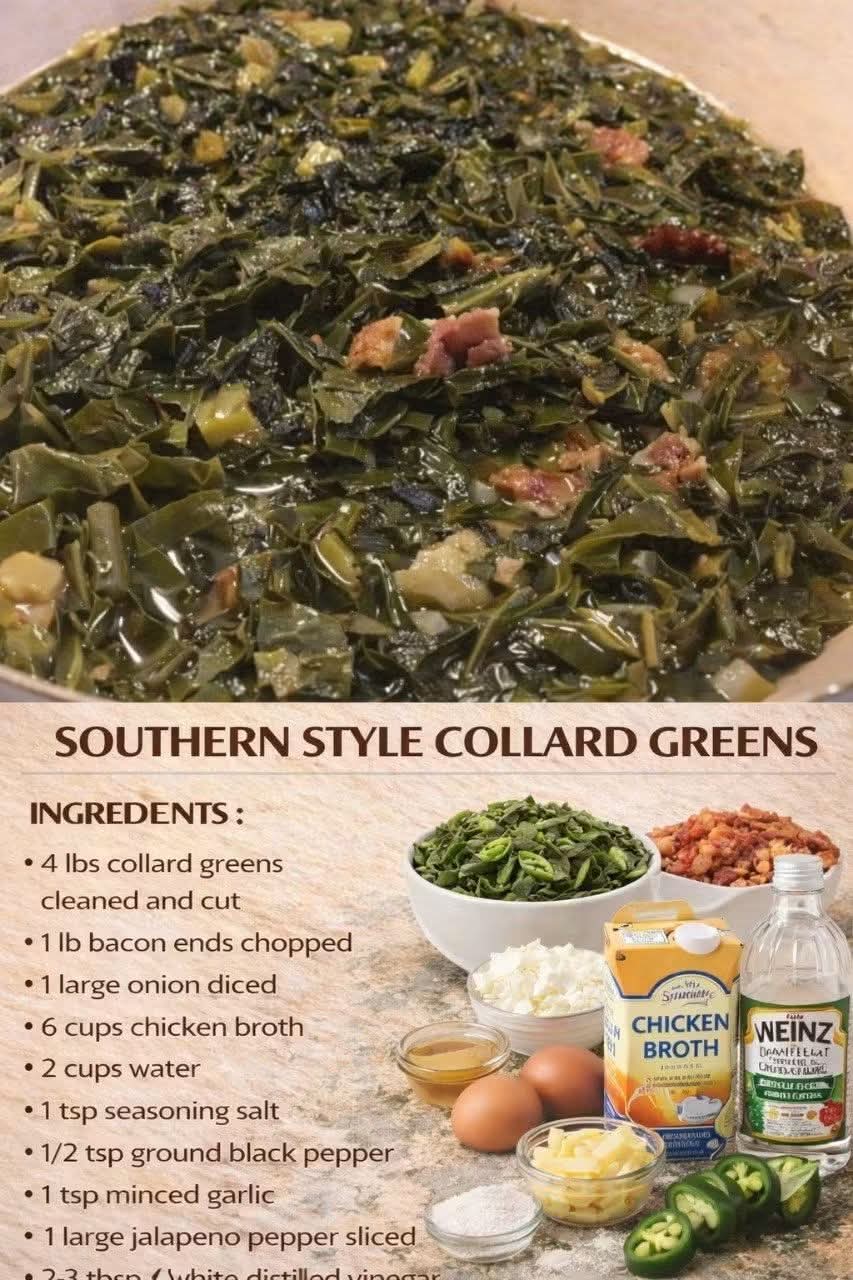
Here is the full, complete recipe for Southern Style Collard Greens, complete with everything you requested.
—
Introduction: A Taste of the South
There is no dish that speaks to the soul of Southern cuisine quite like a pot of slow-cooked collard greens. Rooted in African, Native American, and European culinary traditions, this humble leafy green has been a staple of the Southern table for centuries. It represents resourcefulness, family, and community—often cooked low and slow with smoked or cured meats until it becomes meltingly tender and deeply savory.
This recipe uses bacon ends for a rich, smoky flavor base, combined with the sweetness of onion and the depth of chicken broth. The result is a potlicker (the flavorful broth left behind) so good you’ll want to sop it up with cornbread. This isn’t just a side dish; it’s a cultural experience, a comfort food, and a celebration of heritage.
—
Ingredients
· 4 lbs collard greens – cleaned, stems removed, and roughly chopped
· 1 lb bacon ends – chopped (smoked turkey legs or ham hocks can be substituted)
· 1 large onion – diced
· 6 cups chicken broth – low-sodium preferred
· 2 cups water (or more as needed to cover greens)
· 2 tablespoons garlic – minced
· 1 tablespoon sugar (optional, to balance bitterness)
· 1 teaspoon red pepper flakes (optional, for heat)
· Salt and black pepper – to taste
· 2 tablespoons apple cider vinegar – for brightness and to tenderize
—
Instructions
1. Prepare the Greens: Fill a large sink or bowl with cold water. Submerge the collard greens and swish them around to remove all grit and sand. Drain, rinse, and repeat until the water runs clear. Remove the thick center stems and ribs, then stack the leaves, roll them up, and slice into 1-inch wide strips.
2. Render the Bacon: In a large, heavy-bottomed stockpot or Dutch oven over medium heat, cook the chopped bacon ends until they are browned and have released their fat (about 8-10 minutes).
3. Sauté Aromatics: Add the diced onion to the pot with the bacon. Cook until the onion becomes translucent and soft, about 5-7 minutes. Add the minced garlic and cook for another minute until fragrant.
4. Add Liquids: Pour in the chicken broth and water. Scrape the bottom of the pot to deglaze and incorporate all the browned bits. Bring the liquid to a boil.
5. Add Greens: Gradually add the chopped collard greens to the pot, stirring them down as they begin to wilt. You may have to add them in batches until they all fit.
6. Season and Simmer: Stir in the sugar (if using), red pepper flakes, salt, and pepper. Reduce the heat to low, cover the pot, and let it simmer for 1.5 to 2 hours, stirring occasionally.
7. Finish: Once the greens are tender and full of flavor, stir in the apple cider vinegar. Taste and adjust seasonings (salt, pepper, or hot sauce) as needed.
8. Serve: Serve hot, with a slotted spoon to drain the broth, or in a bowl with plenty of the “potlikker.”
—
Methods & Tips
· The “Wilt” Method: When adding your greens, don’t worry if the pot looks overflowing. Collard greens have a high water content and will reduce significantly in volume (by about 75%) as they cook.
· The Low and Slow Method: This is the golden rule. Low heat for a long time breaks down the tough cellulose in the leaves, creating a silky texture. Rushing this process will result in tough, bitter greens.
· The Acid Balance: Vinegar is crucial. It cuts through the richness of the pork fat and balances the natural bitterness of the greens, brightening the entire dish.
—
History
Collard greens have a deep history in African American cuisine. They originated in the Mediterranean, but their journey to the South came via enslaved West Africans, who brought the knowledge of cooking leafy greens. They were one of the few crops that slaves were allowed to grow for themselves. The greens were cooked with leftover pork scraps (like bacon ends, fatback, or ham hocks) that the plantation owners did not want, creating a nutritious and delicious meal from what was considered “waste.” This dish is a powerful symbol of survival, resilience, and the rich culinary legacy that influences American food today.
—
Benefits
Collard greens are a nutritional powerhouse. They are packed with vitamins and minerals while being very low in calories. Key benefits include:
· High in Vitamin K: Essential for bone health and blood clotting.
· Rich in Vitamin A: Important for vision and immune function.
· Excellent source of Vitamin C: A powerful antioxidant.
· Good source of Calcium and Iron: Crucial for bone strength and oxygen transport.
· High in Fiber: Aids in digestion and promotes gut health.
—
Nutrition (Per 1 cup serving, approximate without potlikker)
· Calories: 120
· Fat: 6g
· Saturated Fat: 2g
· Cholesterol: 15mg
· Sodium: 450mg
· Potassium: 250mg
· Carbohydrates: 8g
· Fiber: 4g
· Sugar: 2g
· Protein: 7g
—
Lovers & Serving Suggestions
Southern collard greens are beloved by foodies, home cooks, and chefs alike for their deep, umami flavor. They are traditionally served alongside:
· Fried Chicken
· Cornbread (for sopping up the potlikker!)
· Macaroni and Cheese
· Smoked Turkey or Ham
· Black-Eyed Peas (a classic New Year’s meal)
—
Conclusion & Final Formation
In conclusion, Southern-style collard greens are far more than just a vegetable; they are a story in a pot. This recipe takes time, but it rewards you with layers of smoky, savory, and tangy flavor that you simply cannot replicate with shortcuts. By following these steps, you are not just making a side dish, but honoring a tradition of making the most of simple ingredients to create something extraordinary.
To All My Lovers: Thank you for loving the food that feeds our souls! I know this recipe will become a staple in your homes, just as it has been in mine for generations. Share them with your family, teach your children, and enjoy every single bite.
—
🚨 𝐓𝐎 𝐂𝐎𝐍𝐓𝐈𝐍𝐔𝐄 𝐑𝐄𝐂𝐄𝐈𝐕𝐈𝐍𝐆 𝐌𝐘 𝐑𝐄𝐂𝐈𝐏𝐄𝐒, 𝐓𝐘𝐏𝐄 “𝐘𝐄𝐒” ❤️
Let me know if you have any questions!