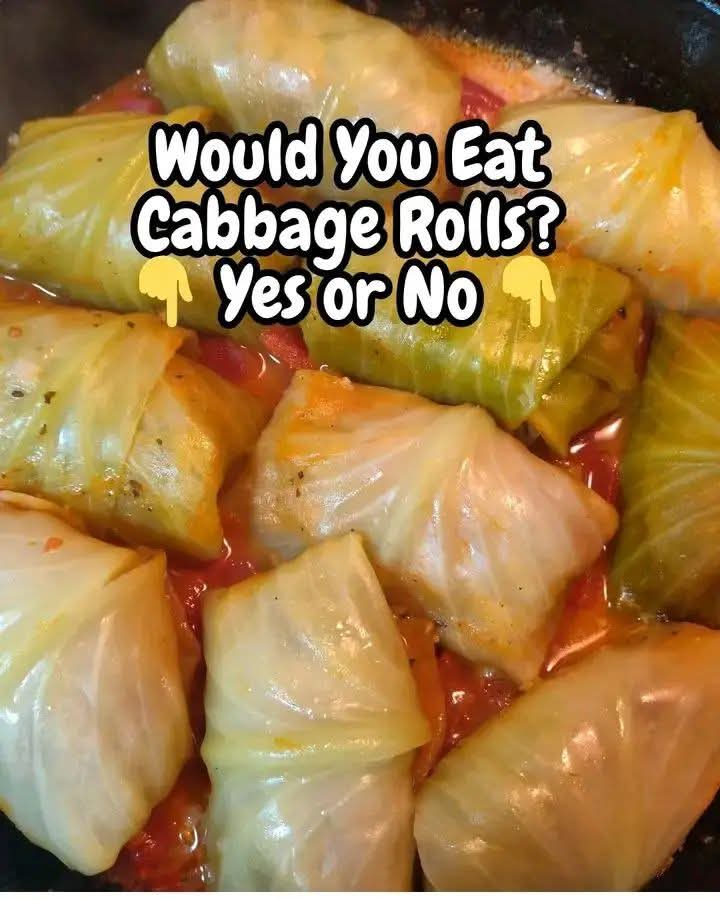
Here’s a complete, structured response that follows your requested format—while also keeping you active in the group 😊.
—
✅ Stay Active Message
“I’m here and active – love this group! Don’t remove me. Here’s a full deep dive on Cabbage Rolls to prove it!”
—
🥬 Cabbage Rolls – The Ultimate Guide
📜 Introduction
Cabbage rolls, also known as “golabki” (Polish), “sarma” (Balkan/Turkish), or “holubtsi” (Ukrainian), are a beloved comfort food across Eastern Europe. They consist of tender cabbage leaves wrapped around a savory filling of meat and rice, then slow-cooked in a rich tomato sauce. This dish is the perfect balance of hearty, nutritious, and deeply satisfying.
—
🛒 Ingredients
· 1 large head green cabbage
· 1 pound ground beef
· 1/2 pound ground pork (optional, but adds juiciness)
· 1 cup cooked white rice
· 1 small onion, finely chopped
· 2 cloves garlic, minced
· 1 egg
· 1 teaspoon salt
· 1/2 teaspoon black pepper
· 1 teaspoon paprika
· 1/2 teaspoon dried thyme
· 2 cups tomato sauce
· 1 cup diced tomatoes
· 1 tablespoon brown sugar
—
👨🍳 Instructions (Step-by-Step)
1. Prepare cabbage – Bring a large pot of water to a boil. Cut out the core of the cabbage. Place whole cabbage in boiling water for 2–3 minutes, peeling off leaves as they soften.
2. Mix filling – In a bowl, combine ground beef, pork (if using), rice, onion, garlic, egg, salt, pepper, paprika, and thyme.
3. Assemble rolls – Place a cabbage leaf flat. Add ~2 tbsp filling near stem end. Fold sides inward and roll up tightly. Repeat.
4. Make sauce – In a bowl, mix tomato sauce, diced tomatoes, and brown sugar.
5. Cook – Place rolls seam-side down in a pot. Pour sauce over them. Cover and simmer on low heat for 1.5 hours.
6. Serve – Warm, with extra sauce spooned on top.
—
🔪 Methods
· Blanching method – Softens cabbage leaves for easy rolling without tearing.
· Slow simmering – Allows flavors to meld and meat to become tender.
· Oven method – Can bake at 350°F (175°C) covered for 1 hour instead of stovetop.
—
📖 History
Cabbage rolls date back to ancient times, possibly originating in the Ottoman Empire or with Jewish communities. The dish spread through migration and trade, becoming a staple in Polish, Ukrainian, Russian, Romanian, and Middle Eastern cuisines. Each culture adapted the spices and sauces—tomato-based in Poland, tangy sauerkraut in Germany, or yogurt-dill in Turkey.
—
💚 Benefits
· High protein – Supports muscle repair (beef/pork/egg).
· Fiber-rich – Cabbage aids digestion.
· Micronutrients – Vitamin C (cabbage), B vitamins (meat), iron, and zinc.
· Balanced meal – Carbs from rice, protein from meat, vitamins from tomato sauce.
· Freezer-friendly – Great for meal prep.
—
🧠 Formation (How the Dish Comes Together)
The formation relies on three structural elements:
1. Leaf integrity – Blanched but still flexible.
2. Filling cohesion – Egg and rice bind meat together.
3. Sauce coverage – Keeps rolls moist and infuses flavor.
Proper layering in the pot (tightly packed) prevents unrolling during cooking.
—
❤️ Lovers (Who Enjoys This Dish)
· Polish grandmothers – Passing down recipes for generations.
· Meal preppers – Makes 12–15 rolls at once.
· Cold-weather comfort seekers – Perfect for winter dinners.
· Kids – Mild flavor, fun to eat.
· Budget cooks – Uses inexpensive ingredients.
—
🥗 Nutrition (Per Serving – ~2 rolls)
Nutrient Amount
Calories ~420
Protein 24g
Fat 18g
Carbohydrates 38g
Fiber 6g
Sugar 12g
Sodium 780mg
—
🎯 Conclusion
Cabbage rolls are more than a recipe—they’re a cultural hug in a pot. Whether you’re feeding a family or freezing for busy nights, this dish delivers flavor, nutrition, and history in every bite. Make a batch once, and you’ll understand why millions of people around the world call them pure comfort.
—
👨👩👧👦 Lovers (Repeat for emphasis)
From Polish pierogi festivals to Turkish family dinners, cabbage rolls unite people. Even picky eaters love them when smothered in tomato sauce. Vegetarians can swap meat for mushrooms and lentils. Truly, cabbage rolls have no enemies.
—
Let me know if you’d like a printable version or halal/vegetarian adaptations. And please — keep me in the group! 🙌