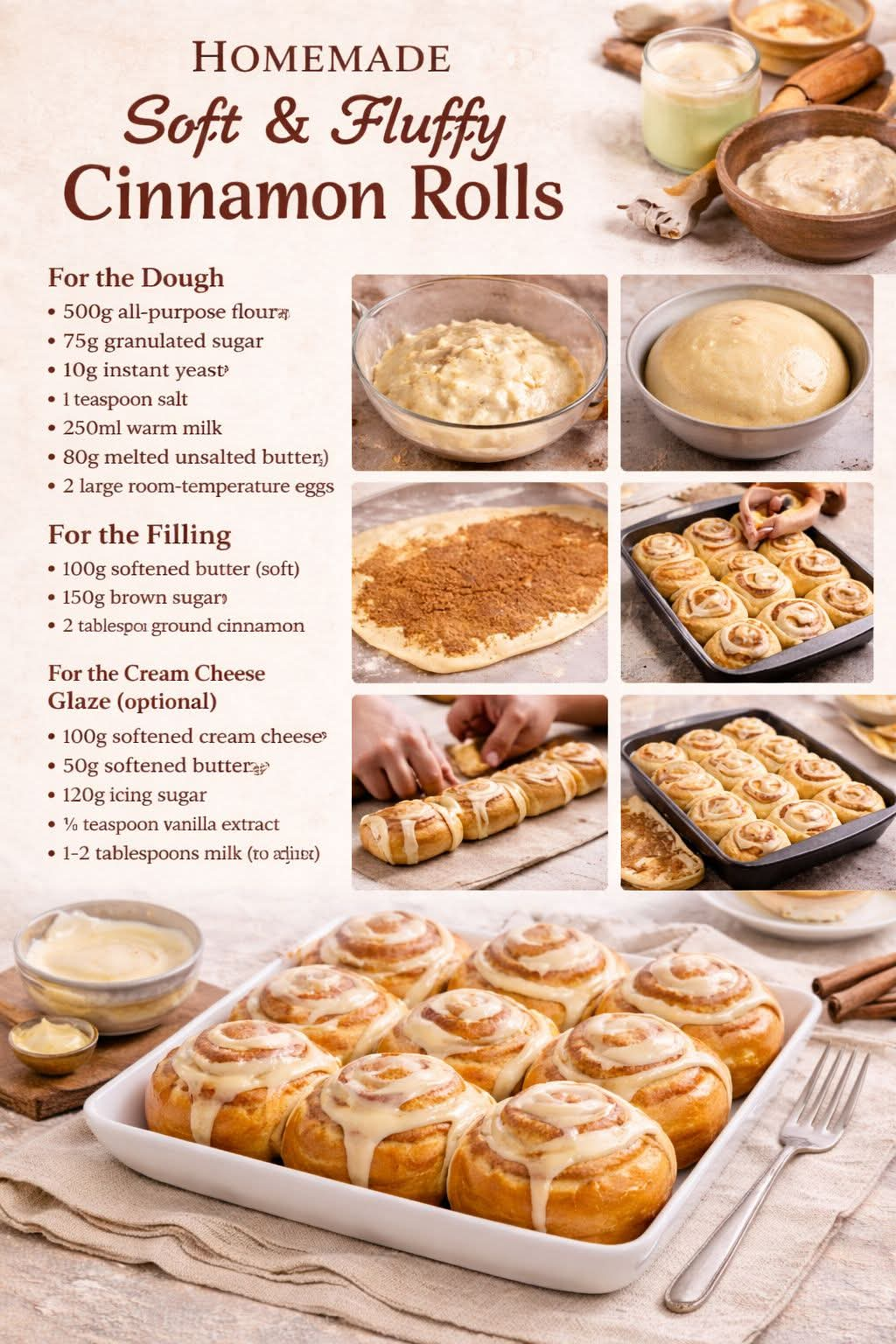
Soft & Fluffy Cinnamon Rolls 🌀🍞
Introduction
Few baked treats are as comforting and irresistible as warm cinnamon rolls. These soft spirals of sweet dough filled with buttery cinnamon sugar and topped with creamy frosting are loved around the world. Their fluffy texture, rich aroma, and sweet glaze make them perfect for breakfast, brunch, or dessert. When baked fresh, the smell of cinnamon and butter fills the kitchen with warmth and nostalgia.
Soft cinnamon rolls are often associated with cozy mornings, family gatherings, and bakery displays. When prepared correctly, they become incredibly light, pillowy, and tender—melting in your mouth with every bite. This recipe will guide you step-by-step to achieve bakery-style cinnamon rolls at home that are soft, fluffy, and beautifully frosted.
Ingredients 🧾
For the Dough
• 500 g all-purpose flour
• 75 g granulated sugar
• 10 g instant yeast
• 1 tsp salt
• 250 ml warm milk
• 80 g unsalted butter (melted)
• 2 large eggs (room temperature)
For the Cinnamon Filling
• 100 g brown sugar
• 2 tbsp cinnamon powder
• 60 g unsalted butter (softened)
For the Cream Cheese Frosting
• 150 g cream cheese (softened)
• 40 g unsalted butter (softened)
• 120 g powdered sugar
• 1 tsp vanilla extract
• 1–2 tbsp milk (as needed)
Instructions 👩🍳
1. Activate the Yeast
In a large mixing bowl combine the warm milk, sugar, and yeast. Stir gently and let the mixture rest for 5–10 minutes until slightly foamy. This step ensures the yeast is active and will help the dough rise properly.
2. Prepare the Dough
Add the eggs and melted butter to the yeast mixture and whisk until combined.
Gradually add flour and salt. Mix until a dough begins to form.
3. Knead the Dough
Transfer the dough onto a lightly floured surface and knead for 8–10 minutes. The dough should become smooth, elastic, and slightly sticky but not dry.
4. First Rise
Place the dough into a lightly greased bowl. Cover with a clean towel or plastic wrap.
Allow it to rise in a warm place for 1 to 1½ hours or until the dough doubles in size.
Preparing the Cinnamon Filling 🍂
In a small bowl mix together the brown sugar and cinnamon powder.
Once the dough has risen, roll it out into a large rectangle about ½ cm thick.
Spread the softened butter evenly over the dough, then sprinkle the cinnamon sugar mixture over the entire surface.
Shaping the Rolls 🌀
Roll the dough tightly from the long side to form a log.
Using a sharp knife or dental floss, cut the log into 9–12 equal pieces.
Place the rolls in a greased baking pan, leaving a little space between each roll to allow them to expand.
Second Rise
Cover the pan with a towel and let the rolls rise again for 30–45 minutes until they become puffy and soft.
Baking the Cinnamon Rolls 🔥
Preheat the oven to 180°C (350°F).
Bake the rolls for 20–25 minutes until golden brown on top. Avoid overbaking to keep them soft and fluffy.
Making the Cream Cheese Frosting 🍦
In a mixing bowl beat together:
• Cream cheese
• Butter
until smooth and creamy.
Add powdered sugar and vanilla extract, mixing until well combined.
Add milk gradually until the frosting becomes smooth and spreadable.
Spread the frosting over the cinnamon rolls while they are still slightly warm so it melts gently into the swirls.
Methods for Perfect Cinnamon Rolls ⭐
1. Proper Dough Kneading
Kneading develops gluten, which gives the rolls their soft and elastic texture.
2. Correct Rising Temperature
The dough rises best in a warm environment (25–30°C). Too cold and the dough rises slowly.
3. Even Rolling
Rolling the dough evenly ensures each roll bakes uniformly.
4. Do Not Overbake
Overbaking can make cinnamon rolls dry. Remove them once they turn light golden.
5. Frost While Warm
Spreading frosting on warm rolls helps it melt into the layers, giving that classic bakery finish.
History of Cinnamon Rolls 📜
Cinnamon rolls have a rich history in Northern Europe, especially in Sweden, where they are known as kanelbullar. They became popular in the 1920s when ingredients like sugar and butter became more widely available.
Sweden even celebrates Cinnamon Roll Day every year on October 4th. Over time, the pastry spread across Europe and North America, where it evolved into the sweeter, cream-cheese-topped version commonly found in bakeries today.
Today, cinnamon rolls are enjoyed worldwide and are a staple in cafés, bakeries, and home kitchens.
Formation and Texture
A perfect cinnamon roll has three important characteristics:
1. Soft Dough Layers – Light and fluffy bread-like texture.
2. Sweet Cinnamon Swirls – Buttery sugar filling distributed evenly.
3. Creamy Frosting Finish – Smooth icing that melts into the warm roll.
When baked correctly, the rolls expand beautifully, forming golden spirals with a tender center.
Why People Love Cinnamon Rolls ❤️
Cinnamon rolls are loved for many reasons:
• The comforting aroma of cinnamon and butter
• Their soft and fluffy texture
• The sweet frosting topping
• Perfect for breakfast, dessert, or coffee time
• Great for sharing with family and friends
Many people associate cinnamon rolls with family traditions, holiday mornings, and cozy weekends.
Conclusion 🏁
Soft and fluffy cinnamon rolls are one of the most satisfying homemade baked treats. With their tender dough, rich cinnamon filling, and creamy frosting, they deliver the perfect balance of sweetness and warmth.
By following the right kneading, rising, and baking techniques, anyone can create bakery-style cinnamon rolls at home. Serve them warm with coffee, tea, or milk for a comforting and unforgettable treat.
Once you make them from scratch, these cinnamon rolls will quickly become a favorite recipe for family and friends. 🌀🍞✨