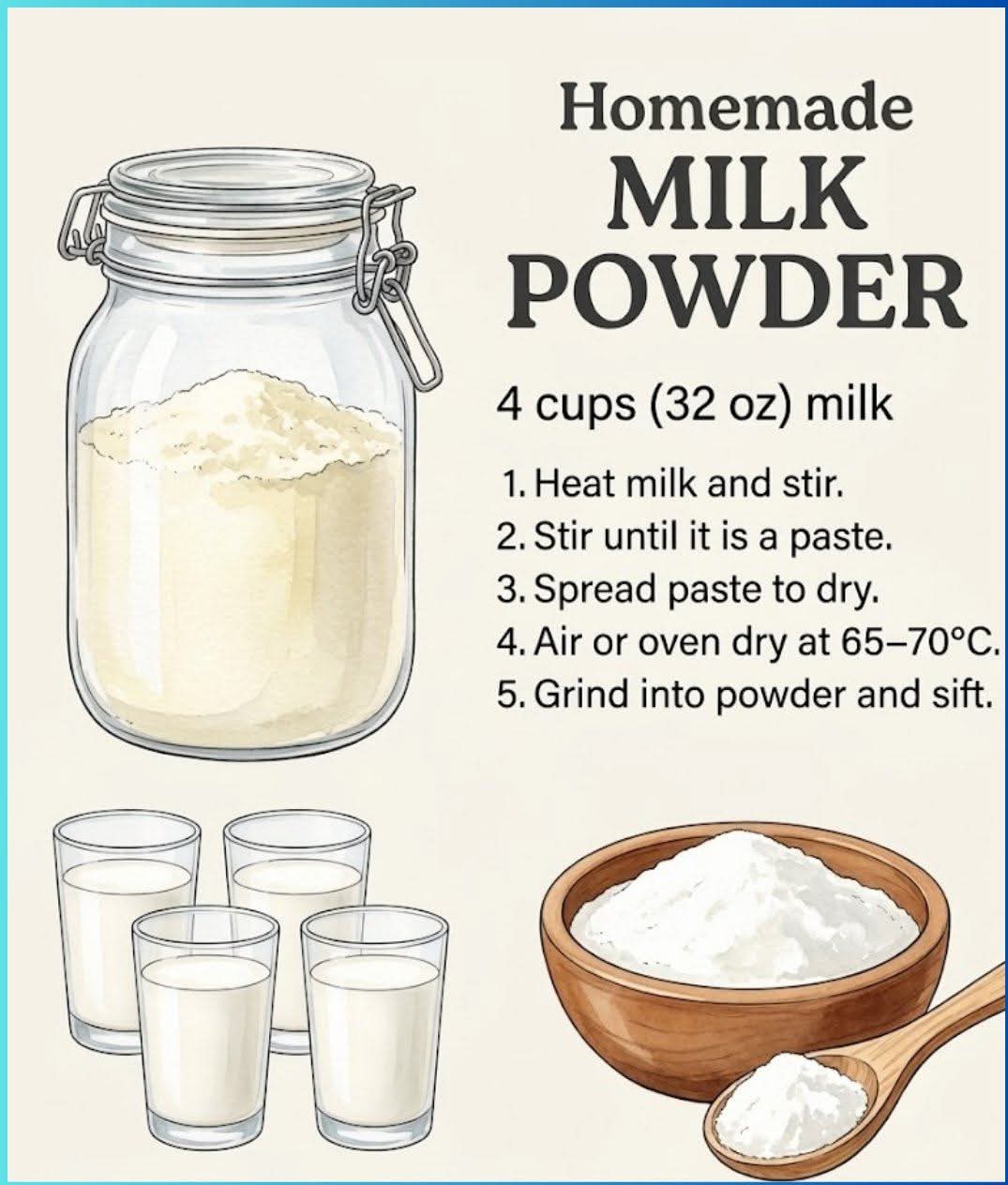
🥛 Homemade Milk Powder (Only ONE Ingredient!)
Making your own milk powder at home may sound surprising, but it’s actually a simple and rewarding kitchen project. With just fresh milk and a little patience, you can create a shelf-stable powder that can be used in baking, drinks, and cooking.
Homemade milk powder is a great way to reduce waste, save money, and avoid additives often found in store-bought powdered milk. Many traditional kitchens around the world used similar drying techniques long before modern factories existed. If you enjoy making ingredients from scratch, this method is both fun and practical.
🥛 Introduction
Milk powder is simply milk with the water removed. Once dehydrated, it turns into a fine powder that can be stored for long periods and easily reconstituted with water.
At home, you can make milk powder using slow evaporation and drying. The result is a natural product that works wonderfully in recipes like cakes, cookies, breads, hot chocolate, and creamy sauces.
This recipe uses a simple 5-step method that requires only one ingredient and basic kitchen tools.
🥛 Ingredients
Only one ingredient is needed:
- 1–2 liters fresh whole milk
(You can also use low-fat milk if preferred.)
🥄 Kitchen Tools
- Large heavy saucepan
- Baking tray
- Parchment paper or silicone mat
- Oven or dehydrator
- Blender or food processor
- Airtight storage jar
👨🍳 Method 1: Oven Drying Method (Most Common)
Step 1: Heat the Milk
Pour the milk into a large saucepan and heat it on low heat. Stir frequently so the milk does not burn.
Continue simmering gently until the milk reduces and thickens.
Step 2: Reduce the Milk
Let the milk slowly cook until most of the water evaporates.
It will become thick and creamy, similar to condensed milk but without sugar.
Step 3: Spread the Milk
Line a baking tray with parchment paper.
Spread the thick milk mixture into a very thin layer across the tray.
Step 4: Dry in the Oven
Place the tray in the oven at 60–80°C (140–175°F).
Let it dry slowly for 3–5 hours, until the milk becomes completely dry and brittle.
Step 5: Grind into Powder
Break the dried milk sheets into pieces and place them in a blender or grinder.
Blend until it becomes a fine powder.
Your homemade milk powder is ready! 🥳
🔄 Method 2: Dehydrator Method
If you own a food dehydrator, the process becomes even easier.
- Pour milk into a shallow tray.
- Dehydrate at 57°C (135°F).
- Dry for 8–12 hours until fully dry.
- Grind into powder.
This method preserves flavor very well.
🏺 A Little History
Milk preservation has been important for centuries. Before refrigeration existed, people needed ways to store milk for long periods.
In the 1800s, large-scale milk powder production began when inventors discovered methods to evaporate milk and dry it into powder. It quickly became valuable for:
- Military food supplies
- Long sea voyages
- Baking industries
- Emergency food storage
Today, milk powder is used worldwide in bakeries, chocolate production, and instant drinks.
🍰 Uses for Homemade Milk Powder
Your homemade milk powder can be used in many recipes:
• Cakes and cupcakes
• Cookies and biscuits
• Pancakes and waffles
• Coffee and tea creamers
• Smoothies
• Hot chocolate
• Bread and pastry dough
To make milk again:
Mix 1 tablespoon milk powder + 1 cup warm water.
❤️ Why People Love This Recipe
Homemade milk powder lovers appreciate it because:
✔ Only one natural ingredient
✔ No preservatives or additives
✔ Budget-friendly
✔ Great for baking
✔ Long shelf life when stored properly
It’s also satisfying to know you created a useful pantry ingredient from scratch.
🏁 Conclusion
Making milk powder at home is a simple but fascinating kitchen skill. With just fresh milk, gentle heat, and patience, you can transform a liquid ingredient into a versatile powder that lasts for months.
Whether you enjoy homemade cooking, baking delicious cakes, or preparing pantry staples, this recipe is a great technique to learn and share.
Once you try it, you might never look at a glass of milk the same way again! 🥛✨