Here’s a rich, full “steak story recipe” you can use next time you cook — with flavor science, tradition, and everything your husband was reacting to included.
🥩 Perfect Juicy Steak (The “It Looks Like It’s Bleeding” Steak)
🟤 Introduction
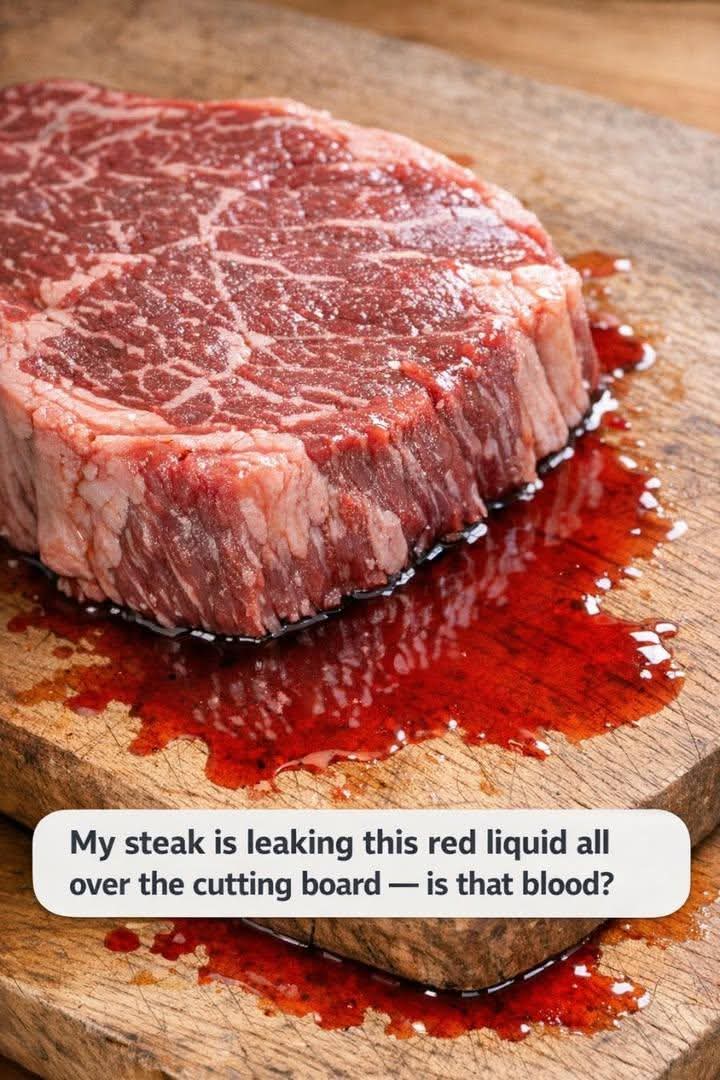
That “red juice” people see in a perfectly cooked steak is not blood — it’s mostly myoglobin, a protein that stores oxygen in muscle tissue. When heated, it releases that rich reddish liquid that makes steak look dramatic, juicy, and intensely flavorful.
A good steak isn’t just food — it’s a balance of science, heat control, and timing. This recipe turns that “bleeding illusion” into a perfectly tender, restaurant-quality experience.
🧂 Ingredients (2 servings)
- 2 beef steaks (ribeye, sirloin, or entrecôte)
- 2 tbsp olive oil or butter
- 3 garlic cloves, crushed
- 1 tsp salt (preferably coarse)
- 1 tsp black pepper
- 1 tsp paprika (optional, for depth)
- Fresh rosemary or thyme
- Optional: splash of lemon juice or balsamic glaze for finishing
🔥 Instructions
1. Preparation (The secret step)
- Take steak out of the fridge 30–60 minutes before cooking
- Pat completely dry with paper towels
👉 This helps create the perfect sear
2. Seasoning
- Rub both sides with salt, pepper, and paprika
- Lightly coat with olive oil
👉 Salt starts breaking down proteins, improving tenderness
3. Searing (Where flavor is born)
- Heat a heavy pan (cast iron preferred) until very hot
- Add oil, then steak
- Sear 2–4 minutes per side depending on thickness
👉 This creates the Maillard reaction, the golden crust full of flavor
4. Aromatic infusion
- Add butter, garlic, and herbs to the pan
- Tilt pan and spoon melted butter over steak repeatedly
👉 This “basting” locks in richness and aroma
5. Resting (CRUCIAL)
- Remove steak and rest for 5–10 minutes
👉 This redistributes juices so it stays tender instead of leaking out
🧪 Cooking Method Explained
- High heat searing = flavor crust (Maillard reaction)
- Internal proteins (myoglobin) = red juice appearance
- Resting phase = juice redistribution + tenderness
- Fat + butter basting = moisture + aroma infusion
📜 History of Steak Cooking
Steak cooking dates back to early cattle farming traditions in Europe, especially France and England. Cast iron pans became popular in the 18th century, allowing cooks to achieve high heat searing indoors.
The “juicy red center” became prized in French cuisine as “saignant” (meaning “bloody” in appearance but not actual blood), which later influenced modern rare and medium-rare cooking styles worldwide.
🧬 Formation of Flavor (Food Science)
When steak cooks:
- Proteins (myosin, myoglobin) denature
- Fats melt and carry flavor compounds
- Surface sugars and amino acids react (Maillard reaction)
- Water and juices redistribute during rest
👉 That’s why a properly cooked steak feels “alive” with juice, aroma, and tenderness.
🍽️ Serving Suggestions (“Lovers” pairing idea)
To elevate your steak experience:
- Garlic mashed potatoes
- Grilled vegetables
- Pepper sauce or mushroom cream sauce
- Red wine or sparkling water with lemon
For couples or “food lovers night”:
- Serve on a wooden board
- Add candlelight or warm lighting
- Slice steak before serving for sharing style dining
❤️ Conclusion
A great steak is not just cooked — it’s controlled heat meeting chemistry. That “bloody-looking juice” is actually what makes it luxurious, tender, and deeply satisfying.
Once you understand the science behind it, you stop fearing the redness… and start appreciating it.
💬 Final thought
Next time someone asks why your steak looks “bloody,” you can confidently say:
👉 “That’s not blood — that’s flavor science doing its job.”
If you want, I can also give you:
- or