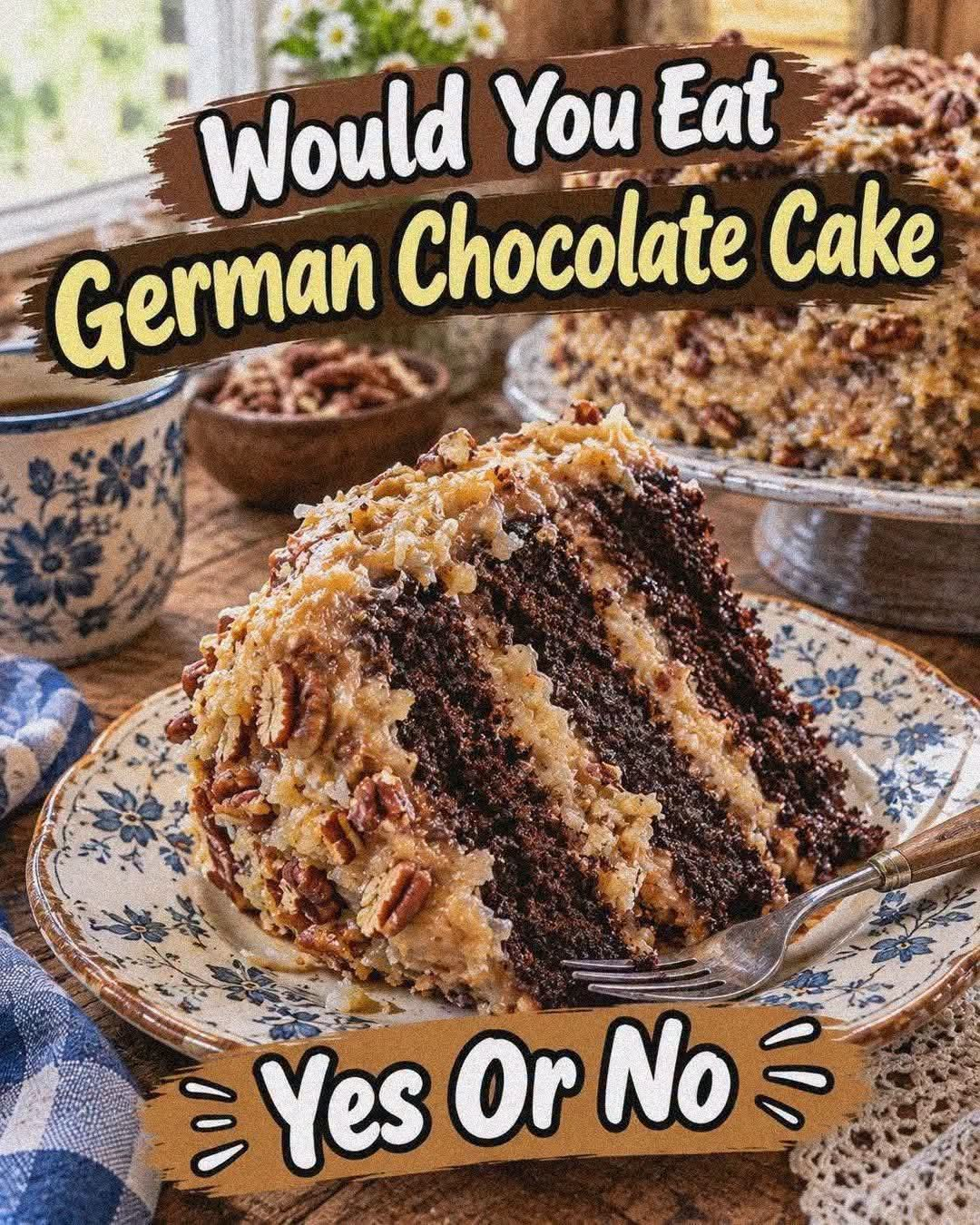
Old-Fashioned German Chocolate Cake
There’s something wonderfully special about a homemade German Chocolate Cake. With its moist chocolate sponge, rich coconut-pecan frosting and generous layers of buttery sweetness, it’s the kind of dessert that instantly makes a birthday, family gathering or holiday celebration feel more memorable.
This old-fashioned German chocolate cake recipe combines two soft chocolate cake layers with a traditional-style cooked frosting made from evaporated milk, egg yolks, butter, sugar, shredded coconut and chopped pecans. The contrast between the tender chocolate sponge and the sweet, nutty topping is what makes every slice so satisfying.
What I especially love about this recipe is that the coconut-pecan frosting isn’t simply a buttercream mixed with nuts. Instead, you gently cook the milk, egg yolks, butter and sugar until thickened, then fold in the vanilla, coconut and pecans. That gives the frosting its distinctive rich, almost caramel-like character.
The chocolate cake itself is easy to prepare using familiar baking ingredients. Unsweetened cocoa powder provides the chocolate flavour, while milk, eggs, vegetable oil and hot water or coffee help create a moist, tender crumb.
It’s a proper celebration cake, but you don’t need a special occasion to make it. Whether you’re baking for friends or treating yourself to a homemade dessert, this German chocolate layer cake with coconut-pecan frosting is a lovely recipe to have in your collection.
And one of the best things about the classic presentation? You can leave the sides of the cake uncovered, showing off the beautiful contrast between the dark chocolate layers and the golden coconut-pecan frosting.
German Chocolate Cake Recipe Overview
- Recipe: Old-Fashioned German Chocolate Cake
- Recipe Type: Dessert / Layer Cake
- Style: Classic American-Inspired Baking
- Method: Oven-Baked Cake with Stovetop Coconut-Pecan Frosting
- Layers: 2 chocolate cake layers
- Cake Tin Size: Two 9-inch (approximately 23 cm) round cake tins
- Oven Temperature: 350°F (175°C)
- Cake Baking Time: 30–35 minutes
- Cooling in Tins: 10 minutes
- Frosting Cooking Time: Approximately 10–12 minutes
- Frosting Safety Temperature: 160°F (71°C)
- Frosting Placement: Between the cake layers and on top
- Servings: Not specified
- Complete Preparation and Cooling Time: Not specified
Important: The cake layers must cool completely before assembly, and the cooked coconut-pecan frosting needs to cool until thick enough to spread. The original recipe doesn’t give exact durations for those cooling stages.
What Is German Chocolate Cake?
Despite its name, German chocolate cake is an American dessert, not a traditional cake from Germany.
The name is associated with Samuel German, who developed a sweet baking chocolate for Baker’s Chocolate in the nineteenth century. The dessert became widely popular in the United States during the twentieth century.
Traditionally, German chocolate cake combines chocolate cake layers with a distinctive cooked frosting containing coconut and pecans.
Unlike many other chocolate layer cakes, the classic presentation often leaves the sides exposed rather than completely covering them in chocolate buttercream.
It’s the coconut-pecan frosting that really sets this cake apart. Its rich texture, buttery sweetness and nutty flavour make it instantly recognisable.
The recipe shared here uses unsweetened cocoa powder rather than German’s sweet baking chocolate, so it’s best understood as a homemade cocoa-based version of this classic American favourite.
That doesn’t take away from its appeal: you still get moist chocolate layers and the signature coconut-pecan frosting that people love.
Why You’ll Love This Homemade German Chocolate Cake
- Rich chocolate flavour: Unsweetened cocoa powder gives the sponge a deep chocolate taste.
- Moist, tender layers: Vegetable oil, milk and hot liquid help produce a soft crumb.
- Traditional-style frosting: Coconut, pecans, butter and evaporated milk create the distinctive topping.
- Made from scratch: No boxed cake mix required.
- Perfect for celebrations: A lovely centrepiece for birthdays, holidays and family gatherings.
- Beautiful layered presentation: The uncovered sides highlight the chocolate sponge and golden frosting.
- Simple ingredients: Familiar baking staples create an impressive dessert.
- Great make-ahead potential: Cake layers and frosting can be prepared ahead with appropriate storage.
German Chocolate Cake Ingredients
This recipe has two components: a rich chocolate sponge and a buttery coconut-pecan frosting.
For the Chocolate Cake
- 2 cups all-purpose flour (plain flour)
- 2 cups granulated sugar
- ¾ cup unsweetened cocoa powder
- 2 teaspoons baking powder
- 1½ teaspoons baking soda (bicarbonate of soda)
- 1 teaspoon salt
- 2 large eggs
- 1 cup whole milk
- ½ cup vegetable oil
- 2 teaspoons vanilla extract
- 1 cup boiling water or hot coffee
For the Coconut-Pecan Frosting
- 1 cup evaporated milk
- 1 cup granulated sugar
- 3 large egg yolks
- ½ cup unsalted butter
- 1 teaspoon vanilla extract
- 1½ cups sweetened shredded coconut
- 1 cup chopped pecans
- Pinch of salt
UK ingredient note: All-purpose flour is plain flour, baking soda is bicarbonate of soda, and sweetened shredded coconut is different from the unsweetened desiccated coconut commonly sold in UK supermarkets.
Allergy note: This cake contains wheat, eggs, milk and pecans. Check the labels of the chocolate and coconut products for additional allergen information.
Ingredient Notes and Why Each One Matters
Plain Flour
The cake uses two cups of plain flour.
Plain flour provides structure and helps the cake layers hold their shape beneath the generous frosting.
Because the recipe includes baking powder and bicarbonate of soda, self-raising flour isn’t a direct substitute without adjusting the raising agents.
Granulated Sugar
The cake batter uses two cups of granulated sugar.
Sugar adds sweetness and helps create a moist, tender crumb.
The frosting also contains a separate cup of granulated sugar, which contributes to its distinctive sweet, caramel-like flavour.
Unsweetened Cocoa Powder
Three-quarters of a cup of unsweetened cocoa powder gives the sponge its chocolate flavour.
The original recipe doesn’t use chocolate bars or melted baking chocolate.
Choose a good-quality cocoa powder for a rich, satisfying taste.
Baking Powder
Two teaspoons of baking powder help the cake rise in the oven.
Bicarbonate of Soda
One and a half teaspoons of bicarbonate of soda are included alongside the baking powder.
Use the measured amount because changing the raising agents can affect both the texture and flavour.
Salt
One teaspoon of salt balances the sweetness of the chocolate cake.
The frosting also uses a small pinch to round out its rich flavour.
Large Eggs
The sponge contains two whole eggs.
Eggs contribute structure, moisture and richness.
The frosting uses three separate egg yolks, which help thicken the cooked mixture.
Whole Milk
One cup of whole milk contributes moisture and a soft texture to the cake batter.
Vegetable Oil
Half a cup of vegetable oil helps keep the chocolate sponge moist.
Oil-based chocolate cakes often retain a soft texture even after refrigeration.
Vanilla Extract
Two teaspoons of vanilla extract go into the cake, while the frosting uses another teaspoon.
Vanilla complements both the cocoa and the coconut-pecan topping.
Boiling Water or Hot Coffee
One cup of boiling water or hot coffee is added at the end of mixing the cake batter.
Hot liquid helps disperse the cocoa powder and produces a thin batter.
Coffee is an optional alternative that can deepen the perception of chocolate flavour.
The recipe specifically warns that the batter will be thin, so don’t be tempted to add more flour simply because it looks runny.
Evaporated Milk
The frosting uses one cup of evaporated milk.
This concentrated, unsweetened milk contributes richness and helps create the cooked custard-style base.
Important: Evaporated milk is not the same as sweetened condensed milk.
Egg Yolks
Three egg yolks help the frosting thicken as it cooks.
The recipe specifies heating the mixture to 160°F (71°C) for food safety.
Unsalted Butter
Half a cup of unsalted butter makes the frosting rich and buttery.
Using unsalted butter allows the small pinch of salt to balance the sweetness.
Sweetened Shredded Coconut
One and a half cups of sweetened shredded coconut give the frosting its distinctive texture and flavour.
Sweetened shredded coconut is often softer and moister than standard UK desiccated coconut.
Chopped Pecans
One cup of chopped pecans adds a pleasant nutty flavour and texture.
The nuts help create the familiar coconut-pecan topping associated with German chocolate cake.
Equipment You’ll Need
- Two 9-inch (23 cm) round cake tins
- Baking parchment
- Large mixing bowl
- Medium mixing bowl, if desired
- Electric hand mixer or stand mixer
- Whisk
- Measuring cups and spoons
- Rubber spatula
- Medium saucepan
- Heatproof spoon or whisk
- Food thermometer
- Wire cooling racks
- Offset spatula or butter knife for spreading frosting
- Cake stand or serving plate
A food thermometer is particularly useful for the frosting, which contains egg yolks and must reach the specified safe temperature.
How to Make Old-Fashioned German Chocolate Cake
This recipe follows nine straightforward steps: prepare the pans, mix the cake, bake, cool, cook the coconut-pecan frosting and assemble the layers.
-
Step 1: Preheat the Oven and Prepare the Cake Tins
Preheat your oven to 350°F (175°C).
Grease two 9-inch round cake tins and line their bases with baking parchment.
Prepare both tins before mixing the batter so you can divide and bake it promptly.
-
Step 2: Combine the Dry Ingredients
In a large mixing bowl, add:
- 2 cups plain flour
- 2 cups granulated sugar
- ¾ cup unsweetened cocoa powder
- 2 teaspoons baking powder
- 1½ teaspoons bicarbonate of soda
- 1 teaspoon salt
Whisk thoroughly until the ingredients are evenly distributed and any obvious cocoa lumps have broken apart.
-
Step 3: Add the Wet Ingredients
Add:
- 2 large eggs
- 1 cup whole milk
- ½ cup vegetable oil
- 2 teaspoons vanilla extract
Beat until the mixture is smooth.
Carefully stir in 1 cup boiling water or hot coffee.
The batter will be thin. This is expected, so don’t add extra flour.
Chef’s tip: Pour the hot liquid carefully to avoid splashes, especially if using an electric mixer.
-
Step 4: Bake the Chocolate Cake Layers
Divide the batter evenly between the two prepared cake tins.
Place them in the preheated oven and bake for 30–35 minutes.
Check the centre of each cake with a skewer or cocktail stick.
The cakes are ready when the skewer comes out clean or with a few moist crumbs rather than wet batter.
-
Step 5: Cool the Cakes Completely
Let the cake layers rest in their tins for 10 minutes.
Then carefully turn them out onto wire cooling racks.
Allow both layers to cool completely before adding the frosting.
Warm sponge can soften the frosting and cause the layers to slide.
-
Step 6: Cook the Coconut-Pecan Frosting Base
In a medium saucepan, combine:
- 1 cup evaporated milk
- 1 cup granulated sugar
- 3 large egg yolks
- ½ cup unsalted butter
- Pinch of salt
Whisk the mixture together.
Cook over medium-low heat, stirring constantly, for approximately 10–12 minutes, until thickened.
Use a food thermometer to check that the mixture reaches at least 160°F (71°C).
Keep the heat gentle to prevent scorching or scrambling the egg yolks.
-
Step 7: Add Coconut, Pecans and Vanilla
Remove the saucepan from the heat.
Stir in:
- 1 teaspoon vanilla extract
- 1½ cups sweetened shredded coconut
- 1 cup chopped pecans
Mix thoroughly so the coconut and pecans are evenly coated.
Allow the frosting to cool until thick enough to spread.
It will become firmer as it cools.
-
Step 8: Assemble the German Chocolate Cake
Place one cooled chocolate cake layer on a serving plate or cake stand.
Spread half the coconut-pecan frosting evenly over the top.
Carefully place the second chocolate cake layer above it.
Spread the remaining frosting over the top layer.
Leave the sides uncovered, following the original traditional-style presentation.
-
Step 9: Let the Cake Set and Serve
Allow the assembled cake to settle before slicing.
Use a sharp cake knife to cut neat portions.
Serve with a glass of cold milk or a cup of coffee.
How to Make a Moist Chocolate Cake from Scratch
A tender, moist chocolate sponge is essential for balancing the rich coconut-pecan frosting.
Measure the Flour Carefully
Too much flour can produce a heavy, dry cake.
If measuring by volume, avoid packing flour tightly into the cup.
Use Unsweetened Cocoa Powder
The source calls for cocoa powder rather than sweetened drinking chocolate.
Whisk the Dry Ingredients
Mixing the baking powder, bicarbonate of soda and cocoa evenly helps the cakes rise consistently.
Use the Specified Oil
Half a cup of vegetable oil contributes to the cake’s soft, moist texture.
Don’t Worry About Thin Batter
The hot liquid makes the batter noticeably runny.
This is part of the original recipe’s method, not a sign that something has gone wrong.
Choose Hot Water or Coffee
Both are permitted by the source.
Coffee can enhance the chocolate flavour, while hot water keeps the flavour simpler.
Avoid Overbaking
Begin checking the cake towards the end of the 30–35-minute range.
Cool on Wire Racks
Proper cooling prevents the cake from remaining damp underneath and prepares it for the frosting.
Chef’s tip: A few moist crumbs on the testing skewer are fine; wet batter means the cake needs more time.
How to Make Old-Fashioned Coconut-Pecan Frosting
The frosting is what makes German chocolate cake so distinctive.
Unlike a typical icing made by beating butter with icing sugar, this version uses a cooked mixture that develops a rich, thick consistency.
Start with Evaporated Milk
Evaporated milk provides the creamy base.
Add Sugar and Egg Yolks
The granulated sugar sweetens the mixture while the egg yolks help it thicken as it cooks.
Include Butter and Salt
Butter adds richness, while a pinch of salt balances the sweetness.
Cook Over Medium-Low Heat
Gentle heat helps the mixture thicken without burning.
Stir Constantly
This is important because the frosting contains milk, sugar and egg yolks, which can stick or curdle if overheated.
Check the Temperature
The source specifies a safe cooking temperature of 160°F (71°C).
Add Vanilla After Cooking
Stirring in the vanilla off the heat preserves its familiar fragrant flavour.
Fold in Coconut and Pecans
These ingredients provide the characteristic texture.
Cool Before Spreading
The frosting needs to thicken enough to stay in place between the cake layers.
Chef’s tip: Keep the saucepan over gentle heat and stir right across the base and corners to prevent any part of the mixture from scorching.
How to Assemble a Beautiful German Chocolate Layer Cake
Assembly is simple, but the temperature and consistency of the cake and frosting make a big difference.
Cool the Sponge Completely
Even slightly warm cake can soften the filling.
Let the Frosting Thicken
It should spread easily but hold its shape.
Start with a Stable Cake Layer
Place the first layer on a flat serving plate or cake stand.
Use Half the Frosting
The original recipe divides the coconut-pecan frosting equally between the middle and the top.
Place the Second Cake Layer Carefully
Lower it gently onto the filling to avoid squeezing frosting over the edges.
Spread the Remaining Frosting
Use an offset spatula or the back of a spoon.
Leave the Sides Exposed
The original method doesn’t cover the sides with frosting.
This creates the familiar layered appearance associated with traditional-style German chocolate cake.
Allow Time to Set
Let the assembled cake settle before slicing so the frosting stays in place.
Expert Baking Tips for German Chocolate Cake
1. Prepare Both Cake Tins Before Mixing
The batter contains raising agents and should go into the oven promptly after mixing.
2. Measure the Cocoa Carefully
Too much cocoa can affect the cake’s texture and bitterness.
3. Use Fresh Raising Agents
Baking powder and bicarbonate of soda lose effectiveness over time.
4. Mix the Dry Ingredients Thoroughly
This helps prevent uneven rising.
5. Expect a Thin Batter
The hot water or coffee makes this recipe’s batter quite fluid.
6. Divide the Batter Evenly
Equal amounts help the two cake layers bake consistently.
7. Check Before Overbaking
Start checking towards the end of the specified range.
8. Cool the Cakes Completely
Warm cakes can cause the coconut-pecan frosting to slide.
9. Keep the Frosting Heat Gentle
Medium-low heat helps protect the egg yolks and dairy.
10. Use a Thermometer
The frosting must reach the recipe’s safe temperature of 71°C (160°F).
11. Stir the Frosting Constantly
Don’t leave the saucepan unattended while it thickens.
12. Let the Frosting Cool Before Assembly
It should be spreadable rather than hot and runny.
13. Use Evenly Chopped Pecans
Smaller pieces distribute more consistently through the frosting.
14. Keep the Classic Layered Look
Leaving the cake sides uncovered highlights the contrast between the sponge and coconut-pecan frosting.
Common German Chocolate Cake Mistakes to Avoid
Using Sweetened Drinking Chocolate Instead of Cocoa
The recipe specifically calls for unsweetened cocoa powder.
Adding Extra Flour Because the Batter Is Thin
The runny batter is intentional and helps produce a moist cake.
Using the Wrong Cake Tin Size
The original recipe uses two 9-inch round tins.
Overbaking the Sponge
Overbaked chocolate cake can turn dry and crumbly.
Removing the Cakes Too Quickly
Let them cool in the tins for the specified ten minutes first.
Frosting Warm Cakes
The filling can melt or slide if the sponge hasn’t cooled.
Cooking the Frosting Over High Heat
High heat can scorch the milk mixture or scramble the egg yolks.
Not Stirring the Frosting
Constant stirring is essential for even thickening.
Confusing Evaporated Milk with Condensed Milk
Sweetened condensed milk would substantially change the sweetness and texture.
Skipping the Frosting Temperature Check
The egg-yolk mixture should reach 160°F (71°C), as specified.
Using Hot, Runny Frosting
Allow it to cool until thick enough to spread.
Skipping the Setting Time
Allowing the assembled cake to settle helps produce neater slices.
Optional German Chocolate Cake Variations
The original recipe is delicious as written, but these optional ideas offer different flavours and presentations.
Coffee-Enhanced Chocolate Cake
Choose the original recipe’s hot coffee option instead of boiling water for a deeper chocolate impression.
Extra-Pecan Frosting
Some home bakers prefer a more nut-forward coconut-pecan topping. Increasing the pecans would be an optional adaptation.
Toasted Coconut Variation
Lightly toasted coconut can bring a different flavour, although the source uses regular sweetened shredded coconut.
Chocolate Frosted Sides
Some modern versions include chocolate buttercream around the sides.
The original recipe doesn’t, and leaving the sides exposed gives a more traditional appearance.
German Chocolate Cupcakes
You could adapt the batter for cupcakes, but the cake tin requirements and baking time would need separate testing.
Three-Layer German Chocolate Cake
A three-layer presentation is another option, although dividing the original batter among three tins would require different baking guidance.
Different Nuts
Walnuts could be used in an adapted version, but pecans are the defining nut in the original frosting.
Note: These are optional variations and may change the baking time, texture or traditional character of the cake.
What to Serve with German Chocolate Cake
Cold Milk
A glass of cold milk is one of the original serving suggestions and pairs beautifully with the rich chocolate sponge.
Freshly Brewed Coffee
Coffee balances the sweetness of the coconut-pecan frosting.
Vanilla Ice Cream
A small scoop of vanilla ice cream is an optional addition for an extra-indulgent dessert.
Whipped Cream
A little lightly whipped cream is another optional accompaniment if you prefer something less sweet.
Birthday Celebrations
The layered presentation makes this cake a lovely birthday centrepiece.
Holiday Dessert Tables
German chocolate cake is a wonderful choice for Christmas, Thanksgiving or other family gatherings.
Afternoon Coffee
A small slice alongside a cup of coffee makes a lovely afternoon treat.
For the classic presentation, serve generous slices that show off the moist chocolate sponge and thick coconut-pecan frosting.
How to Store Homemade German Chocolate Cake
The original recipe doesn’t include storage directions. These are general recommendations for a cake containing cooked egg-yolk and evaporated-milk frosting.
Refrigerating the Cake
Because the coconut-pecan frosting contains eggs and dairy, refrigerate the finished cake promptly in a covered container or cake carrier.
As a conservative general guideline, enjoy refrigerated leftovers within approximately 3–4 days.
Serving After Refrigeration
The frosting and cake may feel firmer straight from the fridge.
You can allow an individual slice to lose some of its chill briefly before eating, while observing normal food-safety limits for perishable foods.
Storing Cake Layers Separately
Unfrosted, completely cooled cake layers can be wrapped securely for make-ahead preparation.
Keep the prepared frosting refrigerated until assembly.
Freezing
Unfrosted chocolate cake layers generally freeze better than fully assembled cakes containing creamy frostings.
Freezing the finished cake may affect the coconut-pecan topping’s texture.
Making Ahead
You can bake the cake layers before the day of serving, provided you cool and store them safely.
The frosting can also be prepared ahead and refrigerated, though it may firm considerably as it cools.
Food Safety
Cook the frosting’s egg-yolk mixture to the specified 160°F (71°C), use clean utensils and don’t leave the finished cake unrefrigerated for prolonged periods.
Frequently Asked Questions About German Chocolate Cake
What is German chocolate cake?
It’s a classic American chocolate layer cake best known for its rich coconut-pecan frosting.
Is German chocolate cake actually from Germany?
No. Despite the name, German chocolate cake originated in the United States.
Why is it called German chocolate cake?
The name is associated with Samuel German, who developed a type of sweet baking chocolate for Baker’s Chocolate.
What makes German chocolate cake different from regular chocolate cake?
The signature coconut-pecan frosting and layered presentation distinguish it from many other chocolate cakes.
Does this recipe use German’s sweet chocolate?
No. This version uses unsweetened cocoa powder for the chocolate sponge.
What size cake tins do I need?
Two 9-inch (approximately 23 cm) round cake tins.
What oven temperature should I use?
350°F (175°C).
How long should I bake the chocolate cake layers?
Approximately 30–35 minutes, until a skewer inserted into the centre comes out clean or with a few moist crumbs.
Why is the chocolate cake batter so thin?
The cup of hot water or coffee creates a thinner batter, as specified in the original instructions.
Can I use coffee instead of boiling water?
Yes. The recipe explicitly allows either hot coffee or boiling water.
Will the cake taste strongly of coffee?
Coffee can deepen the perception of chocolate flavour, though the intensity depends on the coffee you use.
How long should I cool the cake in the tins?
Ten minutes before transferring the layers to wire racks.
Do the cake layers have to cool completely?
Yes. Warm cake can make the frosting too soft and unstable.
What is coconut-pecan frosting made from?
Evaporated milk, granulated sugar, egg yolks, butter, vanilla, sweetened shredded coconut, pecans and a pinch of salt.
Is coconut-pecan frosting a buttercream?
No. This version is a cooked, custard-style frosting rather than a conventional buttercream made by beating butter and icing sugar.
How long should I cook the frosting?
The original recipe specifies approximately 10–12 minutes over medium-low heat, stirring constantly until thickened.
What temperature should the frosting reach?
At least 160°F (71°C), as stated in the original recipe.
Why does the frosting contain egg yolks?
The yolks help thicken the cooked mixture and contribute richness.
Can I use sweetened condensed milk instead of evaporated milk?
No. Sweetened condensed milk contains added sugar and isn’t a direct replacement.
Can I use desiccated coconut?
Desiccated coconut is more commonly available in the UK, but it’s generally drier and may be unsweetened. The original recipe specifies sweetened shredded coconut.
Can I toast the pecans first?
Yes, as an optional adaptation. The original method uses chopped pecans without a separate toasting instruction.
Why is my coconut-pecan frosting runny?
It may need more cooking or cooling. The mixture should thicken on the hob and firm further as it cools.
Should the frosting cover the cake sides?
Not in the supplied recipe. Half goes between the layers and the remaining half goes on top.
Can I assemble the cake while the frosting is warm?
The frosting should cool until thick enough to spread, and the cake layers should be completely cool.
Can I make German chocolate cake ahead?
Yes. The cake layers and frosting can be prepared in advance and stored appropriately before assembly.
Does German chocolate cake need refrigeration?
This recipe contains a cooked egg-and-dairy frosting, so refrigeration is the safest storage option.
Can I freeze German chocolate cake?
Unfrosted chocolate cake layers generally freeze well. The coconut-pecan frosting may change texture after freezing.
How many servings does this recipe make?
The original recipe doesn’t specify a serving yield. The number of slices depends on your preferred portion size.
What should I serve with German chocolate cake?
The original recipe suggests cold milk or coffee. Vanilla ice cream is another optional accompaniment.
German Chocolate Cake Recipe Card
Recipe Name: Old-Fashioned German Chocolate Cake
Description: Moist homemade chocolate cake with two rich cocoa sponge layers and sweet, buttery coconut-pecan frosting, perfect for birthdays and family celebrations.
Recipe Category: Dessert / Cake
Cooking Method: Oven and Stovetop
Yield: One two-layer 9-inch round cake
Oven Temperature: 350°F (175°C)
Cake Baking Time: 30–35 minutes
Cooling in Tins: 10 minutes
Frosting Cooking Time: Approximately 10–12 minutes
Frosting Safety Temperature: 160°F (71°C)
Ingredients
Chocolate Cake
- 2 cups all-purpose flour
- 2 cups granulated sugar
- ¾ cup unsweetened cocoa powder
- 2 teaspoons baking powder
- 1½ teaspoons baking soda
- 1 teaspoon salt
- 2 large eggs
- 1 cup whole milk
- ½ cup vegetable oil
- 2 teaspoons vanilla extract
- 1 cup boiling water or hot coffee
Coconut-Pecan Frosting
- 1 cup evaporated milk
- 1 cup granulated sugar
- 3 large egg yolks
- ½ cup unsalted butter
- 1 teaspoon vanilla extract
- 1½ cups sweetened shredded coconut
- 1 cup chopped pecans
- Pinch of salt
Instructions
- Preheat the oven: Heat the oven to 350°F (175°C). Grease and line two 9-inch round cake tins with baking parchment.
- Mix the dry ingredients: In a large bowl, whisk together the plain flour, granulated sugar, unsweetened cocoa powder, baking powder, bicarbonate of soda and salt.
- Add the wet ingredients: Add the eggs, whole milk, vegetable oil and vanilla extract. Beat until smooth. Carefully stir in the boiling water or hot coffee. The batter will be thin.
- Bake the cakes: Divide the batter evenly between the two prepared tins. Bake for 30–35 minutes, until a skewer inserted in the centre comes out clean or with a few moist crumbs.
- Cool completely: Let the cakes cool in their tins for 10 minutes, then transfer to wire racks and cool completely.
- Cook the frosting: In a saucepan, whisk together the evaporated milk, granulated sugar, egg yolks, butter and salt. Cook over medium-low heat, stirring constantly, for approximately 10–12 minutes until thickened. Ensure the mixture reaches at least 160°F (71°C).
- Add the coconut and pecans: Remove the saucepan from the heat. Stir in the vanilla extract, shredded coconut and chopped pecans. Allow the frosting to cool until thick enough to spread.
- Assemble the cake: Place one cooled chocolate cake layer on a serving plate. Spread half the coconut-pecan frosting over the top. Add the second layer and spread the remaining frosting over the top.
- Slice and serve: Allow the cake to set before slicing. Serve with cold milk or coffee.
Recipe Notes
- The recipe produces two 9-inch chocolate cake layers.
- Use unsweetened cocoa powder, not sweetened drinking chocolate.
- Hot water or hot coffee are both specified options.
- The chocolate cake batter should be thin.
- Do not overbake; check for a clean skewer or a few moist crumbs.
- Cool the cakes completely before adding frosting.
- Cook the coconut-pecan frosting over medium-low heat while stirring constantly.
- The egg-yolk frosting mixture should reach 160°F (71°C).
- Allow the frosting to cool until spreadable.
- Use half the frosting between the cake layers and the remainder on top.
- The original presentation leaves the sides unfrosted.
- The source doesn’t specify preparation time, total time, serving count or nutritional information.
Recipe Hashtags
#GermanChocolateCake #ChocolateCake #OldFashionedRecipes #HomemadeCake #CoconutPecanFrosting #ClassicDesserts #BakingFromScratch #DessertLovers #FamilyRecipes #ChocolateLovers