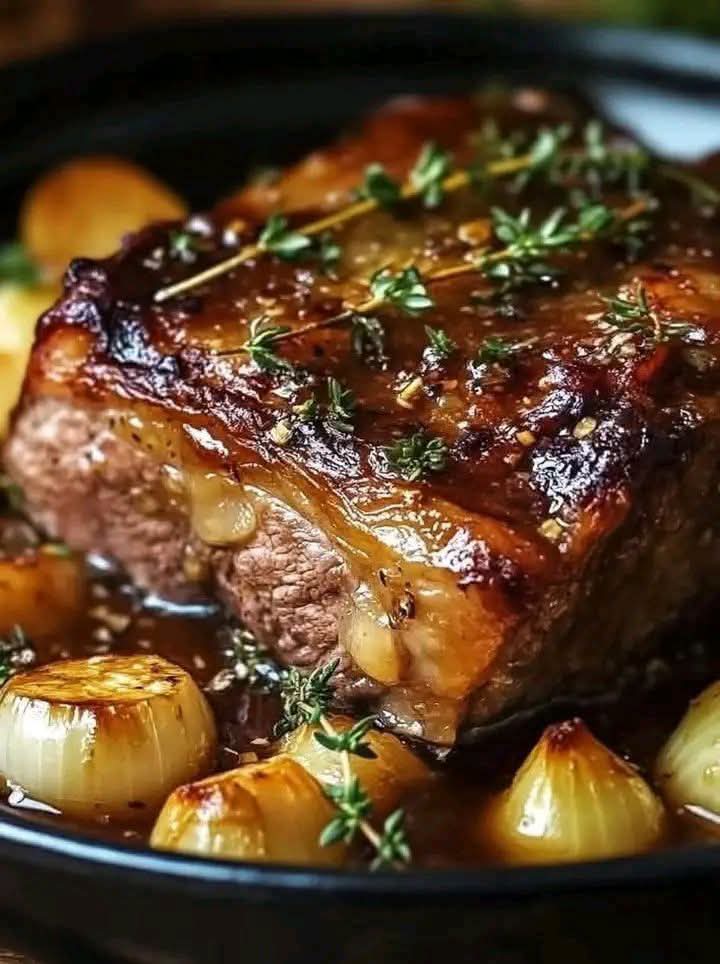
Slow-Roasted Garlic and Herb Lamb Shoulder with a Sticky Honey Mustard Glaze
This Slow-Roasted Garlic and Herb Lamb Shoulder combines a long, gentle oven roast with a short blast of higher heat and a sticky honey mustard glaze. The result described by the supplied method is an extremely tender lamb shoulder that pulls apart easily with a fork before receiving its final glazed finish.
Garlic plays a major role from the beginning. Some of the peeled cloves are pressed directly into small cuts in the lamb, while the remaining cloves roast around the meat. Rosemary, thyme, oregano, smoked paprika, salt and black pepper create the herb-and-spice rub.
The lamb sits over thickly sliced yellow onion and roughly chopped carrots while olive oil and chicken or lamb broth surround the base. It then slow-roasts covered at 300°F, with the cooking juices used for basting every hour.
For the finishing glaze, Dijon mustard and whole grain mustard combine with honey, lemon juice and Worcestershire sauce. After the slow roast, the oven temperature rises to 425°F and the glazed lamb returns uncovered for another 15–20 minutes, with a second brushing of glaze halfway through.
Why You’ll Love This Recipe
- Long, gentle roasting: The lamb cooks covered at 300°F for 3 1/2–4 hours until extremely tender.
- Plenty of garlic: The recipe uses 10 cloves, with some inserted directly into the lamb and the remainder scattered around it.
- Fresh herbs add flavor: Rosemary and thyme join oregano, smoked paprika, salt and black pepper in the seasoning mixture.
- Vegetables roast underneath: Thick onion slices and roughly chopped carrots create the base beneath the lamb.
- Two kinds of mustard: Dijon and whole grain mustard give the glaze its mustard component.
- Honey balances the glaze: Three tablespoons of honey combine with mustard, lemon and Worcestershire sauce.
- Basting is built into the method: The lamb is basted with its cooking juices every hour during the slow roast.
- High heat finishes the exterior: After slow roasting, the lamb returns to a 425°F oven uncovered with its honey mustard glaze.
Ingredients
- 4 pounds bone-in lamb shoulder
- 10 cloves garlic, peeled
- 2 tablespoons fresh rosemary, chopped
- 2 tablespoons fresh thyme leaves
- 2 teaspoons kosher salt
- 1 teaspoon black pepper
- 1 teaspoon smoked paprika
- 1/2 cup olive oil
- 1 cup chicken or lamb broth
- 2 tablespoons Dijon mustard
- 2 tablespoons whole grain mustard
- 3 tablespoons honey
- 1 tablespoon lemon juice
- 1 tablespoon Worcestershire sauce
- 1 teaspoon dried oregano
- 1 large yellow onion, thickly sliced
- 2 carrots, roughly chopped
- 1 tablespoon fresh parsley, chopped
Ingredient Notes
Bone-In Lamb Shoulder
The recipe uses a 4-pound bone-in lamb shoulder. Rather than relying only on a clock, the supplied method gives a texture cue for the slow-roasting stage: the meat should become extremely tender and pull apart easily with a fork.
Garlic
Ten peeled garlic cloves are used. The recipe instructs you to make several small cuts over the lamb and press some cloves into those openings. The remaining cloves are scattered around the lamb before roasting.
Rosemary, Thyme and Oregano
Fresh chopped rosemary and fresh thyme leaves combine with dried oregano in the seasoning mixture. This herb blend is rubbed generously over the entire lamb shoulder.
Smoked Paprika
One teaspoon of smoked paprika joins the herbs, kosher salt and black pepper in the rub.
Onion and Carrots
One thickly sliced yellow onion and two roughly chopped carrots go into the bottom of the Dutch oven or roasting dish. The seasoned lamb sits directly on top.
Olive Oil and Broth
Half a cup of olive oil and 1 cup of chicken or lamb broth are poured into the bottom of the roasting dish. The recipe specifically says the liquid should not completely cover the lamb.
Dijon and Whole Grain Mustard
The glaze uses 2 tablespoons each of Dijon mustard and whole grain mustard. Both are whisked with the other glaze ingredients before the final high-temperature roasting stage.
Honey, Lemon and Worcestershire Sauce
Three tablespoons of honey, 1 tablespoon of lemon juice and 1 tablespoon of Worcestershire sauce complete the supplied glaze mixture.
Fresh Parsley
The ingredient list includes 1 tablespoon of chopped fresh parsley. However, the supplied directions are truncated before stating how the parsley is used, so this article does not assign it to a particular step.
Equipment
- Large Dutch oven or deep roasting dish
- Lid or aluminum foil
- Sharp knife
- Paper towels
- Small mixing bowls
- Whisk
- Pastry or basting brush for the glaze
- Spoon or baster for the cooking juices
How to Make Slow-Roasted Garlic and Herb Lamb Shoulder
-
Preheat the Oven
Preheat the oven to 300°F (150°C).
-
Prepare the Lamb and Garlic
Pat the lamb shoulder dry with paper towels. Using a sharp knife, make several small cuts throughout the surface of the lamb and press some of the garlic cloves into the openings.
-
Season the Lamb
Combine the rosemary, thyme, kosher salt, black pepper, smoked paprika, and oregano in a small bowl. Rub the seasoning mixture generously over the entire lamb shoulder.
-
Arrange the Vegetables
Arrange the sliced onion and carrots in the bottom of a large Dutch oven or deep roasting dish. Place the seasoned lamb shoulder on top.
-
Add the Garlic and Cooking Liquid
Scatter the remaining garlic cloves around the lamb. Pour the olive oil and broth into the bottom of the dish, making sure the liquid does not completely cover the lamb.
-
Cover the Lamb
Cover the dish tightly with a lid or aluminum foil and place it in the oven.
-
Slow-Roast
Slow-roast for 3 1/2 to 4 hours, basting the lamb with the cooking juices every hour, until the meat is extremely tender and easily pulls apart with a fork.
-
Make the Honey Mustard Glaze
In a small bowl, whisk together the Dijon mustard, whole grain mustard, honey, lemon juice, and Worcestershire sauce.
-
Increase the Oven Temperature
Carefully remove the lamb from the oven and increase the oven temperature to 425°F (220°C).
-
Glaze the Lamb
Remove the lid or foil and brush the honey mustard mixture generously over the surface of the lamb.
-
Finish Roasting Uncovered
Return the lamb to the oven uncovered and roast for 15–20 minutes, brushing once more with the glaze halfway through.
Source note: The original final instruction ends after the words “until the o”. Because the remainder of that sentence was not supplied, its final doneness description and any subsequent directions have not been reconstructed.
Tips for the Best Results
- Pat the lamb dry: This is the first preparation step before adding the garlic and herb rub.
- Put garlic inside the lamb: Make small cuts and press some of the peeled cloves into the openings rather than keeping all the garlic around the roast.
- Season the entire shoulder: Rub the rosemary, thyme, oregano, paprika, salt and pepper mixture generously over the whole piece.
- Keep the lamb above the vegetables: Onion and carrots form the bottom layer, with the lamb resting on top.
- Do not submerge the meat: The source specifically says the olive oil and broth should not completely cover the lamb.
- Cover tightly for the slow roast: Use the Dutch oven lid or aluminum foil during the 300°F stage.
- Baste every hour: Spoon the cooking juices over the lamb throughout the 3 1/2–4 hour slow roast.
- Use tenderness as the cue: Before glazing, the meat should be extremely tender and easily pull apart with a fork.
- Glaze twice: Brush the lamb before the final roast and once again halfway through the 15–20 minute uncovered stage.
Common Mistakes to Avoid
Skipping the Garlic Pockets
The supplied preparation deliberately puts some garlic cloves into small cuts in the lamb. Scattering all 10 cloves around the outside would change that step.
Submerging the Lamb
Pour the olive oil and broth into the bottom of the dish, but follow the recipe’s instruction not to completely cover the lamb with liquid.
Leaving the Dish Uncovered During the Slow Roast
The initial 300°F roasting stage is performed with the Dutch oven or roasting dish tightly covered.
Forgetting to Baste
The recipe calls for basting with the cooking juices every hour during the 3 1/2–4 hour slow-roasting period.
Adding the Honey Mustard Glaze Too Early
The glaze belongs to the final stage. First slow-roast the lamb until extremely tender, then increase the oven to 425°F, uncover the dish and brush on the glaze.
Forgetting the Second Glaze
Brush the lamb again halfway through the final 15–20 minutes in the oven.
Substitutions and Variations
The recipe explicitly gives one choice for the cooking liquid: use chicken broth or lamb broth. Either option is part of the supplied recipe.
No substitutions are supplied for the bone-in lamb shoulder, fresh herbs, mustards, honey or other ingredients. Changes to those components would therefore be editorial variations rather than documented alternatives from the original recipe.
Serving Suggestions
The supplied recipe does not provide separate side-dish suggestions. The onion and carrots roast in the same dish beneath the lamb and are established components of the recipe.
Fresh parsley is also included in the ingredient list, but the source cuts off before explaining its use. For that reason, this article does not state that it must be sprinkled over the lamb or vegetables at serving time.
Storage and Reheating
Specific storage and reheating instructions were not included with the original recipe, so this article does not assign a storage duration or reheating method that was not supplied.
Frequently Asked Questions
What cut of lamb does this recipe use?
The recipe calls for a 4-pound bone-in lamb shoulder.
What temperature do you slow-roast lamb shoulder at?
This recipe begins at 300°F (150°C) with the roasting dish tightly covered.
How long does the lamb shoulder slow-roast?
The supplied recipe calls for 3 1/2–4 hours at 300°F, with the lamb basted every hour.
How do I know when the slow-roasting stage is finished?
The recipe says the lamb should be extremely tender and easily pull apart with a fork before you move on to the glazing stage.
Where does the garlic go?
Press some of the 10 peeled cloves into small cuts made in the lamb. Scatter the remaining cloves around the lamb in the roasting dish.
What herbs are used on the lamb?
The seasoning mixture contains fresh rosemary, fresh thyme and dried oregano, along with smoked paprika, kosher salt and black pepper.
What is the honey mustard glaze made from?
Whisk together Dijon mustard, whole grain mustard, honey, lemon juice and Worcestershire sauce.
When do I add the honey mustard glaze?
Add it after the 3 1/2–4 hour slow roast. Increase the oven temperature to 425°F, uncover the lamb and brush the glaze over its surface.
How long does the glazed lamb go back into the oven?
The supplied final roasting time is 15–20 minutes at 425°F (220°C), uncovered.
Should I add more glaze while the lamb finishes?
Yes. The recipe instructs you to brush the lamb once more with glaze halfway through the final roasting stage.
Can I use chicken broth instead of lamb broth?
Yes. The ingredient list explicitly allows chicken or lamb broth.
What happens to the fresh parsley?
The recipe includes 1 tablespoon of chopped fresh parsley, but the supplied directions are truncated before stating how it should be used. Its final use has therefore not been invented.
Recipe Card: Slow-Roasted Garlic and Herb Lamb Shoulder with a Sticky Honey Mustard Glaze
Recipe Name: Slow-Roasted Garlic and Herb Lamb Shoulder with a Sticky Honey Mustard Glaze
Description: Bone-in lamb shoulder slow-roasted with garlic, rosemary, thyme, onion and carrots until extremely tender, then finished at high heat with a sticky honey mustard glaze.
Method: Oven roasting
Slow-Roasting Time: 3 1/2–4 hours
Final Glaze Roast: 15–20 minutes
Ingredients
- 4 pounds bone-in lamb shoulder
- 10 cloves garlic, peeled
- 2 tablespoons fresh rosemary, chopped
- 2 tablespoons fresh thyme leaves
- 2 teaspoons kosher salt
- 1 teaspoon black pepper
- 1 teaspoon smoked paprika
- 1/2 cup olive oil
- 1 cup chicken or lamb broth
- 2 tablespoons Dijon mustard
- 2 tablespoons whole grain mustard
- 3 tablespoons honey
- 1 tablespoon lemon juice
- 1 tablespoon Worcestershire sauce
- 1 teaspoon dried oregano
- 1 large yellow onion, thickly sliced
- 2 carrots, roughly chopped
- 1 tablespoon fresh parsley, chopped
Instructions
- Preheat the oven to 300°F (150°C).
- Pat the lamb shoulder dry with paper towels. Using a sharp knife, make several small cuts throughout the surface of the lamb and press some of the garlic cloves into the openings.
- Combine the rosemary, thyme, kosher salt, black pepper, smoked paprika, and oregano in a small bowl. Rub the seasoning mixture generously over the entire lamb shoulder.
- Arrange the sliced onion and carrots in the bottom of a large Dutch oven or deep roasting dish. Place the seasoned lamb shoulder on top.
- Scatter the remaining garlic cloves around the lamb. Pour the olive oil and broth into the bottom of the dish, making sure the liquid does not completely cover the lamb.
- Cover the dish tightly with a lid or aluminum foil and place it in the oven.
- Slow-roast for 3 1/2 to 4 hours, basting the lamb with the cooking juices every hour, until the meat is extremely tender and easily pulls apart with a fork.
- In a small bowl, whisk together the Dijon mustard, whole grain mustard, honey, lemon juice, and Worcestershire sauce.
- Carefully remove the lamb from the oven and increase the oven temperature to 425°F (220°C).
- Remove the lid or foil and brush the honey mustard mixture generously over the surface of the lamb.
- Return the lamb to the oven uncovered and roast for 15–20 minutes, brushing once more with the glaze halfway through.
Recipe Notes
- The original final direction is truncated after “until the o,” so no missing final phrase has been invented.
- Baste the lamb with its cooking juices every hour during the slow-roasting stage.
- Before glazing, the lamb should be extremely tender and easily pull apart with a fork.
- Do not completely submerge the lamb when adding the olive oil and broth.
- Chicken broth or lamb broth can be used.
- Brush the glaze over the lamb twice: once before the final roast and again halfway through.
- The supplied directions do not explain how the chopped fresh parsley is used.
- No serving yield or nutrition information was supplied.
Storage and Reheating
Specific storage and reheating instructions were not included with the original recipe.