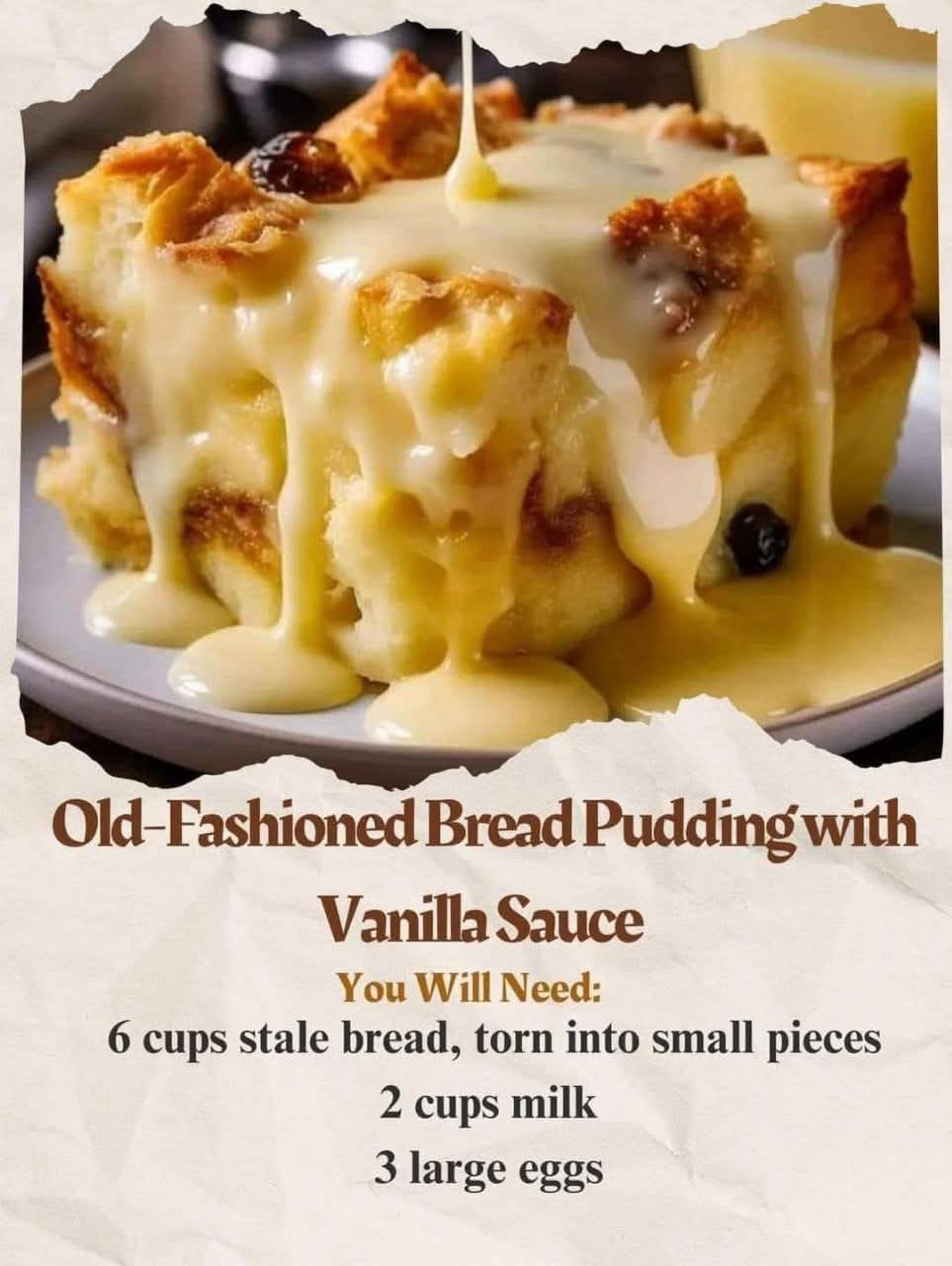
Grandma’s Old-Fashioned Bread Pudding with Homemade Vanilla Sauce
Introduction
There is something wonderfully comforting about an old-fashioned bread pudding. It is the kind of dessert that turns simple pantry ingredients into something warm, rich, tender, and deeply satisfying. Soft pieces of bread soak up a sweet, creamy custard, while raisins add little bursts of sweetness throughout. Once baked, the pudding develops a lightly golden top while remaining soft and delicate in the center.
The finishing touch is a generous spoonful of warm homemade vanilla sauce. The silky sauce melts over the warm pudding and brings everything together.
This is a wonderful recipe for using leftover bread, and it is especially good when you want a traditional dessert that tastes homemade without requiring complicated ingredients.
Ingredients
For the Bread Pudding
- 8 cups day-old bread, cut or torn into small cubes
- 4 cups whole milk
- 1 cup granulated sugar
- 4 large eggs
- 1/2 cup unsalted butter, melted
- 2 teaspoons vanilla extract
- 1 teaspoon ground cinnamon
- 1/4 teaspoon ground nutmeg
- 1/2 teaspoon salt
- 1 cup raisins
- 1/2 cup packed light brown sugar
- 1 tablespoon butter, for greasing the baking dish
For the Vanilla Sauce
- 1 cup granulated sugar
- 1/2 cup unsalted butter
- 1/2 cup heavy cream or whole milk
- 1 teaspoon vanilla extract
- 1 tablespoon all-purpose flour
- Pinch of salt
Optional Additions
For a slightly different version, you can add:
- 1/2 cup chopped pecans or walnuts
- 1/2 cup shredded coconut
- 1/2 cup chopped dried cranberries
- 1 tablespoon bourbon or rum
- Extra cinnamon for sprinkling
- A small amount of orange or lemon zest
History
Bread pudding has a long history because it began as a practical way to avoid wasting leftover bread. Rather than throwing away bread that had become dry or stale, cooks found that soaking it in milk, eggs, and sugar transformed it into a delicious dessert.
Versions of bread pudding have appeared in many different culinary traditions. In American home cooking, it became particularly associated with economical, comforting family meals and traditional Southern-style desserts. Recipes were often passed from one generation to another, with each family adding its own favorite ingredients.
Grandmothers frequently prepared bread pudding because it was inexpensive, adaptable, and forgiving. A few slices of leftover bread, some milk, eggs, sugar, and spices could become a dessert that would feed the whole family.
The vanilla sauce is another classic touch. Instead of serving the pudding plain, a warm buttery sauce is poured over the top, creating a rich contrast between the tender pudding and the smooth sweetness of the sauce.
Formation and Preparation
Step 1: Prepare the Bread
Preheat your oven to 350°F (175°C).
Grease a 9-by-13-inch baking dish generously with butter.
Place the cubed or torn day-old bread into a large mixing bowl.
Day-old bread works especially well because it is slightly dry and can absorb the custard without becoming completely mushy.
Step 2: Prepare the Custard
In a separate large bowl, whisk together the eggs, granulated sugar, melted butter, vanilla extract, cinnamon, nutmeg, and salt.
Slowly add the milk while whisking until everything is thoroughly combined.
The finished mixture should be smooth and evenly blended.
Step 3: Combine Everything
Pour the custard mixture over the bread cubes.
Gently toss the bread so that every piece becomes coated with the custard.
Add the raisins and brown sugar, distributing them evenly throughout the mixture.
Allow everything to sit for approximately 15 to 20 minutes. This soaking period allows the bread to absorb the custard and gives the finished pudding its soft, tender texture.
Step 4: Transfer to the Baking Dish
Pour the soaked bread mixture into the prepared baking dish.
Spread it evenly and gently press down on the bread with the back of a spoon so the top is relatively level.
If desired, sprinkle a little additional cinnamon over the surface.
Step 5: Bake
Place the baking dish in the preheated oven.
Bake for approximately 45 to 55 minutes, or until the top is golden brown and the center is set.
The pudding should still have a slight softness when gently pressed in the middle. Avoid overbaking because excessive baking can make the pudding dry.
Remove it from the oven and allow it to rest for about 10 to 15 minutes before serving.
Method for the Homemade Vanilla Sauce
While the bread pudding is baking, prepare the sauce.
Place the sugar, butter, heavy cream or milk, flour, and salt into a small saucepan.
Whisk the ingredients together over medium-low heat.
Continue cooking and stirring until the butter has melted and the sauce becomes smooth and slightly thickened.
Do not allow the mixture to boil aggressively. Gentle heating helps create a smooth sauce.
Remove the saucepan from the heat and stir in the vanilla extract.
Taste the sauce and add a tiny pinch more salt if necessary. The salt helps balance the sweetness and brings out the vanilla flavor.
Keep the sauce warm until the bread pudding is ready.
Serving Method
Cut the warm bread pudding into squares or spoon individual portions into serving bowls.
Pour warm vanilla sauce generously over each serving.
For an extra-special presentation, you can serve it with a scoop of vanilla ice cream, a dollop of whipped cream, or a light dusting of cinnamon.
The contrast between the warm pudding and cool ice cream is especially delicious.
Important Tips for the Best Bread Pudding
Use Day-Old Bread
Fresh bread can work, but slightly stale bread absorbs the custard much better. If your bread is very fresh, cut it into cubes and let it sit uncovered for several hours.
Do Not Rush the Soaking
Giving the bread time to absorb the custard helps produce a soft, evenly textured pudding.
Do Not Overbake
The pudding should be set but still tender. If it is baked for too long, it can become dry.
Adjust the Sweetness
If you prefer a less-sweet dessert, reduce the granulated sugar slightly. The vanilla sauce will also contribute considerable sweetness.
Make It Your Own
Bread pudding is very forgiving. Raisins are traditional, but chopped pecans, walnuts, dried cranberries, or a little citrus zest can add wonderful flavor.
Serve It Warm
Although bread pudding can be enjoyed cold, it is at its best when served warm with freshly prepared vanilla sauce.
Storage
Allow leftover bread pudding to cool before covering it and placing it in the refrigerator.
It can generally be refrigerated for several days.
To reheat, warm individual portions in the microwave in short intervals or reheat the pudding gently in the oven.
The vanilla sauce can also be refrigerated separately. Warm it gently before serving, stirring until smooth.
Make-Ahead Method
The bread pudding can be assembled several hours ahead of baking.
Prepare the bread and custard mixture, cover the baking dish, and refrigerate it until you are ready to bake.
Before baking, allow the dish to sit at room temperature briefly while the oven preheats.
The vanilla sauce can also be prepared ahead and gently reheated before serving.
Why People Love This Recipe
This recipe is loved because it is simple, economical, nostalgic, and incredibly comforting.
It does not require expensive ingredients or complicated techniques. Instead, it relies on the familiar flavors of buttery bread, creamy custard, cinnamon, vanilla, and raisins.
It is also a wonderful example of traditional home cooking: taking something ordinary and turning it into something special.
Conclusion
Grandma’s Old-Fashioned Bread Pudding is more than just a dessert. It represents the kind of cooking that was built around family, comfort, generosity, and making the most of what was already in the kitchen.
The tender custard-soaked bread, sweet raisins, warm spices, and rich vanilla sauce create a dessert that feels timeless. It is perfect for Sunday dinner, family gatherings, holidays, or simply an evening when you want something warm and homemade.
Serve it warm, pour the vanilla sauce generously over the top, and enjoy every spoonful.
This is the kind of recipe that deserves to be written down, shared with loved ones, and passed on to the next generation.