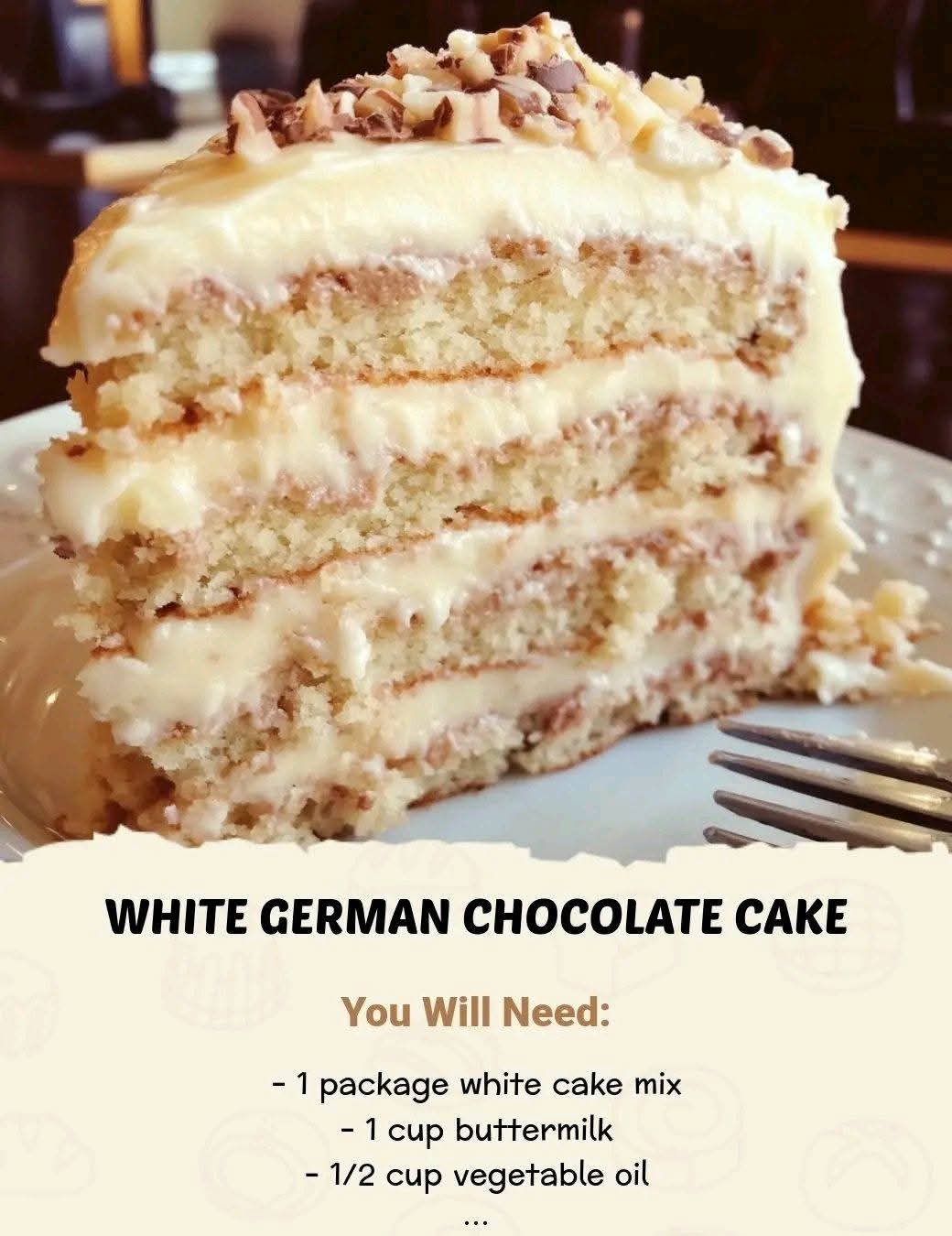
White German Chocolate Cake
Introduction
White German Chocolate Cake is an elegant variation of the classic German chocolate cake, combining a tender white cake with a rich, creamy coconut-pecan frosting. Instead of relying on chocolate-colored cake layers, this version allows the buttery coconut and toasted pecan flavors to take center stage.
The cake is soft, moist, and delicate, while the frosting provides a wonderful contrast with its creamy texture, chewy coconut, and crunchy pecans. It is an excellent choice for birthdays, family gatherings, holidays, afternoon coffee, or whenever you want a homemade dessert that feels especially indulgent.
This recipe makes two beautiful 9-inch cake layers and serves approximately 12 people.
Ingredients
For the White Cake
- 1 package white cake mix
- 1 cup buttermilk
- 1/2 cup vegetable oil
- 4 large egg whites
- 1 teaspoon vanilla extract
For the Coconut-Pecan Frosting
- 1/2 cup unsalted butter
- 1 cup granulated sugar
- 1 cup evaporated milk
- 3 large egg yolks
- 1 teaspoon vanilla extract
- 1 1/2 cups sweetened shredded coconut
- 1 cup chopped pecans
For Preparing the Pans
- Butter or shortening for greasing
- A small amount of flour
Preparation Time
- Prep time: 20 minutes
- Baking time: 25–30 minutes
- Frosting time: approximately 10–12 minutes
- Cooling and assembly: 30–45 minutes
- Total time: approximately 1 hour 30 minutes
- Yield: 12 servings
Instructions
Step 1: Prepare the Oven and Cake Pans
Preheat the oven to 350°F (175°C).
Grease two 9-inch round cake pans thoroughly with butter or shortening. Dust them lightly with flour, shaking out any excess. Properly preparing the pans helps prevent the delicate cake layers from sticking.
For an especially clean release, you can also place a round piece of parchment paper on the bottom of each pan.
Step 2: Make the Cake Batter
Place the white cake mix in a large mixing bowl.
Add the buttermilk, vegetable oil, egg whites, and vanilla extract. Using an electric mixer, beat the ingredients until they are thoroughly combined and the batter is smooth.
Do not overmix once the batter is smooth. Overmixing can affect the tenderness of the finished cake.
The buttermilk adds moisture and a subtle tang, helping create a softer and richer cake than one made with water alone.
Step 3: Fill the Cake Pans
Divide the batter evenly between the two prepared cake pans.
Smooth the surface with a spatula so that the layers bake evenly.
Place the pans in the preheated oven and bake for approximately 25–30 minutes.
Step 4: Check for Doneness
Begin checking the cakes around the 25-minute mark.
Insert a toothpick into the center of each cake. If the toothpick comes out clean or with only a few moist crumbs attached, the cakes are ready.
Avoid overbaking because white cake can become dry if left in the oven too long.
Remove the pans from the oven and allow the cakes to cool for about 10 minutes.
Carefully turn the layers out onto wire racks and allow them to cool completely before frosting.
Making the Coconut-Pecan Frosting
Step 5: Melt the Butter
Place a medium saucepan over medium heat.
Add the unsalted butter and allow it to melt completely.
Keep the heat moderate rather than high because the frosting contains egg yolks and milk, which can scorch or curdle if cooked too aggressively.
Step 6: Add the Remaining Ingredients
Add the granulated sugar, evaporated milk, egg yolks, and vanilla extract to the melted butter.
Stir continuously with a wooden spoon or heat-resistant spatula.
Continue cooking for approximately 10–12 minutes, stirring constantly.
The mixture should gradually become thicker and develop a beautiful golden color.
Step 7: Finish the Frosting
Once the mixture has thickened, remove the saucepan from the heat.
Immediately stir in the shredded coconut and chopped pecans.
Mix thoroughly so the coconut and pecans are distributed throughout the frosting.
Allow the frosting to cool until it is warm or room temperature and thick enough to spread easily.
It will continue to thicken as it cools.
Assembling the Cake
Step 8: Place the First Layer
Place one completely cooled cake layer on a serving plate or cake stand.
If the top is particularly domed, you can carefully level it with a serrated knife.
Step 9: Add the Filling
Spread a generous amount of the coconut-pecan frosting over the top of the first cake layer.
Spread it almost to the edges, creating a thick, flavorful middle layer.
Step 10: Add the Second Layer
Carefully place the second cake layer on top.
Press very gently so the layers settle without squeezing out too much frosting.
Step 11: Frost the Cake
Use the remaining coconut-pecan frosting to cover the top and sides of the cake.
For a traditional homemade appearance, the frosting does not need to be perfectly smooth. The coconut and pecans naturally create a textured, rustic finish.
Make sure the frosting is completely cool before serving.
Important Baking Methods and Tips
Use Room-Temperature Ingredients
When possible, allow the ingredients used for the cake to come closer to room temperature before mixing. This can help them combine more evenly.
Do Not Overbake
The most important way to maintain a moist white cake is to avoid overbaking. Begin testing the cake near the lower end of the recommended baking time.
Stir the Frosting Constantly
The frosting should be stirred continuously while cooking. This helps prevent the milk and egg mixture from sticking to the bottom of the pan and promotes an even, creamy texture.
Control the Heat
Medium heat is ideal for the frosting. Excessive heat can cause the egg yolks to cook too quickly, resulting in an unpleasant texture.
Cool Before Frosting
Never frost hot cake layers. Warm cake can melt the frosting and cause the layers to slide.
Toast the Pecans for Extra Flavor
For an even deeper nutty flavor, lightly toast the chopped pecans before adding them to the frosting. Spread them on a baking sheet and toast them briefly in a 350°F (175°C) oven until fragrant. Allow them to cool before incorporating them into the frosting.
History of German Chocolate Cake
Despite its name, German chocolate cake is an American creation rather than a traditional German dessert.
Its name comes from Samuel German, an American chocolate maker associated with Baker’s Chocolate. In the 19th century, German developed a type of sweetened baking chocolate that was later marketed under the name Baker’s German’s Sweet Chocolate.
The famous German chocolate cake became widely known in the United States after a cake recipe using this chocolate was published in a Texas newspaper in the 1950s. The recipe became extremely popular, and the dessert eventually became associated with the name “German chocolate cake.”
The classic version is known for its distinctive coconut-pecan filling or frosting. This white version keeps that beloved coconut-pecan character while replacing the traditional chocolate cake with tender white cake layers.
Formation of the Cake
The beauty of this cake comes from its three main components.
First, the white cake provides a light and delicate foundation. Buttermilk contributes moisture and a gentle tang, while egg whites help maintain the cake’s lighter appearance.
Second, the coconut-pecan frosting brings richness and texture. The buttery cooked mixture provides a creamy foundation, while coconut adds chewiness and pecans add crunch.
Finally, the two layers are assembled with a generous amount of frosting between them. This creates a dessert where every bite contains soft cake, creamy frosting, coconut, and pecans.
Serving Suggestions
White German Chocolate Cake is delicious served at room temperature.
For an extra-special presentation, serve each slice with:
- A small spoonful of whipped cream
- A few toasted pecans
- A sprinkle of toasted coconut
- A scoop of vanilla ice cream
- A light drizzle of caramel sauce
A cup of coffee, tea, or cold milk also pairs beautifully with the rich coconut-pecan frosting.
How to Store the Cake
Because the frosting contains dairy and egg yolks, the finished cake should be refrigerated if it will not be eaten within a few hours.
Cover the cake well and refrigerate it for up to 3–4 days.
For the best texture, allow refrigerated slices to sit at room temperature for approximately 20–30 minutes before serving.
The cake can also be prepared in advance. The individual cake layers can be baked, cooled, wrapped securely, and refrigerated before assembly.
Why Cake Lovers Enjoy It
Cake lovers appreciate this dessert because it offers several textures in one slice.
The cake is soft and tender, while the frosting is creamy, chewy, buttery, and nutty. The coconut provides sweetness and texture, while the pecans bring a pleasant roasted flavor and crunch.
It is also an excellent alternative for people who enjoy the traditional flavors of German chocolate cake but prefer a lighter-colored vanilla-style cake.
Conclusion
White German Chocolate Cake is a beautiful homemade dessert that transforms the familiar coconut-and-pecan flavors of German chocolate cake into something lighter and wonderfully delicate.
The combination of moist white cake, creamy coconut, crunchy pecans, and buttery frosting makes every layer memorable. Although the finished cake looks impressive, the preparation is straightforward when each component is given enough time to cool and develop its proper texture.
For birthdays, holidays, celebrations, family dinners, or simply a special weekend dessert, this cake is a wonderful recipe to keep. Its combination of softness, richness, coconut, and pecans makes it the kind of homemade cake that guests remember long after the last slice has disappeared.