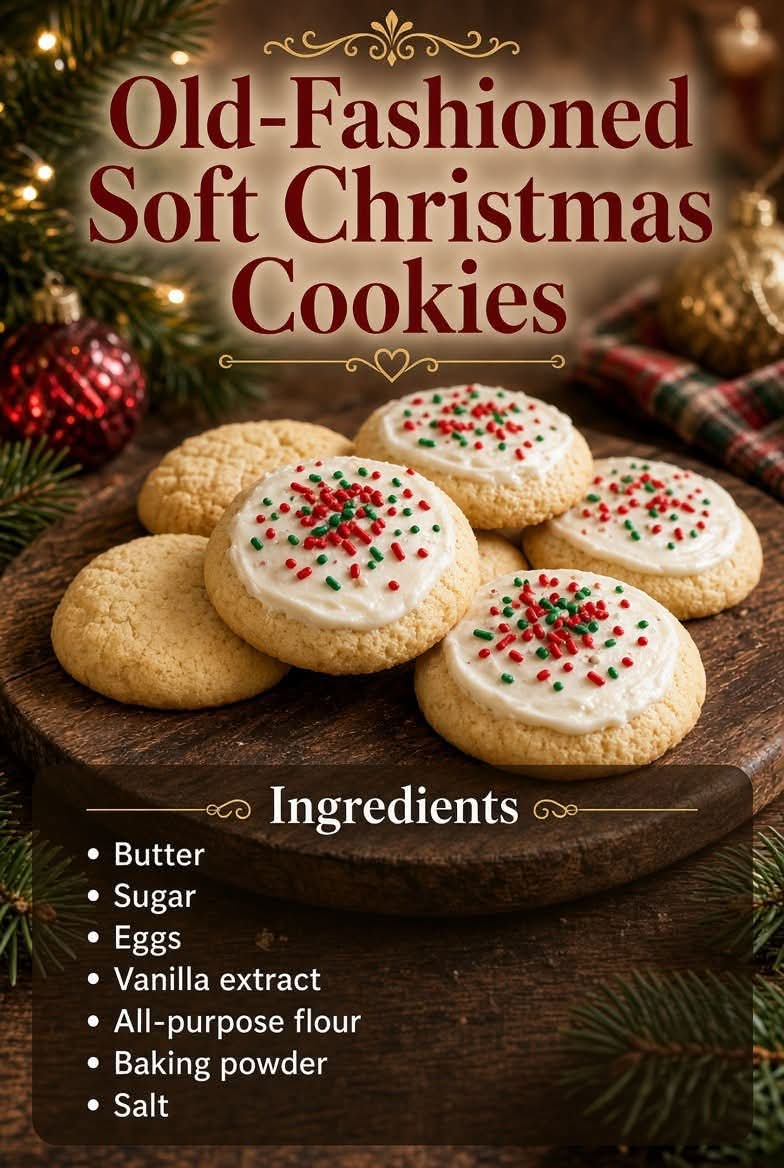
Old-Fashioned Soft Christmas Cookies
Introduction
Old-Fashioned Soft Christmas Cookies are the kind of holiday treat that brings back memories of cookie tins, family kitchens, Christmas gatherings, and plates of homemade sweets waiting beside a warm cup of coffee or cocoa. These cookies are tender, buttery, lightly sweet, and wonderfully soft in the center, with a creamy frosting that makes them especially festive.
Unlike crisp sugar cookies designed for elaborate decorating, these old-fashioned cookies are meant to be soft and comforting. The dough is easy to prepare, the cookies require no complicated techniques, and the finished texture stays pleasantly tender for several days when stored properly.
This recipe makes a generous batch, making it ideal for Christmas cookie exchanges, holiday parties, family gatherings, gift boxes, or simply keeping a container on the kitchen counter for everyone to enjoy.
Ingredients
For the Cookies
- 1 cup unsalted butter, softened
- 1 1/2 cups granulated sugar
- 2 large eggs, room temperature
- 2 teaspoons pure vanilla extract
- 1/2 teaspoon almond extract, optional
- 3 cups all-purpose flour
- 2 teaspoons baking powder
- 1/2 teaspoon baking soda
- 1/2 teaspoon salt
- 1/2 cup sour cream, room temperature
- 2 tablespoons milk, if needed for adjusting the dough
For the Creamy Frosting
- 1/2 cup unsalted butter, softened
- 3 cups powdered sugar
- 2 teaspoons vanilla extract
- 2 to 4 tablespoons milk or heavy cream
- Pinch of salt
For Decorating
- Festive sprinkles
- Colored sugar
- Nonpareils
- Small holiday candies, optional
Equipment
- Large mixing bowl
- Electric hand mixer or stand mixer
- Measuring cups and spoons
- Baking sheets
- Parchment paper
- Cookie scoop or tablespoon
- Wire cooling rack
- Small offset spatula or butter knife
Instructions
Step 1: Prepare the Baking Sheets
Preheat the oven to 350°F (175°C).
Line two baking sheets with parchment paper. Parchment helps prevent sticking and allows the cookies to bake evenly without developing an overly dark bottom.
Step 2: Cream the Butter and Sugar
Place the softened butter and granulated sugar in a large mixing bowl.
Beat on medium speed for approximately 2 to 3 minutes, until the mixture becomes light, creamy, and fluffy.
This step is important because properly creamed butter helps create the delicate texture associated with traditional soft sugar cookies.
Step 3: Add the Eggs and Flavorings
Add the eggs one at a time, mixing well after each addition.
Add the vanilla extract and almond extract if using. Beat briefly until everything is evenly incorporated.
Scrape down the sides of the bowl as needed.
Step 4: Combine the Dry Ingredients
In a separate bowl, whisk together the flour, baking powder, baking soda, and salt.
Mixing the dry ingredients separately distributes the leavening agents and salt evenly throughout the flour.
Step 5: Combine the Wet and Dry Mixtures
Add approximately one-third of the dry ingredients to the butter mixture.
Mix on low speed until just incorporated.
Add half of the sour cream and mix gently. Continue alternating the dry ingredients and sour cream, finishing with the dry ingredients.
Do not overmix the dough.
The finished dough should be soft and slightly thick. If it seems unusually stiff, add milk one tablespoon at a time until the proper consistency is reached.
Step 6: Chill the Dough
Cover the bowl and refrigerate the dough for approximately 30 to 45 minutes.
Chilling makes the dough easier to handle and helps prevent the cookies from spreading excessively during baking.
If your kitchen is particularly warm, a little additional chilling time may be helpful.
Step 7: Portion the Cookies
Use a cookie scoop or tablespoon to portion the chilled dough onto the prepared baking sheets.
Leave approximately 2 inches between each portion because the cookies will spread slightly as they bake.
For a classic appearance, keep the dough in rounded mounds rather than flattening it heavily.
Step 8: Bake
Bake for approximately 9 to 12 minutes.
The cookies should look set around the edges but still appear soft and slightly pale in the centers.
Do not wait for them to become deeply golden brown. Overbaking is one of the easiest ways to lose the tender texture that makes these cookies special.
Step 9: Cool
Allow the cookies to rest on the baking sheet for approximately 5 minutes.
Transfer them carefully to a wire rack and allow them to cool completely before frosting.
The centers will continue to set as the cookies cool.
Method for Making the Frosting
Place the softened butter in a mixing bowl and beat until smooth and creamy.
Gradually add the powdered sugar, mixing on low speed to prevent it from scattering.
Add the vanilla extract and a pinch of salt.
Add 2 tablespoons of milk or heavy cream and beat until smooth. If the frosting is too thick, add additional milk a teaspoon at a time.
If the frosting becomes too thin, add a little more powdered sugar.
The finished frosting should be creamy and spreadable but thick enough to sit nicely on top of the cookies.
Decorating Method
Once the cookies are completely cool, spread a small amount of frosting over each one.
Immediately add festive sprinkles or colored sugar while the frosting is still soft so the decorations adhere properly.
For a more traditional appearance, keep the frosting layer relatively thin. For a richer cookie, use a slightly thicker layer.
Allow the frosting to set before stacking the cookies.
The History Behind Soft Christmas Cookies
Christmas cookies have a long tradition in European and American holiday baking. Families have developed countless versions over generations, often adapting recipes according to the ingredients available in their kitchens.
Soft sugar cookies became especially popular because they were simple to prepare while still feeling special enough for celebrations. Butter, sugar, eggs, flour, and vanilla created a familiar base, while sour cream or similar dairy ingredients could contribute tenderness and moisture.
Decorating the cookies with frosting and colorful sugar became part of the festive tradition, particularly as home baking became an important part of Christmas celebrations.
The appeal of old-fashioned Christmas cookies is not necessarily sophistication. Their charm comes from simplicity, familiarity, and the memories associated with making them.
What Makes These Cookies Stay Soft?
There are several important details behind the tender texture.
First, avoid adding excessive flour. Too much flour can make cookies dry and dense.
Second, sour cream adds moisture and richness to the dough.
Third, avoid overmixing after the flour has been added. Excessive mixing can develop gluten and make the cookies tougher.
Finally, do not overbake them. The centers should still look soft when the cookies come out of the oven. They will continue cooking gently from the residual heat of the baking sheet.
Formation and Texture
The ideal cookie should have a lightly golden or pale exterior, a tender edge, and a soft, almost cake-like center.
The frosting adds another layer of sweetness and richness while the sprinkles provide the traditional Christmas appearance.
For uniform cookies, use a cookie scoop and portion each piece of dough to approximately the same size. This helps all the cookies finish baking at approximately the same time.
Important Baking Tips
Use room-temperature butter rather than melted butter. Softened butter creams properly with the sugar and helps create the desired texture.
Measure flour carefully. If possible, spoon flour into the measuring cup and level it rather than packing it down.
Do not overbake. The cookies should look slightly underdone in the middle when removed from the oven.
Cool completely before frosting. Warm cookies will cause the frosting to soften and slide.
If you want especially thick cookies, chill the dough longer before baking.
For a richer flavor, use pure vanilla extract and good-quality butter.
Storage
Store completely cooled and frosted cookies in an airtight container.
Place parchment or wax paper between layers if you are stacking them.
At room temperature, the cookies can generally be enjoyed for several days when properly sealed.
For longer storage, the unfrosted cookies can be frozen in an airtight freezer-safe container. Thaw them at room temperature and frost them afterward.
Make-Ahead Method
The dough can be prepared ahead of time and refrigerated before baking.
You can also bake the cookies in advance, allow them to cool completely, and freeze them unfrosted.
When needed, thaw the cookies, prepare the frosting, decorate them, and allow the frosting to set before serving.
This makes the recipe particularly convenient for Christmas parties and cookie exchanges because much of the preparation can be completed several days ahead.
Variations
Vanilla Christmas Cookies
Use only vanilla extract for a classic, delicate flavor.
Almond Christmas Cookies
Add almond extract to give the cookies the familiar bakery-style flavor often associated with decorated holiday sugar cookies.
Lemon Christmas Cookies
Add 1 teaspoon of finely grated lemon zest to the dough and replace part of the milk in the frosting with fresh lemon juice.
Chocolate Christmas Cookies
Replace approximately 1/3 cup of the flour with unsweetened cocoa powder for a chocolate variation.
Cinnamon Sugar Cookies
Add 1 teaspoon of ground cinnamon to the dough for a warm holiday flavor.
Serving Suggestions
These cookies are wonderful served alongside coffee, tea, hot chocolate, or a glass of cold milk.
They also make excellent additions to Christmas dessert tables. Arrange them on a large platter with different sizes and sprinkle colors for a traditional holiday presentation.
For gifts, place the cookies in a decorative tin or food-safe box with parchment between the layers.
Why Cookie Lovers Enjoy This Recipe
Cookie lovers appreciate these cookies because they combine everything people want from a nostalgic Christmas treat: buttery flavor, a soft center, creamy frosting, and colorful decoration.
They are also forgiving and approachable. You do not need advanced decorating skills or specialty equipment to make them look beautiful.
The real magic is in the texture. Instead of a hard, crunchy sugar cookie, these remain soft and tender, making them especially satisfying after they have cooled.
Conclusion
Old-Fashioned Soft Christmas Cookies are a wonderful example of how simple ingredients can create something deeply comforting and memorable. The buttery dough, tender crumb, creamy frosting, and festive decorations come together to create a cookie that feels right at home on a Christmas dessert table.
The most important secrets are simple: measure the flour carefully, avoid overmixing, chill the dough when necessary, and take the cookies from the oven while their centers are still soft.
Make a batch for a cookie exchange, prepare them with the family, package them as homemade gifts, or keep them in the kitchen for everyone to enjoy throughout the holiday season. These are the kind of cookies that disappear quickly and become part of the traditions people look forward to making year after year.