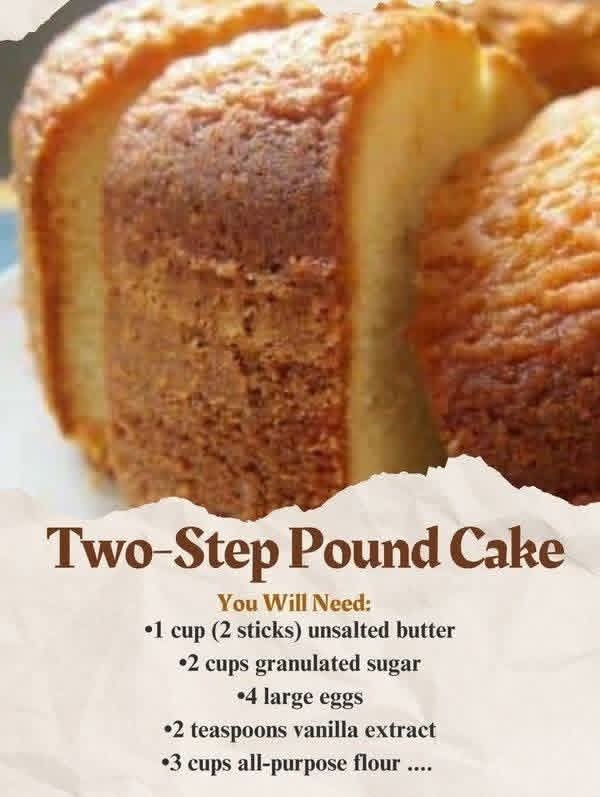
Two-Step Pound Cake
Introduction
This Two-Step Pound Cake is a classic old-fashioned Southern dessert made for those who appreciate a rich, buttery, dense, and beautifully golden cake. The name comes from the simple preparation method: rather than adding the ingredients gradually in several stages, the batter is prepared in two straightforward steps. The result is a tender yet substantial pound cake with a fine crumb, buttery flavor, and a golden crust.
It is the kind of cake that feels perfectly at home on a family dessert table, beside a cup of coffee in the afternoon, or served warm with fresh berries and whipped cream. Simple ingredients are transformed into something wonderfully comforting and elegant.
Ingredients
For the Pound Cake
- 3 cups all-purpose flour
- 3 cups granulated sugar
- 1 cup unsalted butter, softened
- 1/2 cup shortening, softened
- 6 large eggs, room temperature
- 1 cup whole milk
- 2 teaspoons vanilla extract
- 1/2 teaspoon almond extract, optional
- 1/2 teaspoon baking powder
- 1/2 teaspoon salt
For Preparing the Pan
- 1 tablespoon butter or shortening
- 1 tablespoon flour
Instructions
Step 1: Prepare the Oven and Pan
Preheat the oven to 325°F (165°C).
Generously grease a 10-inch tube pan or Bundt pan with butter or shortening. Dust lightly with flour, shaking out any excess. Properly preparing the pan is especially important because pound cake is rich and dense and can otherwise stick.
Allow the butter and eggs to come to room temperature before beginning. Room-temperature ingredients blend more evenly and help create a smoother batter.
Step 2: Make the Batter
In a large mixing bowl, combine the softened butter, shortening, sugar, eggs, milk, vanilla extract, almond extract if using, flour, baking powder, and salt.
Beat the ingredients together on low speed until everything is moistened and combined. Scrape down the sides of the bowl.
Increase the mixer speed to medium and beat the batter until it becomes smooth, thick, and creamy, usually about 2 to 3 minutes. Do not excessively beat the batter after it has become smooth.
The batter should be thick but pourable.
Step 3: Fill the Pan
Spoon the batter evenly into the prepared tube or Bundt pan.
Gently smooth the top with a spatula. Tap the pan lightly against the counter once or twice to remove any large air pockets.
Step 4: Bake
Place the cake in the center of the preheated oven.
Bake for approximately 1 hour 20 minutes to 1 hour 35 minutes, depending on your oven and the shape of your pan.
Begin checking around the 1-hour-15-minute mark. Insert a long wooden skewer or cake tester into the deepest part of the cake. It should come out clean or with a few moist crumbs attached.
The cake should be deeply golden on top and should begin pulling slightly away from the sides of the pan.
Step 5: Cool
Remove the cake from the oven and allow it to cool in the pan for approximately 10 to 15 minutes.
Carefully loosen the edges with a thin knife if necessary, then invert the cake onto a serving plate or cooling rack.
Allow it to cool completely before slicing.
For the cleanest slices, let the cake cool completely. For a warmer, more comforting dessert, serve slightly warm.
Traditional Southern Method
The beauty of this recipe is its simplicity. Traditional pound cakes are valued for their rich texture rather than complicated preparation. Butter and shortening provide richness and structure, while the eggs contribute to the characteristic dense yet tender crumb.
The key is not to rush the mixing process or the baking process. Make sure the ingredients are properly softened and at room temperature, measure the flour carefully, and avoid opening the oven repeatedly while the cake is baking.
A tube pan is particularly useful because its central opening allows heat to reach the middle of the dense batter, helping the cake bake evenly.
History of Pound Cake
Pound cake has a long history in American and European baking. The earliest versions were famously simple, traditionally made with approximately equal amounts of flour, butter, sugar, and eggs. The name “pound cake” comes from this traditional one-pound measurement of each principal ingredient.
Over generations, families adapted the basic formula by adding milk, flavorings, leavening agents, and other ingredients. Southern cooks developed many beloved variations, often emphasizing a rich buttery texture and beautifully browned crust.
The Two-Step method reflects the practical spirit of old-fashioned home baking. Instead of complicated techniques, the ingredients are brought together in a straightforward process that produces a dependable and delicious cake.
Formation and Texture
A successful pound cake should have a fine, close crumb without being dry. The outside should develop a golden crust, while the inside remains rich and moist.
The butter provides a luxurious flavor, while the shortening contributes to the cake’s structure and tenderness. Eggs help bind everything together and give the cake its characteristic richness. Milk softens the crumb and adds moisture.
The finished cake should be substantial enough to hold its shape when sliced but tender enough to melt pleasantly in the mouth.
Serving Ideas
This cake is wonderful served completely plain because its buttery vanilla flavor is already rich enough to stand on its own.
For a more elaborate dessert, serve slices with:
- Fresh strawberries
- Fresh blueberries
- Raspberries
- Whipped cream
- Vanilla ice cream
- Lemon curd
- Strawberry sauce
- Caramel sauce
- Chocolate sauce
- Powdered sugar
- Fresh peaches
A simple dusting of powdered sugar can turn the cake into an elegant dessert without overwhelming its traditional flavor.
Tips for the Best Pound Cake
Use room-temperature ingredients whenever possible. Cold butter and eggs can make the batter uneven and affect the final texture.
Measure flour accurately. Too much flour can make the cake excessively dense and dry.
Do not overfill the pan. A properly sized tube or Bundt pan gives the cake enough room to rise.
Do not open the oven repeatedly during baking. A sudden change in temperature can interfere with the cake’s structure.
Let the cake rest before removing it from the pan. Removing it too quickly can cause the cake to break.
Allow the cake to cool completely before storing it.
Storage
Store the cooled pound cake tightly covered at room temperature for up to 3 days.
For longer storage, wrap the cake securely in plastic wrap and place it in an airtight container. It can be refrigerated for several days, although refrigeration may make the crumb somewhat firmer.
The cake also freezes beautifully. Wrap individual slices or the entire cooled cake tightly and freeze for up to 3 months. Thaw at room temperature before serving.
A Loved Family-Style Dessert
There is something special about an old-fashioned pound cake. It does not need elaborate decorations, layers, or complicated fillings. Its appeal comes from the combination of butter, sugar, eggs, and vanilla baked into a beautifully golden cake.
It is the sort of dessert that can be passed around a family table, shared with friends, or enjoyed quietly with a warm cup of coffee. Every slice brings that familiar homemade quality that makes traditional baking so memorable.
Conclusion
This Two-Step Pound Cake is a wonderful example of how simple ingredients and a straightforward method can create an exceptional dessert. Its golden crust, rich buttery flavor, dense texture, and tender crumb make it a timeless favorite.
Whether served plain, topped with berries and cream, or enjoyed with a cup of coffee, this pound cake is the kind of recipe worth keeping in the family collection. It is simple enough for everyday baking and special enough for holidays, gatherings, and celebrations.
Once you make it, you may understand why classic pound cake has remained a beloved Southern tradition for generations.