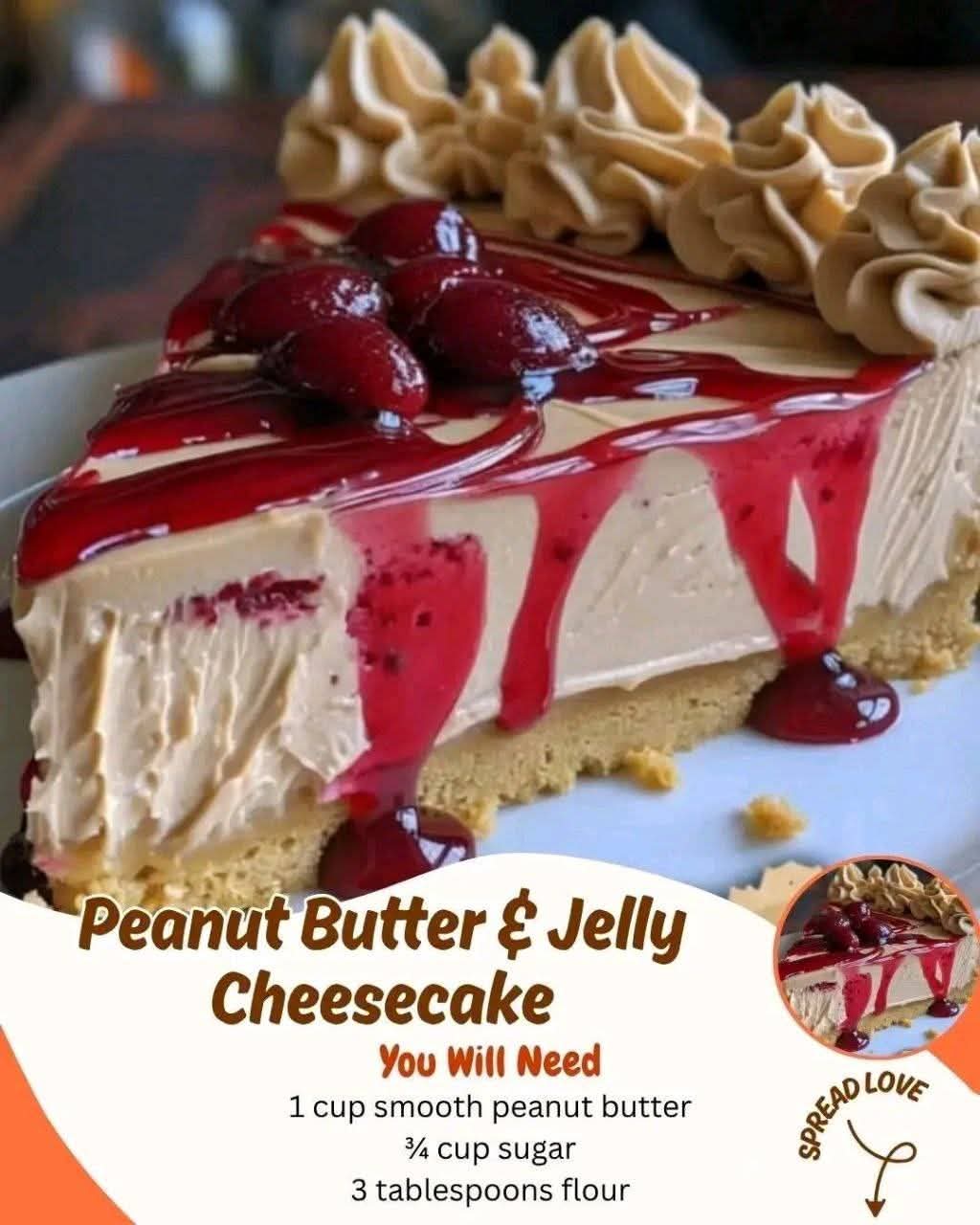
Peanut Butter & Jelly Cheesecake
Introduction
Peanut Butter & Jelly Cheesecake is a rich, creamy dessert inspired by one of the most beloved comfort-food combinations: peanut butter and fruit jelly. This cheesecake brings those familiar flavors into an elegant dessert with a buttery graham cracker crust, a smooth peanut butter cheesecake filling, ribbons of sweet strawberry or grape jelly, and a beautiful finish.
The cheesecake is creamy without being overly complicated, and the combination of salty, nutty peanut butter with bright fruit preserves gives every bite a wonderful balance. It is an excellent dessert for family gatherings, birthdays, holidays, potlucks, and anyone who loves classic peanut butter and jelly flavors.
Ingredients
For the Graham Cracker Crust
- 2 cups graham cracker crumbs
- 6 tablespoons unsalted butter, melted
- 2 tablespoons granulated sugar
- 1/4 teaspoon salt
For the Peanut Butter Cheesecake Filling
- 4 packages (8 ounces each) cream cheese, softened
- 1 cup smooth creamy peanut butter
- 1 cup granulated sugar
- 4 large eggs, room temperature
- 1 teaspoon vanilla extract
- 1/2 cup sour cream
- 1/4 cup heavy cream
- 2 tablespoons all-purpose flour
- 1/4 teaspoon salt
For the Jelly Swirl
- 3/4 cup strawberry, raspberry, or grape jelly or preserves
- 1 tablespoon warm water, if needed to loosen the jelly
For the Topping
- 1/2 cup creamy peanut butter
- 2 tablespoons heavy cream
- 1/3 cup strawberry, raspberry, or grape preserves
- 1/2 cup chopped roasted peanuts, optional
Equipment
- 9-inch springform pan
- Mixing bowls
- Electric hand mixer or stand mixer
- Rubber spatula
- Measuring cups and spoons
- Baking sheet
- Parchment paper
- Sharp knife
Preparation of the Crust
Begin by preheating the oven to 350°F (175°C).
Lightly grease the bottom and sides of a 9-inch springform pan. If desired, place a round piece of parchment paper on the bottom to make releasing the cheesecake easier.
Place the graham cracker crumbs in a bowl. Add the melted butter, granulated sugar, and salt. Mix thoroughly until the crumbs are evenly moistened and resemble wet sand.
Pour the mixture into the springform pan. Press it firmly and evenly across the bottom of the pan. You can use the bottom of a measuring cup or glass to create a compact, level crust.
Bake the crust for approximately 8 to 10 minutes. Remove it from the oven and allow it to cool while preparing the filling.
Preparing the Peanut Butter Cheesecake Filling
Make sure the cream cheese is completely softened before beginning. This is important because cold cream cheese can create lumps.
Place the softened cream cheese in a large mixing bowl. Beat on medium speed until smooth and creamy.
Add the peanut butter and granulated sugar. Continue mixing until the ingredients are fully incorporated and the mixture looks smooth.
Add the eggs one at a time. Mix on low speed after each addition, stopping as soon as the egg disappears into the batter. Avoid overmixing because excessive air can cause the cheesecake to puff and crack during baking.
Add the vanilla extract, sour cream, heavy cream, flour, and salt. Mix gently until the filling is smooth and uniform.
Scrape the sides and bottom of the bowl with a rubber spatula to make sure there are no unmixed portions.
Preparing the Jelly
Place the jelly or preserves in a small bowl.
If it is very thick, add approximately 1 tablespoon of warm water and stir until it becomes smooth and easy to spread.
Strawberry and raspberry preserves give the cheesecake a bright, slightly tart flavor, while grape jelly creates a more traditional peanut butter and jelly combination.
Forming the Cheesecake
Pour approximately half of the peanut butter cheesecake filling over the cooled crust.
Spoon several small portions of jelly over the surface. Use a butter knife or wooden skewer to gently swirl the jelly through the cheesecake mixture.
Pour the remaining cheesecake filling over the first layer.
Add another few spoonfuls of jelly to the top. Gently swirl again, creating attractive ribbons without completely mixing the jelly into the cheesecake.
The goal is to have visible streaks of fruit preserves throughout the cheesecake.
Baking Method
Place the springform pan on a baking sheet and carefully transfer it to the oven.
Reduce the oven temperature to 325°F (165°C).
Bake for approximately 55 to 70 minutes. The cheesecake is ready when the edges look firm but the center still has a slight wobble when the pan is gently moved.
Do not wait until the center is completely firm. Cheesecake continues to set as it cools.
Turn off the oven and leave the cheesecake inside with the oven door slightly open for approximately 30 minutes. This gradual cooling helps reduce the chance of cracking.
Remove the cheesecake from the oven and place it on a cooling rack.
Allow it to cool completely at room temperature.
Chilling the Cheesecake
Once the cheesecake has cooled, cover it loosely with plastic wrap or foil and refrigerate it for at least 6 hours.
For the best texture, refrigerate it overnight.
The long chilling period allows the filling to become firm, creamy, and easy to slice.
Preparing the Peanut Butter Topping
Place 1/2 cup peanut butter in a small bowl.
Warm it gently until it becomes smooth and pourable. Stir in the heavy cream until the mixture has a silky consistency.
Do not make the peanut butter extremely hot. It should simply be warm enough to spread easily.
Spread or drizzle the peanut butter mixture over the completely chilled cheesecake.
Spoon small amounts of fruit preserves over the top and gently swirl them into the peanut butter.
Finish with chopped roasted peanuts if desired.
Final Formation and Decoration
Carefully run a thin knife around the edge of the springform pan before releasing the sides.
Transfer the cheesecake to a serving plate.
For clean slices, use a large sharp knife. Dip the knife into hot water, wipe it dry, and then cut the cheesecake. Repeat this process between slices.
The finished cheesecake should have a firm graham cracker crust, a thick and creamy peanut butter center, visible ribbons of jelly, and a decorative peanut butter and fruit topping.
History and Inspiration
Peanut butter and jelly became one of the best-known American food combinations during the twentieth century. The pairing became particularly popular because peanut butter provided protein and richness while fruit preserves supplied sweetness and acidity.
The classic sandwich eventually inspired countless desserts, including cookies, cupcakes, brownies, pies, ice cream, bars, and cheesecakes.
Cheesecake itself has a much older history. Ancient versions of cheesecake were prepared in the Mediterranean world, while the rich cream-cheese style cheesecake familiar today developed much later. Combining that creamy dessert with the nostalgic flavors of peanut butter and jelly creates a modern interpretation of two classic American favorites.
Helpful Baking Methods
Use Room-Temperature Ingredients
Softened cream cheese blends much more easily than cold cream cheese. Room-temperature eggs and dairy ingredients also help create a smoother filling.
Do Not Overmix
Once the eggs are added, mix gently and only until incorporated. Too much air can cause the cheesecake to rise dramatically and then collapse or crack.
Do Not Overbake
A cheesecake should still have a gentle wobble in the center when it comes out of the oven. If the entire cheesecake is completely firm while still hot, it may become dry after cooling.
Chill Thoroughly
Refrigeration is essential. A cheesecake that has not chilled long enough may be soft and difficult to slice.
Choose the Right Jelly
Strawberry preserves create a classic sweet-tart flavor. Raspberry provides more acidity, while grape jelly gives the most recognizable traditional peanut butter-and-jelly taste.
Variations
For a chocolate version, replace part of the graham cracker crumbs with chocolate cookie crumbs.
For a strawberry version, use strawberry preserves and decorate the top with fresh strawberries.
For a raspberry version, use seedless raspberry preserves and finish with fresh raspberries.
For a grape version, use grape jelly throughout the cheesecake and topping.
For extra crunch, add chopped roasted peanuts to the crust and sprinkle additional peanuts over the finished cheesecake.
For a chocolate-peanut butter variation, drizzle melted chocolate over the chilled cheesecake before serving.
Serving Suggestions
Serve the cheesecake cold or allow it to stand at room temperature for approximately 10 to 15 minutes before serving.
A small spoonful of additional jelly alongside each slice makes the fruit flavor even more pronounced.
It can also be served with whipped cream, sliced strawberries, raspberries, chopped peanuts, or a light chocolate drizzle.
Because this is a rich cheesecake, relatively small slices are usually enough to satisfy a sweet tooth.
Storage
Store the cheesecake covered in the refrigerator for up to 4 to 5 days.
For longer storage, individual slices can be wrapped carefully and frozen. Place the wrapped slices in an airtight freezer-safe container and freeze for up to 2 months.
Thaw frozen slices overnight in the refrigerator before serving.
Conclusion
Peanut Butter & Jelly Cheesecake is a wonderful meeting of nostalgia and classic cheesecake. The buttery graham cracker crust provides the foundation, while the creamy peanut butter filling delivers deep nutty richness. The ribbons of jelly bring sweetness and fruitiness, creating the familiar contrast that makes peanut butter and jelly so enjoyable.
This dessert is especially loved by people who appreciate comforting, familiar flavors presented in a new way. It is rich, creamy, satisfying, and beautiful enough for a special occasion while still being approachable enough for a weekend baking project.
The best part is the combination of textures and flavors: the crisp buttery crust, velvety peanut butter cheesecake, sweet fruit preserves, and optional crunchy roasted peanuts. Every layer contributes something different, making this a memorable dessert for peanut butter-and-jelly lovers.