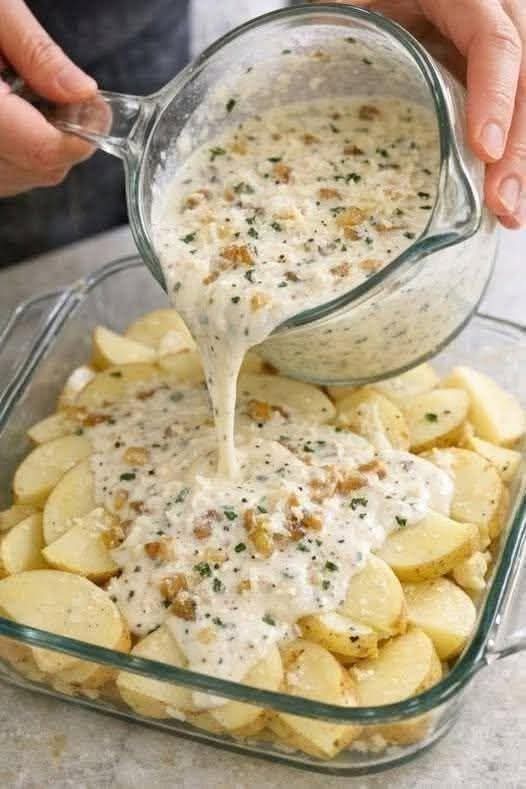
Creamy Pour-Over Potatoes Casserole
Introduction
There are few side dishes as comforting as a bubbling casserole of tender potatoes covered in a rich, creamy sauce. This creamy pour-over potato casserole takes simple ingredients and turns them into a warm, satisfying dish that feels perfect for a cozy family supper.
The potatoes slowly absorb the creamy sauce as they bake, becoming tender and flavorful while the top develops a beautiful golden crust. It is simple enough for a weeknight meal but special enough to serve alongside a holiday roast, baked chicken, or a Sunday dinner.
The secret is the creamy pour-over sauce. Instead of simply coating the potatoes, the sauce is poured over the entire casserole so it can work its way between the layers during baking.
Recipe Overview
Preparation time: 20 minutes
Cooking time: 60 to 75 minutes
Total time: About 1 hour 35 minutes
Servings: 6 to 8
Dish: 9-by-13-inch glass casserole dish
Oven temperature: 190°C (375°F)
Ingredients
For the Potatoes
- 1.5 kg potatoes, preferably Yukon Gold or another creamy potato
- 1 medium yellow onion, thinly sliced
- 2 tablespoons butter, for greasing the casserole dish
- 1 cup shredded cheddar cheese
- 1/2 cup shredded mozzarella cheese
- 2 tablespoons chopped fresh parsley, optional
For the Creamy Pour-Over Sauce
- 2 cups heavy cream
- 1 cup whole milk
- 3 tablespoons butter
- 3 tablespoons all-purpose flour
- 2 cloves garlic, finely minced
- 1 teaspoon salt
- 1/2 teaspoon black pepper
- 1/2 teaspoon dried thyme
- 1/4 teaspoon onion powder
- 1/4 teaspoon nutmeg, optional
For the Topping
- 1/2 cup shredded cheddar cheese
- 1/4 cup grated Parmesan cheese
- 2 tablespoons breadcrumbs, optional
- 1 tablespoon melted butter
Choosing the Potatoes
For this casserole, choose potatoes that become creamy and tender without completely falling apart.
Yukon Gold potatoes are particularly good because they have a naturally buttery flavor and creamy texture.
Russet potatoes can also be used and will produce a softer, starchier casserole.
Avoid cutting the potatoes too thick. Thin, evenly sliced potatoes cook more consistently and allow the cream sauce to penetrate every layer.
Instructions
Step 1: Prepare the Oven
Preheat the oven to 190°C (375°F).
Grease a 9-by-13-inch glass casserole dish thoroughly with butter.
Set the prepared dish aside.
Step 2: Prepare the Potatoes
Wash and peel the potatoes if desired.
Slice them into thin, even rounds, approximately 3 to 4 mm thick.
Try to keep the slices approximately the same thickness so they cook at the same rate.
Do not soak the sliced potatoes for this particular recipe. The natural starch from the potatoes helps the creamy sauce thicken as everything bakes together.
Step 3: Prepare the Onion
Thinly slice the onion.
You can leave it raw for a more traditional casserole, or gently sauté it in a tablespoon of butter for 5 to 7 minutes if you prefer a sweeter, deeper onion flavor.
Step 4: Make the Creamy Pour-Over Sauce
Place a saucepan over medium heat.
Add the butter and allow it to melt.
Add the minced garlic and cook for approximately 30 seconds, just until fragrant.
Sprinkle in the flour and whisk continuously for about 1 minute.
The flour and butter will form a smooth paste.
Gradually pour in the milk while whisking.
Once the milk is incorporated, slowly add the heavy cream.
Continue whisking until the sauce becomes smooth.
Add the salt, black pepper, thyme, onion powder, and optional nutmeg.
Cook gently for approximately 3 to 5 minutes, stirring frequently.
The sauce should become slightly thickened but still pour easily.
Do not boil it aggressively.
Step 5: Build the Potato Layers
Arrange approximately one-third of the sliced potatoes in the bottom of the prepared casserole dish.
Spread one-third of the sliced onions over the potatoes.
Sprinkle with a small amount of cheddar and mozzarella.
Repeat the layers until all the potatoes and onions have been used.
Finish with a layer of potatoes on top.
Step 6: Pour Over the Cream Sauce
Slowly pour the warm cream sauce over the entire casserole.
Pour it gradually rather than dumping it all in one location.
Tilt the casserole dish slightly if necessary so the sauce reaches the edges and works its way between the potato slices.
This is the important part of the recipe.
The creamy sauce will gradually move through the layers as the casserole bakes, coating the potatoes and creating a rich, velvety texture.
Step 7: Add the Cheese Topping
Sprinkle the remaining cheddar and Parmesan cheese over the top.
If using breadcrumbs, combine them with the melted butter and sprinkle them lightly over the cheese.
The breadcrumbs are optional but create an especially appealing crunchy topping.
Step 8: Cover and Bake
Cover the casserole dish tightly with aluminum foil.
Place it in the preheated oven.
Bake for approximately 40 minutes.
The foil traps steam and allows the potatoes to cook gently while absorbing the creamy sauce.
Step 9: Uncover and Finish Baking
Remove the foil carefully.
Continue baking for another 20 to 30 minutes, or until the potatoes are completely tender and the top is golden brown and bubbling.
To check for doneness, insert a thin knife into the center of the casserole.
The knife should slide easily through the potatoes.
If the potatoes are still firm, continue baking for another 10 minutes and check again.
Step 10: Rest Before Serving
Remove the casserole from the oven.
Allow it to rest for approximately 10 to 15 minutes before serving.
This is important because the creamy sauce will thicken slightly as it cools.
If you serve it immediately, the sauce may appear thinner than it will after resting.
The Creamy Pour-Over Method
The defining technique in this recipe is the pour-over sauce.
Rather than simply adding a small amount of cream to the potatoes, the sauce is prepared separately and poured evenly over the layered potatoes.
The butter and flour create a simple roux that gives the sauce body. Milk provides a lighter dairy base, while heavy cream contributes richness.
As the casserole bakes, potato starch is released into the sauce. The combination of potato starch and the prepared cream sauce creates the luxurious consistency that makes this dish so satisfying.
The covered portion of baking allows steam to circulate and soften the potatoes.
The uncovered portion allows excess moisture to evaporate while the cheese develops a golden crust.
Why the Glass Casserole Dish Works Well
A glass casserole dish is particularly useful because it allows you to see the layers while assembling the dish and provides an excellent baking vessel for a casserole like this.
The transparent sides also make it easier to see whether the sauce has reached the lower layers.
Always remember that glass bakeware should be handled according to the manufacturer’s instructions and protected from sudden temperature changes.
A Brief History of Creamy Potato Casseroles
Creamy potato dishes have deep roots in European and American home cooking.
Potatoes became an important staple in many households because they were affordable, filling, versatile, and easy to store. Home cooks discovered countless ways to prepare them, from simple boiled potatoes to gratins, scalloped potatoes, and baked casseroles.
French gratin-style potato dishes traditionally combine thinly sliced potatoes with cream or milk and often cheese. Similar potato casseroles developed in many other kitchens, with each family adding its own preferred ingredients.
American home cooks popularized numerous versions of creamy baked potatoes, particularly as practical side dishes for family dinners and holiday meals.
The modern creamy potato casserole continues that tradition while allowing plenty of room for personal touches.
Formation of the Casserole
The casserole develops its texture through several stages.
First, the raw potatoes form thin layers.
Second, the creamy sauce fills the spaces between those layers.
Third, heat causes the potatoes to soften and release starch.
Fourth, the starch combines with the creamy sauce to create a thicker consistency.
Finally, the uncovered top loses some moisture while the cheese browns, creating a contrast between the crisp golden surface and the soft, creamy potatoes underneath.
That contrast is what makes every spoonful so satisfying.
Optional Variations
Bacon and Creamy Potatoes
Cook 150 g of bacon until crisp.
Crumble it and add some between the potato layers before baking.
Reserve a little for sprinkling over the finished casserole.
Mushroom Potato Casserole
Sauté 250 g of sliced mushrooms in butter until browned.
Layer them between the potatoes and onions.
The mushrooms add a deep savory flavor that pairs beautifully with the cream sauce.
Garlic and Herb Version
Increase the garlic to 3 cloves and add fresh rosemary, parsley, and thyme.
This version works particularly well with roast chicken or beef.
Extra-Cheesy Version
Increase the cheddar to 1 1/2 cups and add an additional 1/2 cup of mozzarella.
The result will be especially rich and cheesy.
Serving Suggestions
This casserole pairs beautifully with roasted meats and poultry.
Serve it alongside:
- Roast chicken
- Roast beef
- Pork loin
- Baked ham
- Grilled steak
- Roasted turkey
- Green beans
- Glazed carrots
- Steamed broccoli
- Fresh garden salad
For a complete winter supper, serve the potatoes with roast chicken, green vegetables, and warm crusty bread.
Tips for Perfect Creamy Potatoes
Slice the potatoes evenly.
Do not make the slices excessively thick.
Use warm cream sauce when assembling the casserole.
Make sure the sauce reaches the edges of the dish.
Cover the casserole during the first part of baking.
Uncover it toward the end so the cheese can brown.
Always test the center for tenderness.
Allow the casserole to rest before serving.
Do not rush the baking process. Tender potatoes are the goal.
For the Lovers of Comfort Food
For lovers of traditional comfort food, this casserole is difficult to resist.
It combines everything people love about a cozy homemade dinner: tender potatoes, creamy sauce, melted cheese, golden edges, and the wonderful aroma of garlic and herbs filling the kitchen.
It is also an excellent make-ahead dish. You can prepare the casserole earlier in the day, refrigerate it, and bake it when dinner approaches. If baking directly from a chilled state, allow additional cooking time and make sure the center becomes completely hot and tender.
Conclusion
This creamy pour-over potato casserole takes an ordinary ingredient and turns it into something rich, comforting, and memorable.
The potatoes slowly absorb the seasoned cream sauce while baking, creating soft layers beneath a golden, cheesy topping. The combination of textures makes this dish especially satisfying during a cold evening when you want something warm and homemade.
Whether served with roast chicken, beef, pork, or simply a fresh salad and crusty bread, it is the kind of recipe that can become a regular family favorite.
And once that creamy sauce has soaked into every layer of those tender potatoes, you may understand why a simple potato casserole can become the star of the entire dinner.