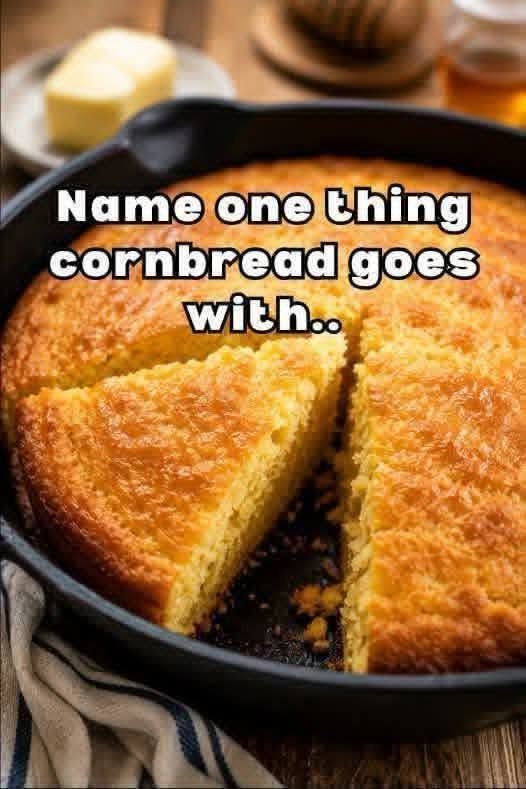
Homemade Southern Cornbread
Introduction
Few things are more comforting than a skillet of freshly baked cornbread. Golden on top, tender in the center, slightly crisp around the edges, and wonderfully buttery, homemade cornbread is the kind of side dish that can turn a simple meal into a memorable one.
It is especially good alongside hearty Southern favorites such as pinto beans, chili, fried chicken, collard greens, barbecue, stews, and soups. Some people love their cornbread sweet, while others insist that true Southern cornbread should be savory. This recipe keeps the balance simple: rich corn flavor, a tender crumb, crisp edges, and just enough butter to make every bite satisfying.
And when it comes to the perfect partner, my vote is pinto beans. Break off a warm piece of cornbread, crumble it over a bowl of beans, and you have a classic combination that is difficult to beat.
Ingredients
For one 9-inch skillet of cornbread:
- 1 1/2 cups yellow cornmeal
- 1/2 cup all-purpose flour
- 1 tablespoon baking powder
- 1/2 teaspoon baking soda
- 1 teaspoon salt
- 1 tablespoon granulated sugar, optional
- 2 large eggs
- 1 1/4 cups buttermilk
- 1/2 cup unsalted butter, melted
- 2 tablespoons vegetable oil
- 1 tablespoon butter or bacon drippings for the skillet
Optional additions
For a richer variation, you can add:
- 1/2 cup shredded sharp cheddar cheese
- 2 tablespoons finely chopped green onions
- 1 small chopped jalapeño
- 1/2 cup sweet corn kernels
- 2 tablespoons finely chopped cooked bacon
Equipment
- 9-inch cast-iron skillet
- Large mixing bowl
- Medium mixing bowl
- Whisk
- Wooden spoon or spatula
- Measuring cups and spoons
Preparation
Begin by preheating your oven to 425°F (220°C). Place the cast-iron skillet in the oven while it heats. Preheating the skillet is one of the secrets to achieving those beautifully crisp, golden edges.
Melt the 1/2 cup of butter and allow it to cool slightly. You want it warm and melted, but not extremely hot.
In a large bowl, combine the cornmeal, flour, baking powder, baking soda, salt, and optional sugar. Whisk everything together until evenly distributed.
In another bowl, whisk the eggs and buttermilk together. Slowly add the melted butter while continuing to whisk.
Pour the wet ingredients into the dry ingredients. Stir gently until everything is just combined. Do not overmix. A few small lumps are perfectly fine.
The Skillet Method
Carefully remove the hot skillet from the oven. Add the tablespoon of butter or bacon drippings and swirl it around so the bottom and sides are lightly coated.
The skillet should be hot enough that the fat becomes glossy and begins to sizzle. This is what helps create the classic crisp crust.
Pour the cornbread batter into the hot skillet. You should hear a gentle sizzle as the batter hits the pan.
Place the skillet immediately into the oven.
Bake for approximately 18 to 23 minutes, or until the top is golden brown and a toothpick inserted into the center comes out clean or with only a few moist crumbs.
For an especially golden top, brush the finished cornbread with a little melted butter immediately after removing it from the oven.
How to Make the Best Cornbread
Use a hot skillet
A properly heated cast-iron skillet makes a major difference. It gives the cornbread a crisp, flavorful edge while keeping the center tender.
Do not overmix
Once the wet and dry ingredients come together, mix only until combined. Overmixing can develop too much gluten from the flour and make the cornbread heavier.
Buttermilk makes a difference
Buttermilk adds tenderness, moisture, and a subtle tang that complements the cornmeal beautifully. It also reacts with the baking soda to help the cornbread rise.
Don’t overbake
Cornbread continues cooking slightly after it comes out of the oven. Remove it once the center is set and the top is nicely browned.
Let it rest
Allow the cornbread to rest for about 5 to 10 minutes before slicing. This gives the crumb time to settle and makes it easier to cut cleanly.
A Brief History of Cornbread
Cornbread has deep roots in North American cooking and is closely connected to the use of cornmeal by Indigenous peoples. Corn was an important staple long before European settlement, and Indigenous cooking traditions included many preparations made from ground corn.
European settlers adopted corn as an important food source and developed their own versions of corn-based breads and cakes. Over generations, cornbread became especially associated with Southern and rural American cooking because corn grew well in many areas where wheat was less dependable.
Different regions developed different styles. Some versions are thin and crisp, some are thick and cake-like, some are sweet, and others are completely savory. Cast-iron skillet cornbread became particularly beloved because the heavy pan produced a wonderfully crisp crust.
Today, cornbread remains one of the most recognizable comfort foods in American cooking.
Formation and Texture
The beauty of this recipe comes from the relationship between its ingredients.
Cornmeal provides the distinctive corn flavor and slightly crumbly texture. Flour gives the bread enough structure to hold together while keeping it tender.
Buttermilk contributes moisture and acidity, while the eggs help bind everything together. Baking powder and baking soda provide the lift that gives the cornbread a lighter interior.
The melted butter contributes richness, while the hot skillet creates the crisp exterior.
The result should be golden brown on the outside, tender in the middle, and flavorful enough to stand on its own.
Serving Suggestions
Fresh cornbread is delicious served warm with:
Pinto Beans
This is one of the classic combinations. Serve the beans in a bowl with a generous piece of warm cornbread on the side, or crumble the cornbread directly over the beans.
Chili
A thick bowl of chili and warm cornbread is a perfect cold-weather meal. The slightly crisp cornbread provides a wonderful contrast to the rich, saucy chili.
Fried Chicken
Crispy fried chicken, creamy mashed potatoes, gravy, and warm cornbread make an unforgettable comfort-food plate.
Collard Greens
Cornbread is practically made for collard greens. The bread can be used to soak up the flavorful pot liquor left in the greens.
Barbecue
Serve it alongside pulled pork, smoked chicken, ribs, baked beans, and coleslaw for a hearty barbecue meal.
Soups and Stews
Cornbread works beautifully with bean soup, vegetable soup, beef stew, chicken stew, and many other hearty dishes.
Cornbread Lovers’ Variations
For sweet cornbread lovers, increase the sugar to 2 to 4 tablespoons.
For savory cornbread lovers, leave the sugar out completely and add a little extra salt if desired.
For cheesy cornbread, fold shredded cheddar into the batter before baking.
For spicy cornbread, add finely chopped jalapeño peppers and a little shredded cheese.
For bacon cornbread, add cooked crumbled bacon to the batter and use a small amount of bacon drippings to grease the skillet.
For corn lovers, fold in fresh, frozen, or canned corn kernels before baking.
Storage
Allow leftover cornbread to cool completely before storing.
Keep it in an airtight container at room temperature for up to 2 days. For longer storage, refrigerate it for several days.
Cornbread can also be frozen. Wrap individual pieces tightly and place them in a freezer-safe bag or container. Thaw at room temperature and reheat in the oven for the best texture.
To refresh leftover cornbread, warm it in a 300°F (150°C) oven for several minutes and brush it with a little butter.
Conclusion
Homemade cornbread is simple food at its best. It requires basic ingredients, comes together quickly, and can accompany almost any comforting meal.
Whether your perfect partner is pinto beans, chili, fried chicken, collard greens, barbecue, or something completely different, a warm skillet of homemade cornbread deserves a place at the table.
And if I had to choose just one combination, I would put a steaming bowl of pinto beans next to a thick slice of golden cornbread, add a little butter, and call it comfort food done right.
The real question is no longer whether cornbread belongs on the table. The question is: what are you serving with yours?