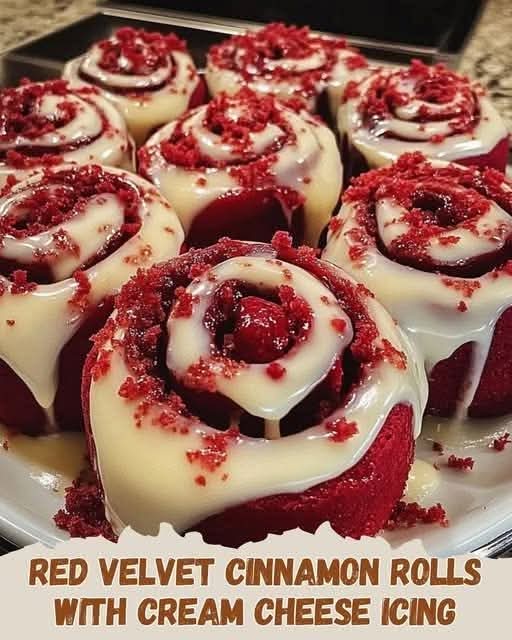
Absolutely! Here is a big, detailed Red Velvet Cinnamon Rolls recipe with a rich introduction, ingredients, history, formation, multiple methods, cream cheese icing, serving ideas, and a warm conclusion. ❤️🍥
❤️ Red Velvet Cinnamon Rolls with Cream Cheese Icing
Introduction
Red Velvet Cinnamon Rolls are a luxurious twist on the classic homemade cinnamon roll. They combine the soft, fluffy texture of traditional cinnamon rolls with the subtle cocoa flavor and beautiful deep-red appearance associated with red velvet cake.
Each roll is filled with a buttery mixture of brown sugar, cinnamon, and cocoa, then baked until golden around the edges and wonderfully tender in the center. A generous layer of tangy cream cheese icing melts over the warm rolls, creating that irresistible combination of sweet, creamy, buttery, and slightly chocolatey flavors.
These cinnamon rolls are perfect for breakfast, brunch, holidays, birthdays, Valentine’s Day, Christmas mornings, bake sales, or simply a special weekend treat.
🛒 Ingredients
For the Red Velvet Dough
- 3 cups all-purpose flour
- 1/4 cup granulated sugar
- 1 package (2 1/4 teaspoons) active dry yeast
- 1/2 teaspoon salt
- 3/4 cup warm milk, about 110°F (43°C)
- 1/4 cup unsalted butter, melted
- 1 large egg
- 1 tablespoon unsweetened cocoa powder
For the Red Velvet Color
- 1–2 tablespoons red food coloring, preferably gel
- 1 teaspoon vanilla extract
The original ingredient list does not include food coloring, but red velvet cinnamon rolls traditionally benefit from it if you want the classic red appearance.
For the Cinnamon Filling
- 1/2 cup packed brown sugar
- 1 1/2 tablespoons ground cinnamon
- 1 tablespoon unsweetened cocoa powder
- 1/4 cup unsalted butter, softened
- 1 teaspoon vanilla extract
- Pinch of salt
For the Cream Cheese Icing
- 4 ounces cream cheese, softened
- 2 tablespoons unsalted butter, softened
- 1 cup powdered sugar
- 1 teaspoon vanilla extract
- 1–2 tablespoons milk or heavy cream, as needed
- Tiny pinch of salt
🍥 Method 1: Classic Homemade Dough
Step 1: Activate the Yeast
Pour the warm milk into a large mixing bowl.
The milk should feel warm but not hot—around 110°F/43°C.
Add:
- Yeast
- Granulated sugar
Stir gently and allow the mixture to stand for about 5–10 minutes.
The surface should become slightly foamy. This indicates that the yeast is active.
Important Tip
Do not use extremely hot milk. Very hot liquid can damage the yeast and prevent the dough from rising properly.
Step 2: Build the Dough
Add the melted butter, egg, vanilla, cocoa powder, and red food coloring to the yeast mixture.
Whisk until combined.
Gradually add the flour and salt.
Begin mixing with a wooden spoon or sturdy spatula. Once the dough becomes too thick to stir comfortably, transfer it to a lightly floured surface.
🤲 Step 3: Knead the Dough
Knead the dough for approximately 8–10 minutes.
The finished dough should become:
- Smooth
- Soft
- Elastic
- Slightly tacky
- Not excessively sticky
If the dough feels extremely wet, add flour one tablespoon at a time.
Avoid adding too much flour because an overly floury dough can produce dry, heavy cinnamon rolls.
🌹 Step 4: First Rise
Place the dough into a lightly greased bowl.
Turn the dough once so the surface is lightly coated with oil or butter.
Cover the bowl with plastic wrap or a clean kitchen towel.
Place it somewhere warm and allow it to rise for approximately 1–1 1/2 hours, or until it has roughly doubled in size.
Formation of the Dough
During this stage, the yeast consumes available sugars and produces carbon dioxide. The gluten network traps those bubbles, causing the dough to expand.
This is what ultimately gives your cinnamon rolls their soft, airy structure.
🍂 Step 5: Prepare the Cinnamon Filling
While the dough is rising, prepare the filling.
Combine:
- Brown sugar
- Cinnamon
- Cocoa powder
- Vanilla
- Pinch of salt
Mix well.
Keep the softened butter separate so it can be spread easily over the dough.
The combination of cinnamon and cocoa gives the filling a deeper flavor that complements the red velvet dough beautifully.
❤️ Step 6: Roll Out the Dough
Once the dough has doubled in size, gently punch it down to release excess gas.
Transfer it to a lightly floured work surface.
Roll it into approximately a 12 × 18-inch rectangle.
Try to keep the thickness relatively even.
Spread the softened butter over the entire surface, leaving a small border around the edges.
Sprinkle the cinnamon-cocoa sugar mixture evenly over the butter.
Gently press the filling into the dough.
🌀 Step 7: Form the Cinnamon Rolls
Starting from one long side, carefully roll the dough into a tight log.
Try to maintain even pressure as you roll.
Once completely rolled, place the seam underneath.
Using a sharp knife or unflavored dental floss, cut the log into approximately 10–12 equal rolls.
For especially soft rolls, avoid pressing down too hard with a knife.
Why Dental Floss Works
Slide the floss underneath the dough, cross the ends over the top, and pull. It creates a clean cut without squashing the delicate spiral.
🧈 Step 8: Prepare the Baking Pan
Grease a 9 × 13-inch baking dish with butter.
Arrange the cinnamon rolls inside, leaving a little space between them.
Cover and allow them to rise again for approximately 30–45 minutes.
They should become noticeably puffy.
🔥 Step 9: Bake
Preheat your oven to:
350°F (175°C)
Bake the cinnamon rolls for approximately 22–28 minutes.
The tops should look set and lightly golden, while the centers should remain soft.
Avoid overbaking.
The Secret to Soft Cinnamon Rolls
The biggest enemy of tender cinnamon rolls is excessive baking.
You want the rolls cooked through, but you don’t want them dried out.
🧁 Cream Cheese Icing Method
While the cinnamon rolls are baking, prepare the icing.
Place the softened cream cheese and butter into a bowl.
Beat until smooth and creamy.
Add the powdered sugar gradually.
Mix in the vanilla and a tiny pinch of salt.
Add milk or heavy cream one tablespoon at a time until the icing reaches your desired consistency.
For thick icing, use less liquid.
For a pourable glaze, add slightly more.
🤍 Step 10: Ice the Warm Rolls
Remove the cinnamon rolls from the oven.
Allow them to cool for approximately 5–10 minutes.
Spread the cream cheese icing generously over the warm rolls.
The icing should begin melting into the spirals, creating beautiful creamy pockets throughout the rolls.
For an extra indulgent result, reserve some icing and spread another layer over the rolls just before serving.
🌟 Method 2: Overnight Cinnamon Rolls
These are perfect for Christmas morning or weekend brunch.
Prepare the rolls through the cutting and arranging stage.
Instead of letting them complete their second rise immediately, cover the baking dish tightly and place it in the refrigerator overnight.
The next morning:
- Remove the rolls from the refrigerator.
- Allow them to sit at room temperature for approximately 45–90 minutes.
- Let them become noticeably puffy.
- Preheat the oven.
- Bake according to the instructions above.
- Prepare the cream cheese icing.
- Ice while warm.
This method gives you fresh cinnamon rolls without having to prepare the dough early in the morning.
⚡ Method 3: Same-Day Quick Preparation
If you’re serving these for breakfast, start early in the morning.
Approximate timeline
8:00 AM: Prepare dough
8:15 AM: Knead
8:25 AM: First rise
9:30 AM: Roll and fill
9:45 AM: Cut and arrange
10:00 AM: Second rise
10:30 AM: Bake
11:00 AM: Ice and serve
The exact timing depends on room temperature and yeast activity.
🍰 The History Behind Red Velvet
Red velvet cake became particularly associated with American baking traditions during the 20th century. Its characteristic combination of cocoa, vanilla, tangy dairy ingredients, and striking red color eventually inspired countless desserts beyond cake.
Cinnamon rolls themselves have a much older European baking tradition, particularly throughout Northern Europe. Over time, American bakers developed richer, softer versions using butter, sugar, cinnamon, and sweet icing.
The red velvet cinnamon roll brings these two traditions together: the comforting spiral of a cinnamon roll with the cocoa-rich character of red velvet cake.
🔴 Why Cocoa Is Used
Red velvet generally uses a relatively modest amount of cocoa rather than being intensely chocolatey.
The cocoa adds:
- Depth
- Warm chocolate notes
- A subtle bitterness
- A richer aroma
For these cinnamon rolls, cocoa is especially delicious when paired with cinnamon and brown sugar.
💕 The Perfect Formation
A beautiful red velvet cinnamon roll should have several distinct layers.
From the outside inward, you should see:
Soft red dough → buttery filling → cinnamon-sugar spiral → tender center
When baked correctly, the rolls should touch each other as they rise, creating soft sides while the exposed tops develop a lightly baked surface.
The center should remain especially tender and almost pull-apart soft.
👩🍳 Baker’s Secrets for the Best Rolls
1. Don’t over-flour the dough
A slightly tacky dough usually produces softer cinnamon rolls than a stiff dough.
2. Use softened butter for the filling
Soft butter spreads much more evenly than melted butter.
3. Give the dough enough time to rise
A properly risen dough produces lighter rolls.
4. Don’t overbake
Take the rolls out once they’re cooked through but still soft.
5. Ice them while warm
Warm rolls allow the cream cheese icing to partially melt into the layers.
6. Use gel food coloring
Gel coloring usually provides stronger color without requiring a large amount of liquid.
7. Measure flour carefully
Too much flour can make the dough dense and dry.
❤️ For the Lovers of Extra-Indulgent Rolls
If you love an especially rich cinnamon roll, try adding one of these variations:
🍫 Chocolate Lover’s Version
Add mini chocolate chips to the cinnamon filling.
🥜 Pecan Version
Sprinkle finely chopped toasted pecans over the filling before rolling.
🍓 Strawberry Red Velvet
Add a thin layer of strawberry preserves beneath the cinnamon filling.
🍫 Cream Cheese Chocolate Version
Add 1–2 tablespoons of cocoa powder to the cream cheese icing.
🍯 Caramel Version
Drizzle warm caramel sauce over the finished cinnamon rolls.
❤️ Valentine’s Version
Add heart-shaped sprinkles or a light dusting of powdered sugar.
🍽️ Serving Suggestions
Serve these cinnamon rolls warm with:
- Coffee
- Hot chocolate
- Tea
- Cappuccino
- Cold milk
- Fresh strawberries
- Fresh berries
- Whipped cream
They are wonderful for breakfast, brunch, dessert, holidays, birthdays, Valentine’s Day, Christmas morning, or family gatherings.
🧊 Storage
Room Temperature
Because of the cream cheese icing, it’s best not to leave fully iced rolls at room temperature for extended periods.
Refrigerator
Store leftovers in a tightly covered container in the refrigerator for approximately 3–4 days.
Reheating
Warm an individual roll gently in the microwave for about 15–25 seconds, depending on its size and your microwave.
The goal is to warm it without drying it out.
❄️ Freezing
You can freeze the baked cinnamon rolls before adding the icing.
Allow them to cool completely, wrap them tightly, and place them in a freezer-safe container.
When ready to eat, thaw them and gently warm them before adding fresh cream cheese icing.
You can also prepare the rolls ahead of time and freeze them before their final rise, although this requires more careful thawing and proofing.
❤️ Final Conclusion
These Red Velvet Cinnamon Rolls with Cream Cheese Icing are the kind of homemade treat that makes the kitchen smell absolutely incredible.
The dough is soft and fluffy, the cinnamon-cocoa filling is warm and aromatic, and the cream cheese icing provides the perfect tangy sweetness. Every bite brings together the familiar comfort of a classic cinnamon roll with the elegant flavor of red velvet cake.
Whether you’re preparing them for your family, serving them at brunch, making them for a holiday breakfast, or simply treating yourself on a quiet weekend morning, these rolls are made to be shared, loved, and enjoyed while still warm.
And for the true cinnamon-roll lovers: don’t be shy with the cream cheese icing! The more it melts into those beautiful red spirals, the more irresistible they become. ❤️🍥🥛