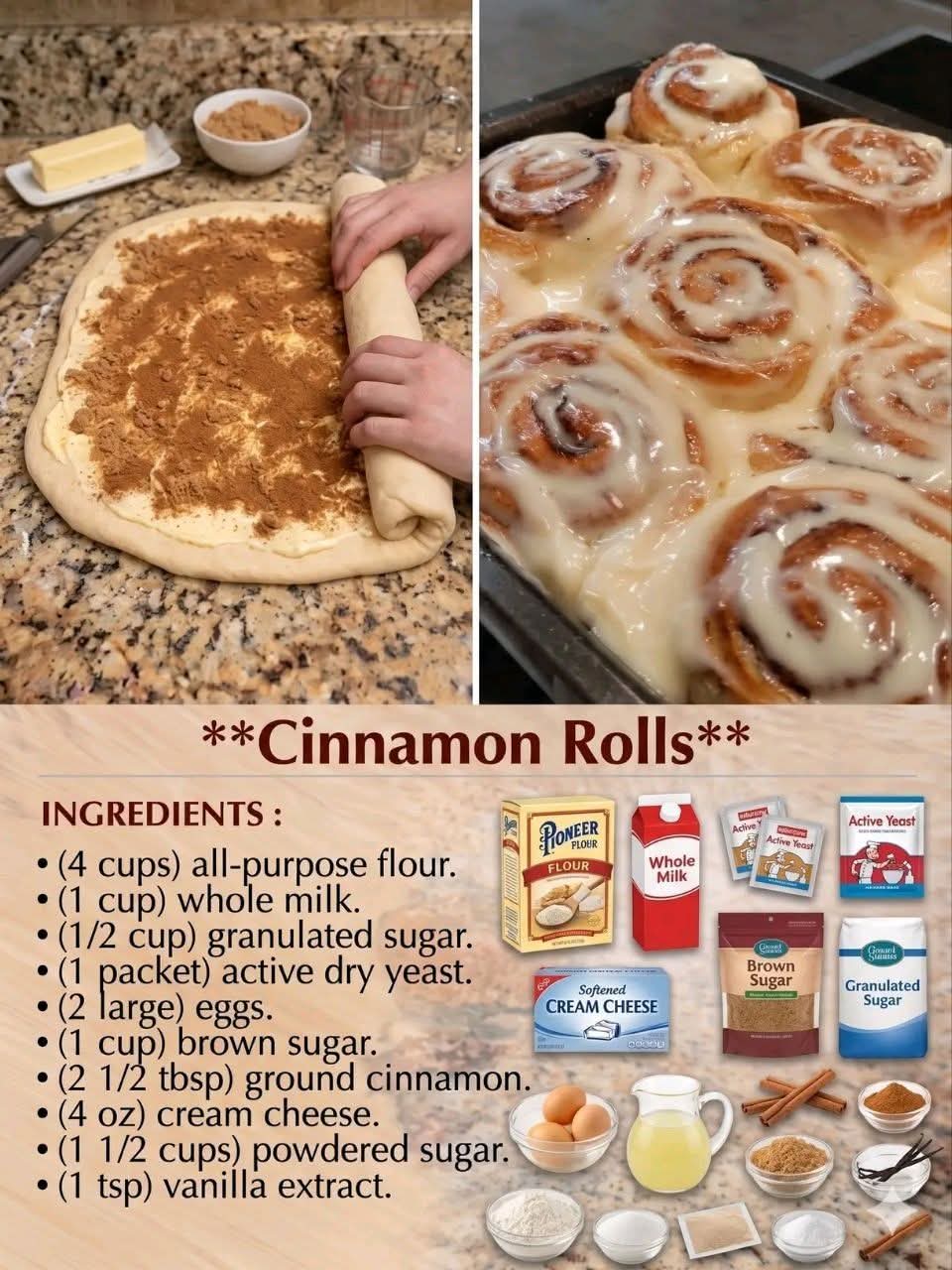
🍂🍥 Classic Homemade Cinnamon Rolls with Vanilla-Pudding Dough 🔥
These cinnamon rolls are soft, fluffy, buttery, and wonderfully tender. The secret is the addition of instant vanilla pudding mix, which helps create a soft, moist texture while adding a gentle vanilla flavor. They’re perfect for breakfast, brunch, holidays, afternoon coffee, or simply when you want the kitchen to smell like warm cinnamon and freshly baked bread. ❤️
🛒 Ingredients
For the Dough
- 1 cup warm milk
- ¼ cup water, room temperature
- ¼ cup unsalted butter, melted
- 1 large egg, room temperature
- 4 cups bread flour
- ½ package (about 1.7 oz / 48 g) instant vanilla pudding mix
- 1 tablespoon granulated sugar
- ½ teaspoon salt
- 2¼ teaspoons instant yeast
For the Cinnamon Filling
- ½ cup unsalted butter, softened
- ¾ cup packed brown sugar
- 2 tablespoons ground cinnamon
- 1 teaspoon vanilla extract
- Pinch of salt
For the Cream Cheese Frosting
- 4 oz cream cheese, softened
- 2 tablespoons unsalted butter, softened
- 1 cup powdered sugar
- 1 teaspoon vanilla extract
- 1–2 tablespoons milk, as needed
- Tiny pinch of salt
👩🍳 Instructions
1. Prepare the Dough
In a large mixing bowl, combine the warm milk, room-temperature water, melted butter, egg, sugar, and instant yeast.
Add the bread flour, vanilla pudding mix, and salt. Stir until a soft dough begins to form.
Transfer the dough to a lightly floured work surface and knead for approximately 8–10 minutes, until smooth and elastic.
The dough should feel soft and slightly tacky but should not be excessively sticky.
2. First Rise
Place the dough in a lightly greased bowl and cover it with plastic wrap or a clean kitchen towel.
Let it rise in a warm, draft-free place for approximately 60–90 minutes, or until doubled in size.
The rising time will depend on the temperature of your kitchen.
🍂 Making the Cinnamon Filling
While the dough rises, prepare the filling.
Mix the softened butter, brown sugar, cinnamon, vanilla, and a small pinch of salt until you have a spreadable mixture.
The combination of brown sugar and cinnamon creates that classic caramelized cinnamon flavor as the rolls bake.
🍥 Forming the Cinnamon Rolls
Once the dough has doubled, gently press it down to release excess air.
Roll it into a large rectangle, approximately 16 × 20 inches.
Spread the cinnamon-butter filling evenly across the entire surface, leaving a small border around the edges.
Starting from one long side, carefully roll the dough into a tight log.
Using a sharp knife or unflavored dental floss, cut the log into approximately 12 equal rolls.
Arrange the rolls in a greased 9 × 13-inch baking dish, leaving a little space between them.
Cover and let them rise again for about 30–45 minutes, until noticeably puffy.
🔥 Baking Method
Preheat your oven to 350°F (175°C).
Bake the cinnamon rolls for approximately 22–28 minutes, until the tops are lightly golden and the centers are cooked through.
Avoid overbaking them. The rolls should remain soft and tender in the center.
Allow them to cool for about 10 minutes before frosting.
🤍 Cream Cheese Frosting
Beat the softened cream cheese and butter until smooth and creamy.
Add the powdered sugar, vanilla, and a pinch of salt.
Beat again until fluffy.
Add milk, a little at a time, until you reach your preferred consistency.
Spread the frosting generously over the warm cinnamon rolls.
For an especially decadent finish, let some of the frosting melt between the rolls while leaving a thicker layer on top. 😍
✨ The Best Methods for Soft Cinnamon Rolls
Use warm—not hot—milk. Very hot liquid can damage yeast, while cool liquid slows fermentation.
Don’t add too much flour. A slightly soft dough produces more tender rolls. Adding excessive flour can make them dense and dry.
Give the dough enough time to rise. Proper fermentation develops both texture and flavor.
Roll evenly. Try to maintain the same thickness throughout the rectangle so every cinnamon roll cooks evenly.
Don’t pack the rolls too tightly. They need room to expand during the second rise.
Don’t overbake. This is one of the most important secrets to keeping cinnamon rolls soft.
📜 A Little History of Cinnamon Rolls
Cinnamon rolls have a long history across Europe, particularly in Northern Europe. Sweetened yeast breads flavored with spices became increasingly popular as ingredients such as cinnamon and sugar became more accessible.
Sweden has a particularly strong cinnamon-roll tradition with kanelbullar, while similar sweet rolls developed throughout Scandinavia and Europe.
The American cinnamon roll evolved into its own beloved style, often featuring generous brown-sugar-and-cinnamon filling and, in many versions, a rich cream-cheese frosting.
Today, cinnamon rolls are enjoyed around the world and have become a favorite homemade breakfast and bakery treat.
🌟 Formation and Texture
The structure of these rolls comes from the combination of bread flour, yeast, eggs, butter, and milk.
Bread flour provides gluten-forming proteins that give the dough enough strength to rise while still creating a fluffy interior.
The vanilla pudding mix contributes to the characteristic tender texture of this particular recipe.
During baking, the butter, brown sugar, and cinnamon filling melts into the layers, creating a fragrant, caramelized center.
The result is a roll that is:
🍥 Soft
🍥 Fluffy
🍥 Buttery
🍥 Moist
🍥 Cinnamon-rich
🍥 Vanilla-scented
🍥 Creamy on top
❤️ Serving Ideas
Serve these cinnamon rolls warm with:
☕ Coffee
🥛 Cold milk
🍵 Tea
🍎 Warm apple compote
🥜 Chopped pecans or walnuts
🍯 A drizzle of caramel
🍂 Extra cinnamon
For a beautiful autumn version, add a small pinch of nutmeg or a little maple syrup to the frosting.
🥰 Why Cinnamon-Roll Lovers Adore This Recipe
This recipe is especially appealing because it combines the familiar flavor of classic cinnamon rolls with an extra-soft dough.
The vanilla pudding creates a subtle sweetness and helps make the crumb tender, while the cinnamon-brown-sugar filling provides the warm, comforting flavor everyone expects from a great cinnamon roll.
Whether you’re making them for your family, a weekend breakfast, a holiday gathering, or a home bakery, these rolls are the kind of treat that disappears quickly from the serving plate. 🍂❤️
👩🍳 Baker’s Final Tips
For the softest possible rolls, cover leftovers tightly once completely cooled and store them at room temperature for up to 2 days.
To reheat, warm an individual roll for about 10–15 seconds in the microwave. This brings back much of that freshly baked softness.
If preparing them ahead, shape the rolls, cover the baking dish, and refrigerate overnight. The next morning, let them sit at room temperature until puffy before baking.
🍥 Final Conclusion
There is something special about homemade cinnamon rolls: the moment the dough begins rising, the aroma of cinnamon fills the kitchen, and warm rolls emerge from the oven covered in creamy frosting.
This vanilla-pudding cinnamon-roll method gives you a wonderfully soft and tender result with a rich cinnamon-brown-sugar center. Take your time with the rises, avoid adding unnecessary flour, and watch the baking time carefully.
One bite of a warm, gooey cinnamon roll with cream cheese frosting, and you’ll understand why this classic has so many devoted lovers. 🍂🍥❤️
Save this recipe, share it with another cinnamon-roll lover, and enjoy every warm, buttery bite! 😍