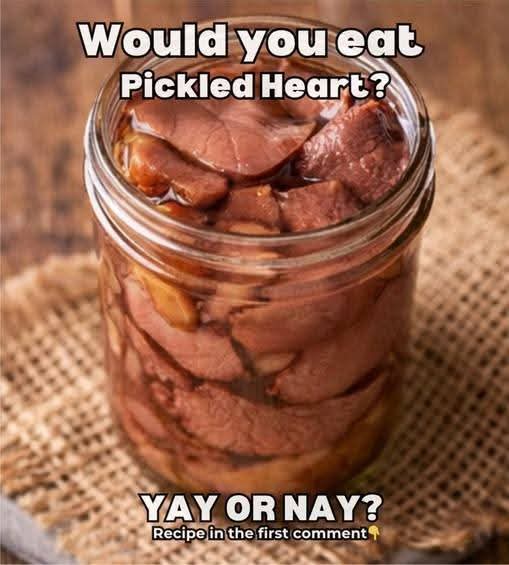
Pickled Heart Recipe 🫙❤️
Be honest… would you try it? Yay or Nay?
Pickled heart is one of those old-fashioned, traditional dishes that comes from a time when nothing was wasted in the kitchen. It’s bold, tangy, deeply savory, and definitely not for everyone — but for those who grew up with it, it’s pure nostalgia in a jar.
This recipe is inspired by rustic home cooking traditions where meat preservation was essential, especially before refrigeration became common. Families would pickle meats to extend shelf life while creating strong, flavorful foods that lasted through seasons.
Ingredients 🥣
For the heart:
- 1 beef or lamb heart, cleaned and trimmed
- 1 tablespoon salt
- 1 teaspoon black pepper
- 3 cloves garlic, crushed
- 1 onion, sliced
For the pickling brine:
- 2 cups white vinegar
- 1 cup water
- 2 tablespoons salt
- 2 tablespoons sugar
- 1 teaspoon mustard seeds
- 1 teaspoon black peppercorns
- 2 bay leaves
- 1 teaspoon chili flakes (optional for heat)
- 3–4 whole cloves garlic
Instructions 🍴
Step 1: Clean the heart
Rinse the heart thoroughly under cold water. Remove any visible fat, veins, or blood vessels. Cut into slices or bite-sized chunks.
Step 2: Pre-cook the meat
Place heart pieces in a pot with salt, pepper, onion, and garlic. Cover with water and simmer for 45–60 minutes until tender but still firm.
Step 3: Prepare the brine
In a separate pot, combine vinegar, water, salt, sugar, and spices. Bring to a gentle boil, then simmer for 5–10 minutes to release flavor.
Step 4: Pack the jar
Place cooked heart pieces into sterilized glass jars. Add garlic, onions, and spices evenly.
Step 5: Add brine
Pour hot brine over the meat until fully covered. Seal tightly.
Step 6: Pickling time
Let jars cool, then refrigerate (or store in a cool place if traditionally preserved).
For best flavor, wait 3–5 days before eating.
Methods of Preparation 👩🍳
1. Traditional Rural Method
Slow cooking the heart, then storing in vinegar brine for preservation.
2. Spicy Street-Style Method
Extra chili, garlic, and pepper for a bold, sharp flavor.
3. Herbal Method
Add thyme, rosemary, or dill for a more aromatic profile.
4. Smoked Version
Lightly smoke the heart before pickling for deep, smoky richness.
History 📜
Pickled meats date back centuries, especially in rural and farming communities. Before refrigeration, people relied on vinegar, salt, and spices to preserve organ meats like heart, liver, and tongue.
These recipes were born from necessity but became cherished traditional dishes in many cultures around the world.
Pickled heart in particular was valued because:
- It was nutrient-rich
- It was affordable
- It preserved well
- It could be stored for long winters
Formation & Texture ✨
When properly prepared, pickled heart has:
- Firm but tender bite
- Tangy vinegar sharpness
- Deep, meaty flavor
- Slight chewiness without toughness
- Aromatic spice infusion
It’s bold, intense, and very traditional.
Why People Love It ❤️
Fans of pickled heart say they love it because:
- It’s a true heritage food
- It reduces waste by using every part of the animal
- It’s packed with flavor
- It lasts a long time
- It connects them to family traditions
For many, it’s not just food — it’s memory in a jar.
Conclusion 🌿
Pickled heart is not your everyday dish. It’s strong, old-fashioned, and full of character. Some people love it instantly, others are unsure at first — but it always tells a story of tradition, survival, and cooking with respect for every ingredient.
If you try it, you’re tasting something that has been passed down through generations of home cooks who knew how to make simple ingredients last and shine.
Lovers & Fans ❤️
People who love pickled heart usually say:
- “It reminds me of my grandparents’ kitchen.”
- “Strong flavor, but addictive.”
- “Best eaten with bread and onions.”
- “A real traditional delicacy.”
And for them, one bite is enough to bring back a whole world of memories.
So now the real question remains…
Yay or Nay? 🫙❤️