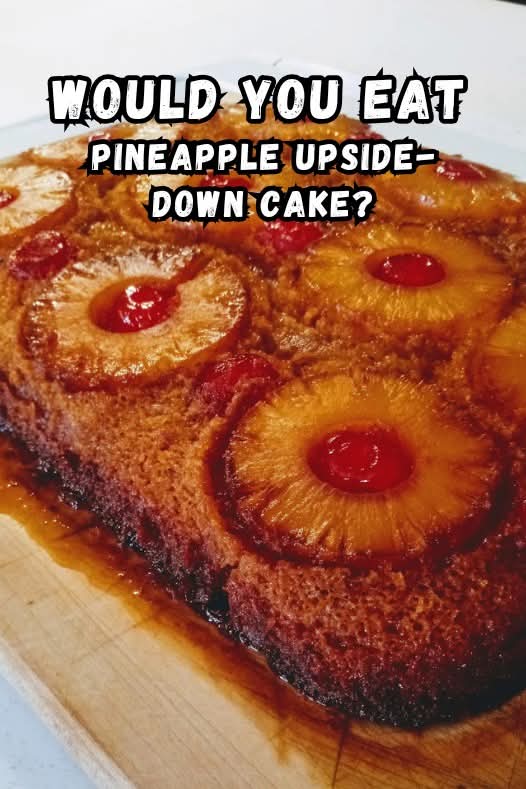
🍍 Pineapple Upside-Down Cake (Classic Old-Fashioned Recipe) 🍰
A buttery, caramel-glazed dessert that flips tradition—literally. When you turn it out of the pan, the golden pineapple rings shine like stained glass, and the sweet aroma feels like it came straight from an old country kitchen.
🧡 Introduction
The pineapple upside-down cake is one of the most iconic retro desserts in baking history. It became especially popular in the early 20th century when canned pineapple became widely available. Home bakers loved how easy it was: everything baked in one pan, then flipped for a dramatic reveal.
Today, it’s still a comfort-food favorite—rich, fruity, and beautifully nostalgic.
🍍 Ingredients
🍯 Caramel Topping
- 1/2 cup (115g) unsalted butter
- 1 cup (200g) brown sugar
- 7–10 canned pineapple rings (or fresh, peeled)
- Maraschino cherries (as needed)
🍰 Cake Batter
- 1 1/2 cups all-purpose flour
- 1 1/2 tsp baking powder
- 1/4 tsp salt
- 1/2 cup (115g) butter, softened
- 3/4 cup (150g) sugar
- 2 large eggs
- 1 tsp vanilla extract
- 1/2 cup milk (or pineapple juice for extra flavor)
👩🍳 Instructions
1. Prepare the caramel base
- Melt butter in a 9-inch cake pan (or skillet).
- Stir in brown sugar until smooth and bubbling.
- Spread evenly across the bottom.
2. Arrange the fruit
- Place pineapple rings over the caramel.
- Add cherries in the center of each ring (and gaps if you like extra color).
3. Make the cake batter
- Mix flour, baking powder, and salt in a bowl.
- In another bowl, cream butter and sugar until fluffy.
- Add eggs one at a time, then vanilla.
- Alternate adding dry ingredients and milk until smooth.
4. Assemble & bake
- Pour batter gently over the fruit layer.
- Bake at 180°C (350°F) for 35–45 minutes, until golden and a toothpick comes out clean.
5. The flip
- Let it rest 10 minutes (important!).
- Place a plate on top and carefully invert the cake.
- Lift the pan slowly to reveal the glossy pineapple topping.
🔥 Methods (Baking Science)
This cake uses a reverse-caramelization method:
- Brown sugar and butter melt into a caramel base.
- Pineapple releases juice while baking, blending with caramel.
- The cake absorbs fruity steam, staying moist and tender.
- Flipping at the right time locks the glossy topping in place.
📜 History & Formation
rose to fame in the 1920s, especially after Dole pineapple marketing campaigns promoted canned pineapple recipes.
Before that, “skillet cakes” existed, but the addition of pineapple and maraschino cherries turned it into a showstopper dessert across America and beyond.
It became a symbol of:
- Home baking creativity
- Affordable luxury (pineapple was once exotic!)
- Mid-century comfort food culture
💛 Serving & Lovers of This Cake
People who love this cake usually say:
- “It’s buttery and nostalgic”
- “The caramel top is the best part”
- “It reminds me of grandma’s house”
Best served:
- Warm with vanilla ice cream 🍦
- Or chilled with whipped cream
- Or even plain with coffee ☕
🍒 Conclusion
Pineapple upside-down cake isn’t just dessert—it’s a memory on a plate. Sweet, sticky, golden, and comforting, it proves that simple ingredients can create something unforgettable.
When you flip it out and see that glossy pineapple pattern… that’s the eal magic moment.