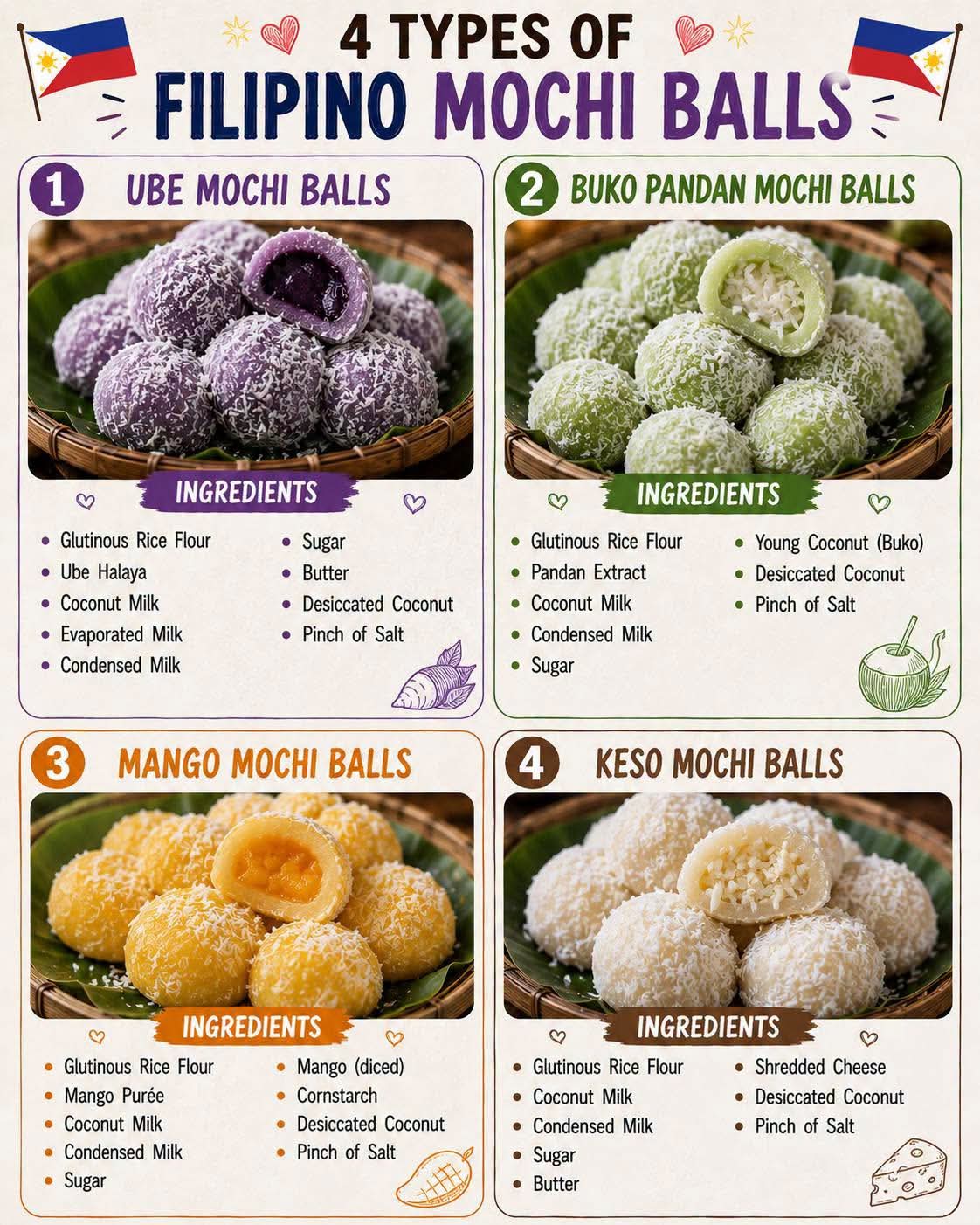
Big Mochi Balls Recipe Collection (4 Flavors)
Soft, chewy, creamy, and filled with tropical flavors—mochi balls are one of the most loved Asian-inspired desserts. Made from sticky rice flour, these bite-sized treats are popular because of their soft texture and endless filling options. In places like the and , mochi desserts have evolved into many creative forms like ube, pandan, mango, and cheese.
These mochi balls combine traditional mochi-making with modern Filipino dessert flavors. They are easy to prepare and perfect for snacks, parties, and family gatherings.
A Short History of Mochi
Mochi originated in over 1,000 years ago. Traditionally, it was made by pounding steamed sticky rice into a smooth dough. It symbolized good luck, prosperity, and celebration.
In the , mochi evolved with local ingredients like ube, buko, pandan, and mango—creating sweeter, richer versions loved by dessert lovers.
1. Ube Mochi Balls
Ingredients
- 2 cups glutinous rice flour
- 1 cup
- 1 cup coconut milk
- ½ cup evaporated milk
- ½ cup condensed milk
- ½ cup sugar
- 2 tablespoons butter
- 1 cup desiccated coconut
- ¼ teaspoon salt
Instructions / Method
Step 1: Make the Dough
Mix glutinous rice flour, sugar, and salt.
Step 2: Add Wet Ingredients
Add coconut milk, evaporated milk, condensed milk, and ube halaya.
Step 3: Cook
Cook over low heat while stirring for 12–15 minutes until thick and sticky.
Step 4: Shape
Cool slightly. Flatten small portions and add extra ube filling if desired.
Step 5: Form Balls
Seal and roll into round balls.
Step 6: Coat
Roll in desiccated coconut.
2. Buko Pandan Mochi Balls
Ingredients
- 2 cups glutinous rice flour
- 1 cup coconut milk
- ½ cup condensed milk
- ½ cup sugar
- 1 teaspoon pandan extract
- 1 cup young coconut strips
- 1 cup desiccated coconut
- ¼ teaspoon salt
Instructions / Method
Step 1
Mix dry ingredients.
Step 2
Add coconut milk, condensed milk, and pandan extract.
Step 3
Cook while stirring until sticky.
Step 4
Cool and flatten.
Step 5
Add young coconut filling.
Step 6
Seal, roll, and coat.
3. Mango Mochi Balls
Ingredients
- 2 cups glutinous rice flour
- 1 cup mango purée
- ½ cup coconut milk
- ½ cup condensed milk
- ½ cup sugar
- 1 cup diced
- 2 tablespoons cornstarch
- 1 cup desiccated coconut
- ¼ teaspoon salt
Instructions / Method
Step 1
Mix flour, sugar, cornstarch, and salt.
Step 2
Add mango purée, coconut milk, and condensed milk.
Step 3
Cook until thick.
Step 4
Cool slightly.
Step 5
Fill with diced mango.
Step 6
Seal and coat.
4. Keso Mochi Balls
Ingredients
- 2 cups glutinous rice flour
- 1 cup coconut milk
- ½ cup condensed milk
- ½ cup sugar
- 2 tablespoons butter
- 1 cup shredded cheese
- 1 cup desiccated coconut
- ¼ teaspoon salt
Instructions / Method
Step 1
Combine dry ingredients.
Step 2
Add coconut milk and condensed milk.
Step 3
Cook until dough forms.
Step 4
Cool and flatten.
Step 5
Add shredded cheese filling.
Step 6
Seal and coat.
Formation of Perfect Mochi Balls
The secret to perfect mochi balls is:
- Use fresh glutinous rice flour.
- Stir constantly while cooking.
- Let dough cool before shaping.
- Dust hands lightly with cornstarch.
- Seal fillings tightly.
- Chill before serving.
This creates: ✔ Smooth texture
✔ Soft chewiness
✔ Better shape
✔ Longer freshness
Different Methods of Cooking Mochi
Stove-top Method
Traditional and best for beginners.
Steaming Method
Keeps the dough softer.
Microwave Method
Quick and easy.
Baking Method
Rare, but gives a firmer texture.
Why People Love Mochi Balls
Mochi lovers enjoy them because:
- Soft and chewy texture
- Rich creamy fillings
- Tropical flavors
- Easy to customize
- Fun to make
Popular among:
- Kids
- Dessert lovers
- Party hosts
- Families
- Food sellers
Conclusion
Mochi balls are a beautiful mix of tradition and creativity. From classic Japanese mochi to Filipino-inspired ube, pandan, mango, and cheese versions, they continue to win hearts worldwide. Whether served chilled or fresh, these little treats bring comfort, sweetness, and joy in every bite.
For many dessert lovers, mochi isn’t just food—it’s a small bite of happiness.