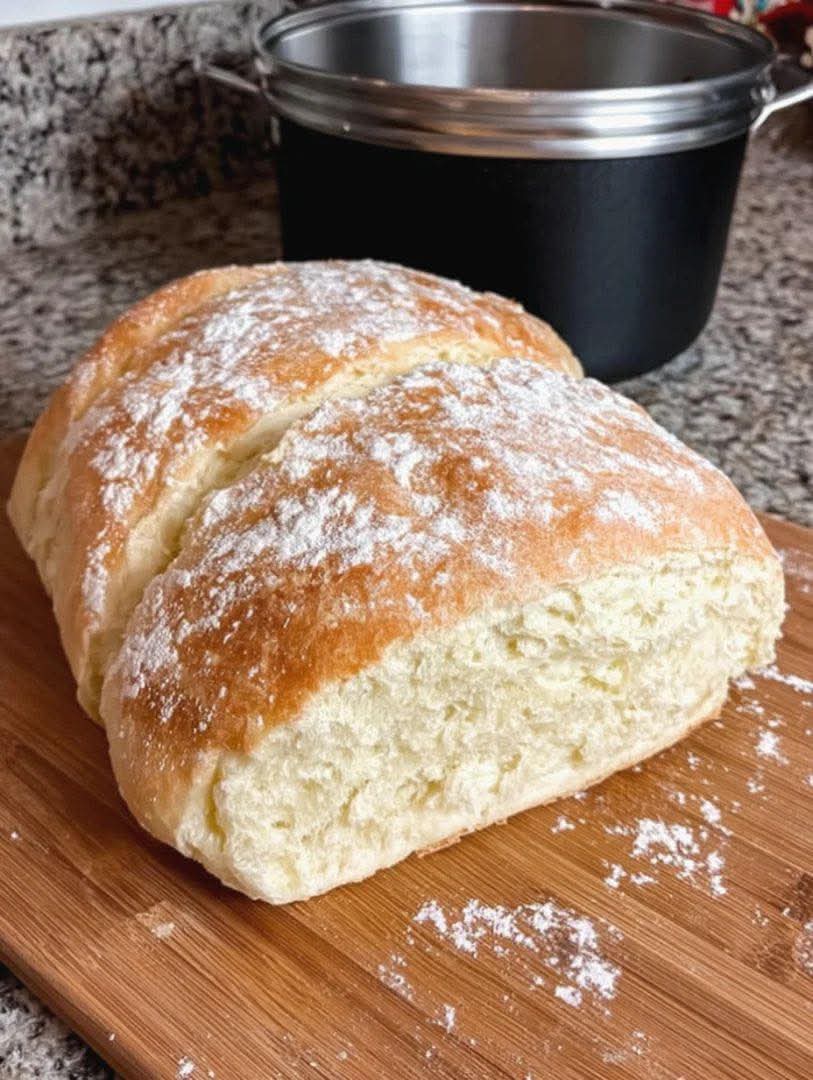
🍞 Homemade Rustic Crusty Bread
There’s something timeless about walking into a home filled with the smell of freshly baked bread. That warm, comforting aroma of flour, yeast, and a golden crust has a way of making everything feel calmer. Rustic bread is one of the oldest and most beloved forms of baking—simple ingredients transformed into something magical. With its crisp crackly crust and soft, airy center, this loaf is perfect for breakfast, sandwiches, or simply enjoyed warm with butter.
📜 The History of Rustic Bread
Bread dates back over 14,000 years, making it one of humanity’s oldest foods. Early civilizations in and baked simple loaves with wild yeast. Rustic artisan bread became popular in European villages, especially in and , where bakers focused on crust, texture, and natural fermentation.
🥖 Ingredients
- 3 cups all-purpose flour
- 1 ½ teaspoons salt
- 2 teaspoons sugar
- 2 ¼ teaspoons instant yeast (1 packet)
- 1 ¼ cups warm water
- 1 tablespoon olive oil
- Extra flour for dusting
- Cornmeal (optional for baking tray)
🥣 Method of Preparation
Step 1: Mixing the Dough
In a large bowl, combine flour, salt, sugar, and yeast. Slowly pour in warm water and olive oil. Mix until a shaggy dough forms.
Step 2: Kneading
Transfer dough to a floured surface and knead for 8–10 minutes until smooth and elastic. This develops gluten and gives the bread structure.
Step 3: First Rise
Place dough in a lightly oiled bowl, cover with a towel, and let it rise for 1–2 hours until doubled in size.
Step 4: Shaping the Loaf
Punch down the dough gently to release air. Shape it into a round or oval loaf.
Step 5: Second Rise
Place shaped dough on a lined baking tray. Cover and let it rest for 30–40 minutes.
Step 6: Scoring
Use a sharp knife to make shallow cuts on top. This helps the bread expand while baking.
Step 7: Baking
Preheat oven to 230°C (450°F). Place a small pan of water in the oven to create steam. Bake for 25–30 minutes until deeply golden and crisp.
🔥 Baking Techniques for Best Results
- Steam method: Creates the crackly crust.
- Dutch oven method: Traps moisture for bakery-style texture.
- Cold fermentation: Refrigerate overnight for deeper flavor.
- Stone baking: Gives a more even heat distribution.
🧪 How Bread is Formed
Bread forms through fermentation:
- Yeast feeds on sugar and releases carbon dioxide.
- Gas bubbles create the airy texture.
- Heat causes expansion (oven spring).
- The crust forms as moisture evaporates and sugars caramelize.
❤️ Why Bread Lovers Adore It
Bread lovers cherish rustic bread because:
- It’s simple yet satisfying.
- The crunchy crust contrasts beautifully with the soft inside.
- It pairs with soups, cheeses, and jams.
- Every loaf feels homemade and unique.
Popular pairings include , , and .
🍽 Serving Ideas
- Warm with butter
- Toasted with jam
- Served alongside soup
- Made into garlic bread
- Used for sandwiches
🌟 Conclusion
Homemade rustic bread is more than food—it’s comfort, tradition, and care baked into every slice. From its ancient origins to modern kitchens, this humble loaf continues to bring people together. One warm slice after a long day can truly make everything feel lighter, proving that the simplest things are often the most meaningful.