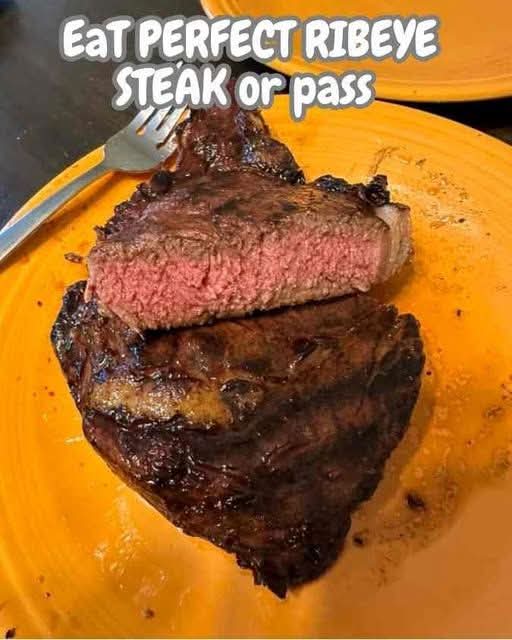
Here is the ultimate guide to cooking the Perfect Ribeye Steak—a recipe so comprehensive, it’s practically a masterclass. Fire up your cast iron, and let’s get sizzling! 🔥
—
Introduction: The King of Steaks
The ribeye is the undisputed monarch of beef cuts. Why? Because it comes from the primal rib section (between the chuck and short loin), which gets very little exercise. This lack of movement means the muscle remains incredibly tender, while its abundant marbling (intramuscular fat) renders down during cooking, basting the meat from the inside out in its own buttery juice. This isn’t just a steak; it’s an experience—a carnivorous celebration that demands respect, heat, and a little bit of patience.
—
History & Formation
· History: The ribeye’s roots trace back to the medieval ages, where whole ribs were roasted on spits over open fires. Butchers eventually realized that cutting the meat away from the bone (or leaving it attached as a “cowboy steak”) created a perfect single-serving portion. It became a staple in American steakhouses in the 19th century, prized for its flavor over leaner cuts.
· Formation: This steak is essentially the longissimus dorsi muscle. Because this muscle supports the animal’s weight but doesn’t do heavy work, it stays tender. The “eye” of the steak is the central lean oval, and the “cap” (spinalis dorsi) is the crescent-shaped outer edge—which is actually the most flavorful, marbled, and coveted part of the entire cow.
—
Benefits (Why You Should Indulge)
· Rich in Protein: A single steak provides over 30g of high-quality protein for muscle repair.
· Iron & Zinc: Ribeye is packed with heme-iron (easily absorbed) and zinc, which boost immunity and energy.
· Healthy Fats: Grass-fed ribeyes contain Omega-3s and conjugated linoleic acid (CLA), which can support heart health in moderation.
· Mood Food: Let’s be honest—the sheer joy of eating a perfect steak is a mental health benefit in itself!
—
Ingredients (For 2 Massive Steaks)
· 2 Bone-in or Boneless Ribeye Steaks (1.5 to 2 inches thick, ~16–20 oz each) – Crucial: bring to room temp!
· 1.5 tbsp Kosher Salt (or 1 tbsp fine sea salt) – For dry-brining.
· 1 tbsp Freshly Cracked Black Pepper – Coarse grind.
· 2 tbsp High-Smoke-Point Oil – Avocado, grapeseed, or canola (not olive oil—it burns).
· 4 tbsp Unsalted Butter – For basting.
· 6 cloves Garlic – Smacked with the side of a knife.
· 4 sprigs Fresh Thyme & 4 sprigs Rosemary – For aromatic flavor.
· Flaky Sea Salt (e.g., Maldon) – For finishing.
—
Equipment
· Cast-iron skillet (preferred) or heavy stainless steel pan.
· Meat thermometer (instant-read).
· Tongs.
· Wire cooling rack (optional, for resting).
—
Instructions & Methods (The Reverse Sear vs. Classic Pan-Sear)
We offer two professional methods. Choose based on your time:
Method 1: The Classic Pan-Sear (30 minutes)
1. Dry-Brine: Pat steaks completely dry. Salt all sides liberally. Let sit at room temp for 45 mins (or overnight in the fridge—this is better!).
2. Sear: Heat skillet over high heat until smoking. Add oil. Place steak away from you to avoid splatter. Press down gently. Sear for 3-4 mins untouched—until a deep mahogany crust forms.
3. Flip: Reduce heat to medium-high. Add butter, garlic, thyme, and rosemary. Tilt pan and spoon butter over the top continuously for 3-4 mins on the second side.
4. Baste & Temp: Keep basting until the internal temp hits 125°F (rare-medium rare) or 130°F (medium-rare). Remove at 125°F—it will rise to 130°F while resting.
Method 2: The Reverse Sear (for absolute perfection – 1.5 hours)
1. Preheat Oven to 225°F. Place dry-brined steak on a wire rack over a baking sheet.
2. Slow Cook: Bake until the internal temp hits 115°F (about 45–60 mins). This dries the surface and cooks the inside evenly.
3. Final Sear: Heat a cast-iron skillet until ripping hot (almost smoking). Add oil and sear for 60-90 seconds PER SIDE with butter and herbs. This creates a glass-like crust without overcooking the center.
—
Nutrition (Per 8oz Serving, approx.)
· Calories: ~580
· Protein: 48g
· Fat: 42g (Saturated: 18g)
· Iron: 15% DV
· Note: Values vary based on marbling and grass/grain-fed.
—
Pro Tips for Lovers of Steak
· The “Touch” Test: Press the center. Rare = wobbly (like raw meat), Medium-rare = springy (like touching your cheek), Medium = firm (like touching your nose).
· Basting Love: Don’t skip the herb-butter bath! This is what gives steakhouses that restaurant flavor.
· The Cap: If you see the crescent-shaped spinalis (the cap)—save the last bite for yourself. It’s the best part.
—
Resting (Non-Negotiable!)
Crucial Step: Transfer steak to a cutting board, pour the pan juices over, and rest for 10 minutes. This allows the muscle fibers to relax and reabsorb the juices. If you cut it immediately, all that golden juice will flood the plate—and that’s a tragedy.
—
How to Serve & Pair
· Sides: Creamy mashed potatoes, grilled asparagus, or a crisp wedge salad with blue cheese.
· Sauce: Serve with a dollop of compound butter (butter mixed with horseradish) or a red wine demi-glace.
· Wine: Full-bodied Cabernet Sauvignon, Malbec, or Syrah.
—
Conclusion
The perfect ribeye is not just about following steps; it’s about confidence and heat. Whether you choose the blazing-fast pan-sear or the patient reverse-sear, the goal is that golden, crispy crust giving way to a warm, ruby-red center that melts like butter. It’s a dish that connects us to ancient fires and modern luxury.
—
A Final Word for Steak Lovers
To the carnivores, the grill masters, and the home cooks: You are the artist, the steak is your canvas. Salt generously, trust your thermometer, and never skip the rest. Fire up that skillet tonight—your steakhouse-worthy meal awaits. Now go forth and sear! 🥩🔥
Did you try it? Drop a comment below and tell us: Rare, Medium-Rare, or Blue? And don’t forget to save this recipe for your next date night! ❤️