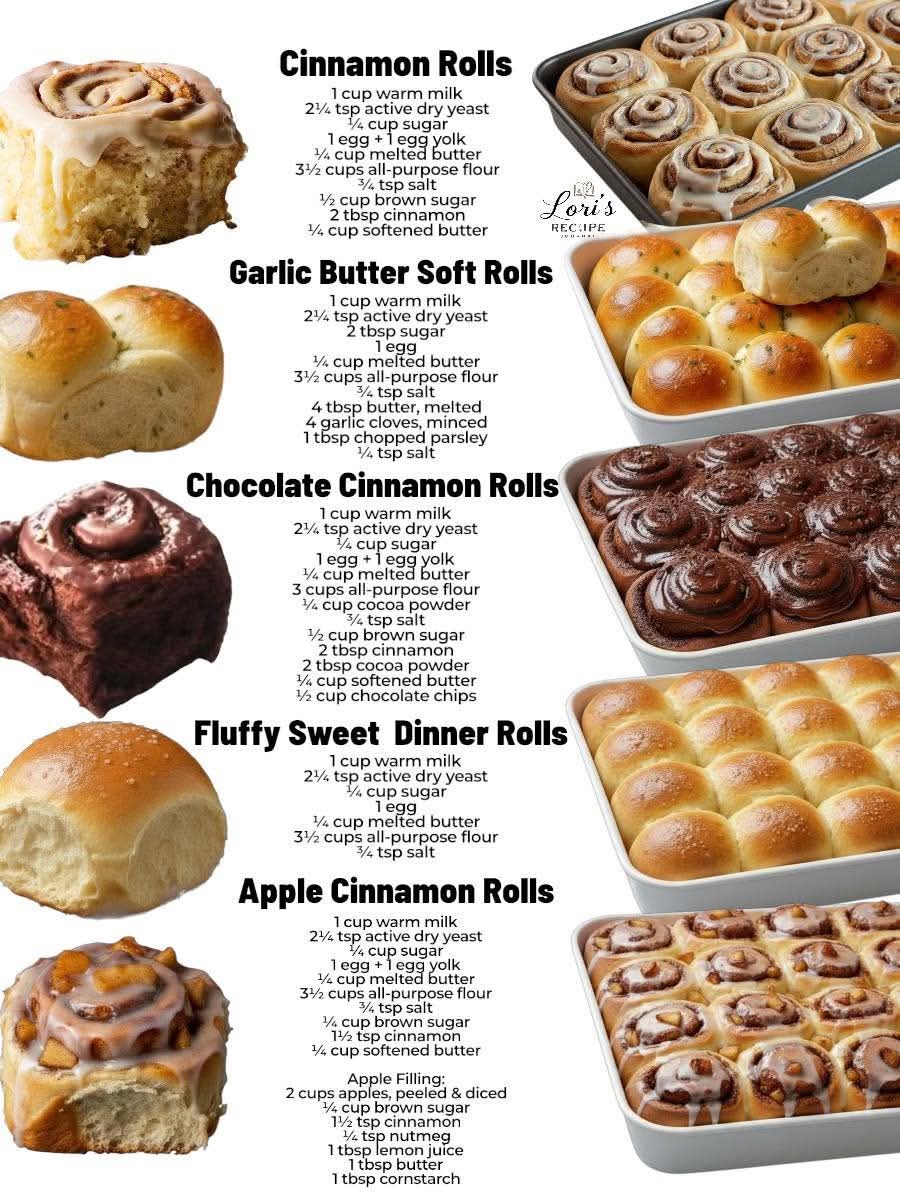
🍥 Soft Homemade Cinnamon Rolls (The Ultimate Bakery-Style Recipe)
Warm, fluffy, and dripping with sweet cream cheese glaze, these homemade cinnamon rolls are the kind of bake that makes a kitchen feel like a bakery at sunrise. Soft in the center, golden on the edges, and filled with buttery cinnamon sugar—this is the kind of recipe that disappears while they’re still warm.
They’re simple enough for a weekend bake but special enough for holidays, brunch tables, and “just because” moments.
🧁 Introduction
Cinnamon rolls are one of the most beloved sweet breads in the world. Their magic comes from a simple yeast dough that transforms into soft, pillowy spirals when baked. The combination of cinnamon, sugar, and butter has roots in Northern Europe, especially Sweden and Denmark, where similar buns like kanelbullar became café staples.
Over time, the recipe traveled across Europe and America, evolving into the rich, frosted cinnamon rolls we know today—often larger, softer, and sweeter than their European cousins.
This version focuses on that classic bakery-style softness with a creamy glaze that melts into every swirl.
🧾 Ingredients
🥖 Dough
- 1 cup warm milk
- 2¼ tsp active dry yeast
- ¼ cup sugar
- 1 egg + 1 egg yolk
- ¼ cup melted butter
- 3½ cups all-purpose flour
- ¾ tsp salt
🍯 Filling
- ½ cup brown sugar
- 2 tbsp cinnamon
- ¼ cup softened butter
🧀 Cream Cheese Glaze
- 4 oz cream cheese, softened
- 2 tbsp butter
- ¾ cup powdered sugar
- 1 tsp vanilla extract
- 1–2 tbsp milk (adjust for consistency)
👩🍳 Methods & Instructions
1. Activating the Yeast (The Foundation Step)
Warm the milk until lukewarm (not hot). Stir in yeast and sugar. Let it sit for 5–10 minutes until foamy—this means your yeast is alive and ready.
2. Building the Dough
Add egg, egg yolk, melted butter, flour, and salt into the yeast mixture. Mix until a soft dough forms, then knead for 8–10 minutes until smooth and elastic.
👉 The dough should feel soft, slightly tacky, but not sticky.
3. First Rise (Fermentation)
Cover the dough and let it rise for about 1 hour or until doubled in size. This is where flavor and fluffiness develop.
4. Rolling & Filling
Roll the dough into a large rectangle. Spread softened butter evenly across the surface. Mix brown sugar and cinnamon, then sprinkle generously over the buttered dough.
5. Shaping the Rolls
Roll tightly from the long edge into a log. Slice into 9–12 equal rolls and place them in a greased baking dish.
6. Second Rise
Cover and let the rolls rise again for 30–40 minutes until puffy and touching.
7. Baking
Bake at 350°F (175°C) for 22–25 minutes, or until golden brown and fragrant.
8. Glazing
Beat cream cheese, butter, powdered sugar, vanilla, and milk until smooth. Spread over warm rolls so it melts into the swirls.
🔬 Methods Explained (Why It Works)
- Yeast activation creates air bubbles that make the dough rise
- Double rise process ensures soft, airy texture instead of dense bread
- Butter layering creates rich, tender spirals
- Warm glazing allows frosting to melt slightly into the rolls, creating gooey pockets
Every step builds softness—skip one, and you lose part of the magic.
📜 A Short History of Cinnamon Rolls
Cinnamon rolls trace back to Scandinavian baking traditions from the 1920s, particularly Sweden. Originally less sweet and without heavy icing, they were enjoyed with coffee during fika (coffee break culture).
American versions evolved later, becoming richer with extra sugar, butter, and thick cream cheese frosting—turning them into the indulgent bakery treat we love today.
🧩 Formation (How the Roll “Becomes Itself”)
The transformation happens in stages:
- Dough phase – simple ingredients combine into structure
- Fermentation phase – yeast expands and creates softness
- Sheeting phase – dough is stretched into thin layers
- Rolling phase – structure becomes spiraled layers
- Proofing phase – air builds between layers
- Baking phase – heat locks in shape and caramelizes sugar
- Glazing phase – final richness and moisture added
This layered formation is what gives cinnamon rolls their signature pull-apart texture.
🍽️ Serving Ideas (The “Lovers” Section)
These cinnamon rolls are loved in every setting:
- 🥛 With cold milk for a comfort snack
- ☕ With coffee for breakfast or brunch
- 🍓 With fresh berries for balance
- 🍦 Warm with vanilla ice cream for dessert
They’re also perfect for sharing—family breakfasts, holidays, sleepovers, or gifting. People tend to “just take one more,” which is why they rarely last long on the tray.
💛 Conclusion
Homemade cinnamon rolls are more than a recipe—they’re an experience. From the smell of yeast dough rising to the moment glaze melts into warm spirals, every step feels comforting and rewarding.
They’re soft, rich, nostalgic, and dangerously easy to love. Once you make them from scratch, store-bought versions will never feel the same again.
If you want, I can also turn this into:
- or a