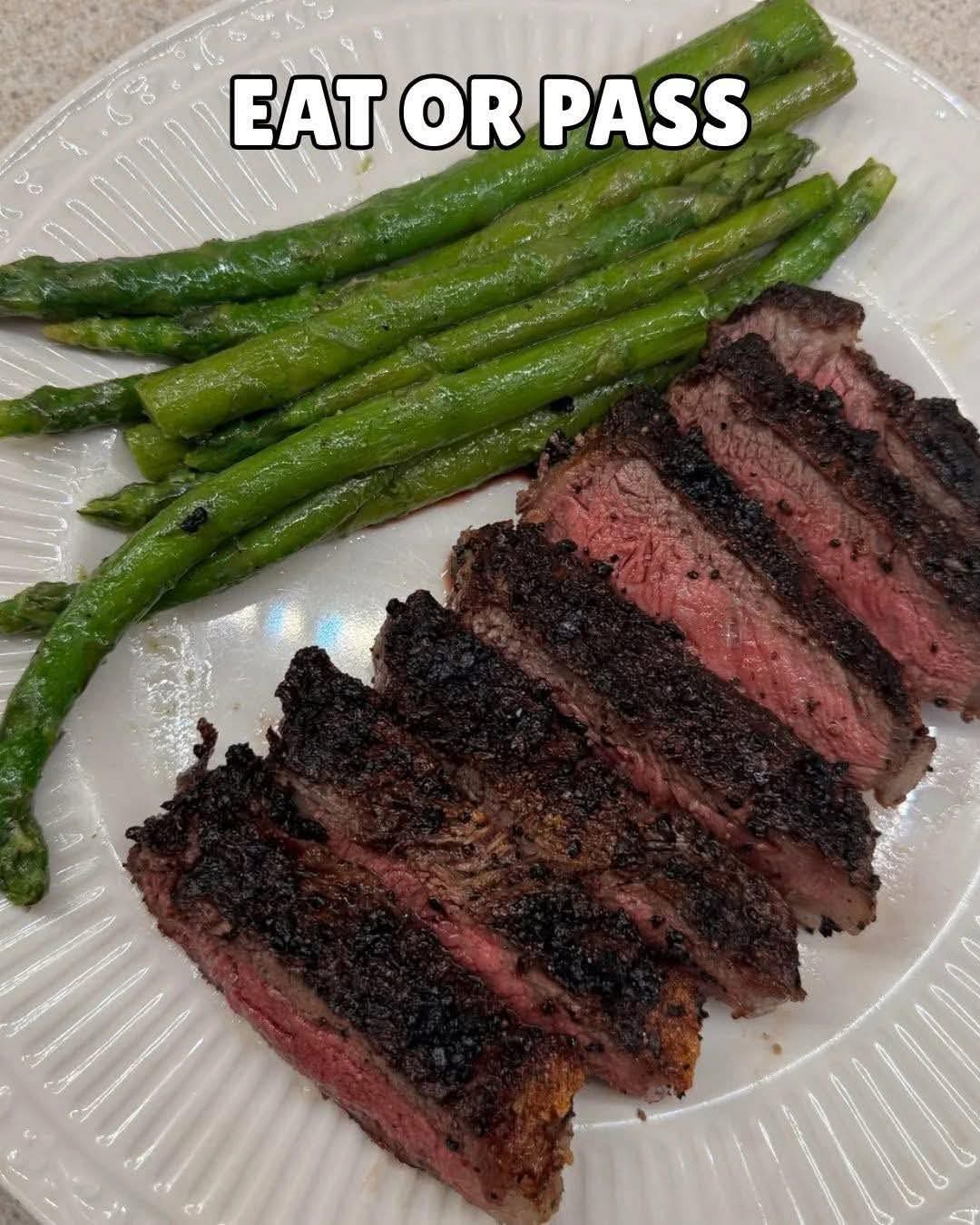
Here is a comprehensive guide to mastering the Perfect Pan-Seared Steak with Garlic Asparagus—a dish that proves elegance is born from simplicity.
—
Introduction
There is a primal satisfaction in the sizzle of a steak hitting a hot pan. This recipe transcends mere cooking; it is a ritual. The goal is a crusty, caramelized exterior that gives way to a buttery, tender interior, paired with vibrant, crisp-tender asparagus kissed with garlic. This dish is the quintessential “date night” dinner, yet simple enough for a rewarding Tuesday night treat. It celebrates high-quality ingredients and fundamental techniques, delivering a restaurant-quality meal in under 30 minutes.
—
History
The love affair between humans and grilled meat is ancient, but the “pan-seared” steak as we know it gained prominence in the 19th century with the advent of cast-iron skillets and improved stovetops. The technique—high heat to create the Maillard reaction—was perfected in French cuisine. Asparagus, cultivated since ancient Egypt and revered by the Romans, became a classic steakhouse side in the early 20th century, often paired with butter and garlic to complement the beef’s richness. This combination embodies the mid-century American steakhouse aesthetic, refined for the home cook.
—
Benefits
· High-Quality Protein: Steak is packed with complete protein, essential for muscle repair and satiety.
· Nutrient-Dense: Rich in bioavailable iron, zinc, and B vitamins (especially B12).
· Healthy Fats: Contains conjugated linoleic acid (CLA) and omega-3s (if grass-fed).
· Asparagus Power: A superfood high in fiber, folate, vitamins A, C, E, K, and antioxidants like glutathione.
· Low-Carb & Keto-Friendly: Naturally fits low-carbohydrate lifestyles.
—
Nutrition (Per Serving – 8oz Steak + 1/2 Asparagus)
· Calories: ~550-650
· Protein: 52g
· Fat: 40g (depending on cut & butter)
· Carbohydrates: 8g
· Fiber: 3g
· Iron: 30% DV
—
Formation (The Science)
The “formation” of this dish is built on two chemical processes:
1. The Maillard Reaction: Heat above 300°F (150°C) causes amino acids and reducing sugars to react, creating hundreds of flavor compounds and that deep brown crust.
2. Carryover Cooking: Resting the steak allows residual heat to evenly distribute, raising internal temperature by 5-10°F while reabsorbing juices.
—
Ingredients
For the Steak:
· 2 boneless ribeye or New York strip steaks (1.5 inches thick, ~12-14 oz each)
· 2 tbsp high-smoke-point oil (avocado or grapeseed)
· Kosher salt (generous) and freshly cracked black pepper
· 3 tbsp unsalted butter
· 4 sprigs fresh thyme or rosemary
· 2 cloves garlic, smashed (skin on)
For the Garlic Asparagus:
· 1 lb fresh asparagus, woody ends snapped off
· 2 tbsp olive oil
· 4 cloves garlic, thinly sliced
· Zest of 1 lemon
· Salt, pepper, and red pepper flakes (optional)
—
Instructions & Methods
Step 1: Prep & Temper
Remove steaks from the fridge 45 minutes before cooking. Pat completely dry with paper towels. Season generously with salt and pepper on all sides. Dry surface = perfect crust.
Step 2: Sear the Steak (The Method)
Heat a heavy cast-iron or stainless-steel skillet over medium-high heat until smoking hot. Add oil and swirl. Gently place steaks away from you to avoid splatter. Press down lightly.
· Sear Time (1.5″ thick): Cook without moving for 4-5 minutes for a deep crust. Flip once and cook another 3-4 minutes.
· Baste: Reduce heat to medium. Add butter, garlic, and thyme. Tilt pan and spoon foaming butter over the steak continuously for 1-2 minutes.
· Target Temps: Rare 125°F, Med-Rare 130-135°F (pull at 130°F), Medium 140°F.
Step 3: The Rest (Crucial)
Transfer steaks to a cutting board, pour pan juices over, and rest for 10 minutes (tent loosely with foil).
Step 4: Garlic Asparagus (While Steak Rests)
Wipe the pan clean (keep some fond). Heat olive oil over medium-high. Add asparagus in a single layer; season with salt. Cook for 3-4 minutes, shaking occasionally, until bright green and crisp-tender. Add sliced garlic and red pepper flakes; cook 1 minute until fragrant. Off heat, add lemon zest.
Step 5: Serve
Slice steak against the grain. Plate with asparagus, spoon any resting juices on top, and finish with flaky sea salt.
—
Conclusion
This is more than a recipe; it’s a skill that will serve you for a lifetime. The juxtaposition of the rich, savory steak and the bright, garlicky asparagus creates a harmony of textures and flavors that feels both luxurious and honest. Master this, and you’ll never order steak out again.
—
For the Lovers (Why We Adore This Dish)
· For the Romantic: It’s the ultimate shared experience—cooking together, the aroma filling the kitchen, and the joy of cutting into a perfect pink center.
· For the Foodie: The simplicity lets the quality of the ingredients shine; a canvas for finishing salts and compound butters.
· For the Busy Professional: It’s 25 minutes of active cooking that delivers a Michelin-star experience.
· For the Health-Conscious: It proves that clean eating can be decadent and deeply satisfying.
—
Final Methods Pro-Tips
· Reverse Sear Alternative: For extra-thick steaks (2″+), oven-bake at 275°F until internal temp is 115°F, then sear 1 minute per side.
· Pan Choice: Cast iron holds heat best; stainless steel gives a better fond for pan sauce.
· Don’t Overcrowd: Cook steaks in batches if necessary—crowding lowers pan temperature and ruins the crust.
—
Enjoy this timeless classic—simple, elegant, and unforgettably delicious.