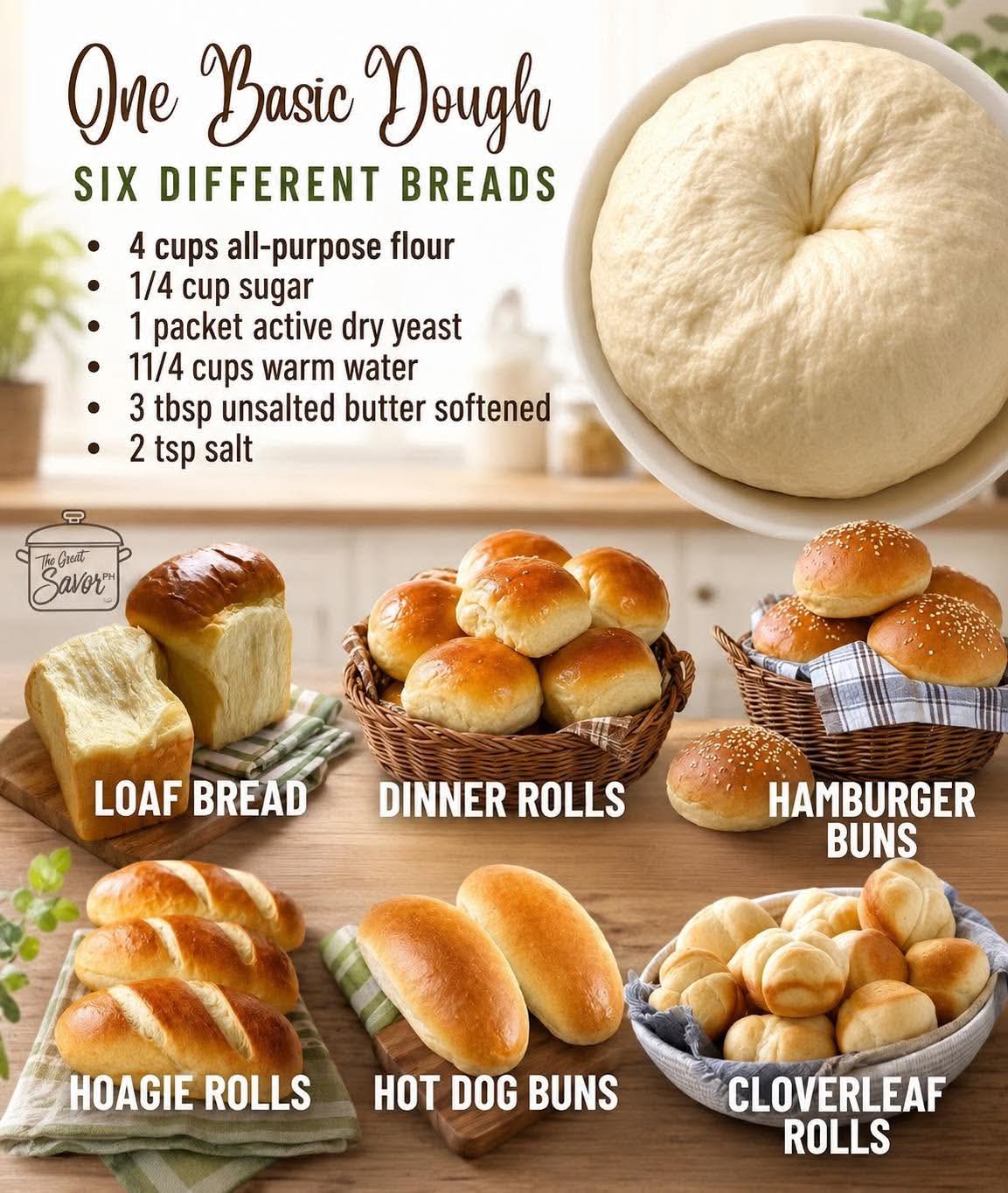
🍞 One Basic All-Purpose Bread Dough (Master Dough Recipe)
✨ Introduction
This is a classic master bread dough used around the world as the foundation for many baked goods—loaves, rolls, buns, and sandwich breads. It is soft, slightly sweet, and versatile, making it perfect for both beginners and experienced bakers. Once you master this dough, you can create multiple bakery-style products from a single recipe.
🧂 Ingredients
Bread Dough Base
- 4 cups all-purpose flour
- 1/4 cup granulated sugar
- 1 packet (about 2¼ tsp) active dry yeast
- 1 1/4 cups warm water (not hot, about 100–110°F / 37–43°C)
- 3 tbsp unsalted butter, softened
- 2 tsp salt
🔬 Method & Techniques (For Consistent Results)
1. Activating the Yeast (Proofing Stage)
In a bowl, combine:
- warm water
- sugar
- yeast
Stir lightly and let sit for 5–10 minutes until foamy.
This step ensures the yeast is alive and active, which is essential for a good rise.
2. Mixing & Kneading (Gluten Development)
Add:
- softened butter
- salt
Then gradually add flour while mixing.
Knead the dough for:
- 8–10 minutes by hand OR
- 5–7 minutes with a mixer
You are looking for:
- smooth texture
- elastic feel
- slightly tacky but not sticky dough
This develops gluten, which gives bread its structure and chew.
3. First Proof (Fermentation)
Place dough in a lightly oiled bowl and cover.
Let rise for:
- 1 to 1½ hours
or until doubled in size
This stage builds flavor, softness, and airiness.
4. Punch Down & Rest
Gently press the dough to release gas bubbles.
Let it rest for 5–10 minutes before shaping.
🍞 Shaping & Baking Methods (One Dough, Many Products)
All items follow this rule:
Shape → Proof → (Optional Egg Wash) → Bake at 375°F / 190°C
1. Classic Bread Loaf
- Shape into a tight log
- Place in greased loaf pan
- Proof until slightly above pan
- Bake 30–35 minutes
- Result: soft sandwich-style bread with golden crust
2. Dinner Rolls
- Divide into 45–50 g pieces
- Shape into smooth balls
- Arrange close together
- Bake 15–18 minutes
- Result: soft, pull-apart rolls
3. Hamburger Buns
- Divide into 80–90 g pieces
- Flatten slightly after shaping
- Proof until puffy
- Bake 16–18 minutes
- Optional: sesame seeds on top
4. Hoagie Rolls
- Shape into oval logs
- Proof seam-side down
- Bake 18–20 minutes
- Perfect for sandwiches
5. Hot Dog Buns
- Shape into long cylinders
- Place close together for soft sides
- Bake 18–20 minutes
6. Decorative Rolls (Cloverleaf & Knot)
- Cloverleaf: 3 small dough balls per cup
- Knot: roll into ropes and tie
- Bake 15–18 minutes
- Soft, bakery-style presentation
🧈 Optional Finish (Egg Wash)
Mix:
- 1 egg
- 1 tbsp water
Brush on shaped dough before baking for:
- glossy crust
- golden color
- bakery appearance
Skip for a softer matte finish.
📜 History & Formation of Bread Dough
Bread dough is one of the oldest prepared foods in human history, dating back over 10,000 years. Early civilizations discovered that mixing ground grains with water and allowing natural fermentation created airy, edible bread. The invention of yeast cultivation later refined this process, leading to modern baking techniques used today in bakeries worldwide.
This “master dough” concept evolved from European baking traditions where one basic dough was adapted into multiple products to save time and ingredients while maximizing variety.
🧠 Formation Science (Why It Works)
- Yeast produces carbon dioxide → dough rises
- Gluten traps gas → creates structure
- Sugar feeds yeast → improves fermentation
- Butter softens texture → tender crumb
- Salt strengthens gluten → improves flavor and control
🍽️ Serving Ideas & Variations (“Lovers of Bread” Section 😄)
People who love this dough usually enjoy it in many creative ways:
- garlic butter rolls
- cinnamon sugar buns
- stuffed cheese bread
- herb sandwich loaves
- breakfast sweet rolls with jam or chocolate
You can also shape it into festive designs for holidays or special gatherings.
🏁 Conclusion
This one basic dough is a complete baking foundation. With just a few ingredients, you can create an entire bakery menu—from soft rolls to sandwich bread. Mastering this dough means mastering versatility, texture control, and baking confidence.
Once you understand how it behaves, you can customize it endlessly with fillings, toppings, and flavors.
If you want, I can also turn this into:
- a sweet dough version (for cinnamon rolls & pastries)
- a whole wheat healthy version
- or a no-knead version for beginners