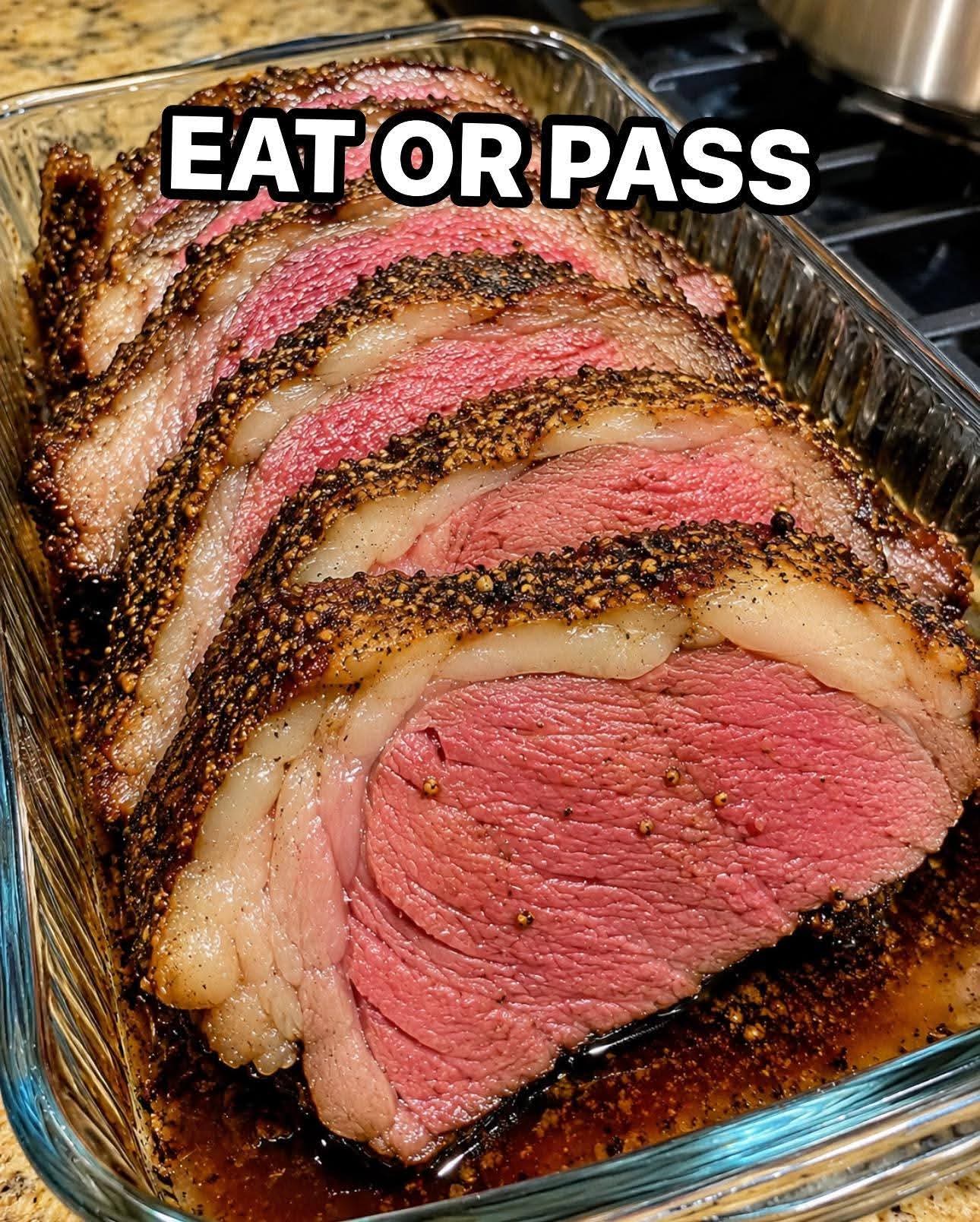
Here is a comprehensive guide to Perfectly Roasted Prime Rib — from history to plate, complete with a big recipe, pro methods, nutrition, and more.
—
Introduction: The King of Roasts
Prime rib—also known as a standing rib roast—is the crown jewel of celebratory meals. When done RIGHT, it delivers a juicy pink center, a crispy, herb-crusted exterior, and a buttery, melt-in-your-mouth fat cap. This isn’t just dinner; it’s an experience. Slow-roasted and sliced thick, every bite is packed with deep beefy flavor. This guide ensures your prime rib is perfect every time.
—
History of Prime Rib
The tradition of roasting beef on the bone dates back to 18th-century England, where it was a Sunday staple for the upper class. The “rib” section (primal cuts 6-12) was prized for its marbling and tenderness. It became known as “prime” because it originally came from the top grade of beef. In the US, it rose to fame as the centerpiece of Christmas dinners and wedding receptions—a true symbol of abundance.
—
Benefits of Prime Rib (Beyond Taste)
· High-quality protein: Supports muscle repair and satiety.
· Rich in B vitamins: B12, B6, and niacin for energy metabolism.
· Iron & Zinc: Essential for immune function and oxygen transport.
· Healthy fats (in moderation): Conjugated linoleic acid (CLA) has anti-inflammatory properties.
· Ketogenic & low-carb friendly: Zero sugar, high fat, moderate protein.
Note: Enjoy in sensible portions due to saturated fat content.
—
Nutrition (per 6 oz / 170g serving, trimmed)
Nutrient Amount
Calories ~550
Protein ~42g
Fat ~42g
Saturated Fat ~17g
Cholesterol ~130mg
Iron 22% DV
Zinc 45% DV
Vitamin B12 85% DV
—
Big Recipe: Slow-Roasted Prime Rib (Serves 6-8)
Ingredients
· Prime rib roast (bone-in): 5–6 lbs (2 ribs)
· Unsalted butter: ½ cup (1 stick), softened
· Kosher salt: ¼ cup (yes, that much for crust)
· Freshly ground black pepper: 2 tbsp
· Garlic cloves: 6, minced
· Fresh rosemary: 2 tbsp, finely chopped
· Fresh thyme: 2 tbsp, finely chopped
· Olive oil: 2 tbsp
Equipment
· Roasting pan with rack
· Meat thermometer (digital instant-read)
· Heavy-duty aluminum foil
—
Method (Step-by-Step)
Day Before (Critical for Flavor)
1. Dry brine: Pat roast dry. Score fat cap in a crosshatch pattern (1-inch squares). Rub all over with ¼ cup kosher salt. Place uncovered on a rack in the fridge for 12–24 hours. This dries the surface for a crispy crust and seasons deep into the meat.
Roasting Day
2. Bring to room temp: Remove roast from fridge 2–3 hours before cooking.
3. Preheat oven to 250°F (120°C) — low and slow method.
4. Make herb butter: Mix softened butter, minced garlic, rosemary, thyme, and black pepper.
5. Apply butter: Pat roast dry again. Rub herb butter all over the meat and fat cap.
6. Roast low: Place bone-side down on rack. Roast at 250°F until internal temp reaches 120°F (rare) or 128°F (medium-rare). Time: ~25-30 min per pound.
7. Rest (first): Remove from oven, tent loosely with foil, rest for 30 minutes. Internal temp will rise 5-10°F.
8. Sear finish: Turn oven to 500°F (260°C). Uncover roast, return for 6-10 minutes until crust is dark and crispy.
9. Final rest: Rest 15-20 minutes before slicing.
Slicing
· Cut away the bones (save for soup!). Slice meat against the grain into ¾–1 inch thick slabs.
—
Pro Methods & Variations
Method Temp Time Result
Low & Slow (above) 250°F ~3-4 hrs Most even pink edge-to-edge
Reverse Sear 200°F then 550°F ~4 hrs then 10 min Best crust + no gray band
High-Heat First 450°F then 325°F 20 min then ~2 hrs Classic, but more gradient
Doneness temps (pull from oven):
· Rare: 115–120°F → final 125°F
· Medium-rare: 120–125°F → final 130–135°F (recommended)
· Medium: 130–135°F → final 140–145°F
Chef’s secret: Add 1 cup beef broth to roasting pan bottom to catch drippings for au jus.
—
Information & Tips for Lovers of Prime Rib
· Bone-in vs boneless: Bone-in adds flavor and prevents overcooking; boneless is easier to slice.
· Leftover magic: Thin slices for French dips; diced for hash; reheat gently in au jus (never microwave).
· Wine pairing: Cabernet Sauvignon, Malbec, or Syrah.
· Sides lovers adore: Creamy horseradish, Yorkshire pudding, garlic mashed potatoes, roasted asparagus.
—
Conclusion
Perfect prime rib is patience, technique, and quality beef. The low-and-slow method with a dry brine guarantees a juicy pink center and a spectacular crust. This is not a weeknight meal—it’s a memory maker. Whether for Christmas, a birthday, or simply because you deserve it, prime rib done RIGHT will make everyone suddenly hungry.
—
For the Lovers (Quotes from True Enthusiasts)
“The first slice off the bone is my religion.”
“That salty, garlic-herb crust is better than any steakhouse.”
“I’d fight someone for the end cut with extra horseradish.”
“Leftover prime rib sandwich is why I cook a whole roast.”
—
Would you grab the first slice or save room for later?
Answer: I’m grabbing the first slice—center cut, medium-rare, with a spoonful of jus and a smile. 👇🥩🔥