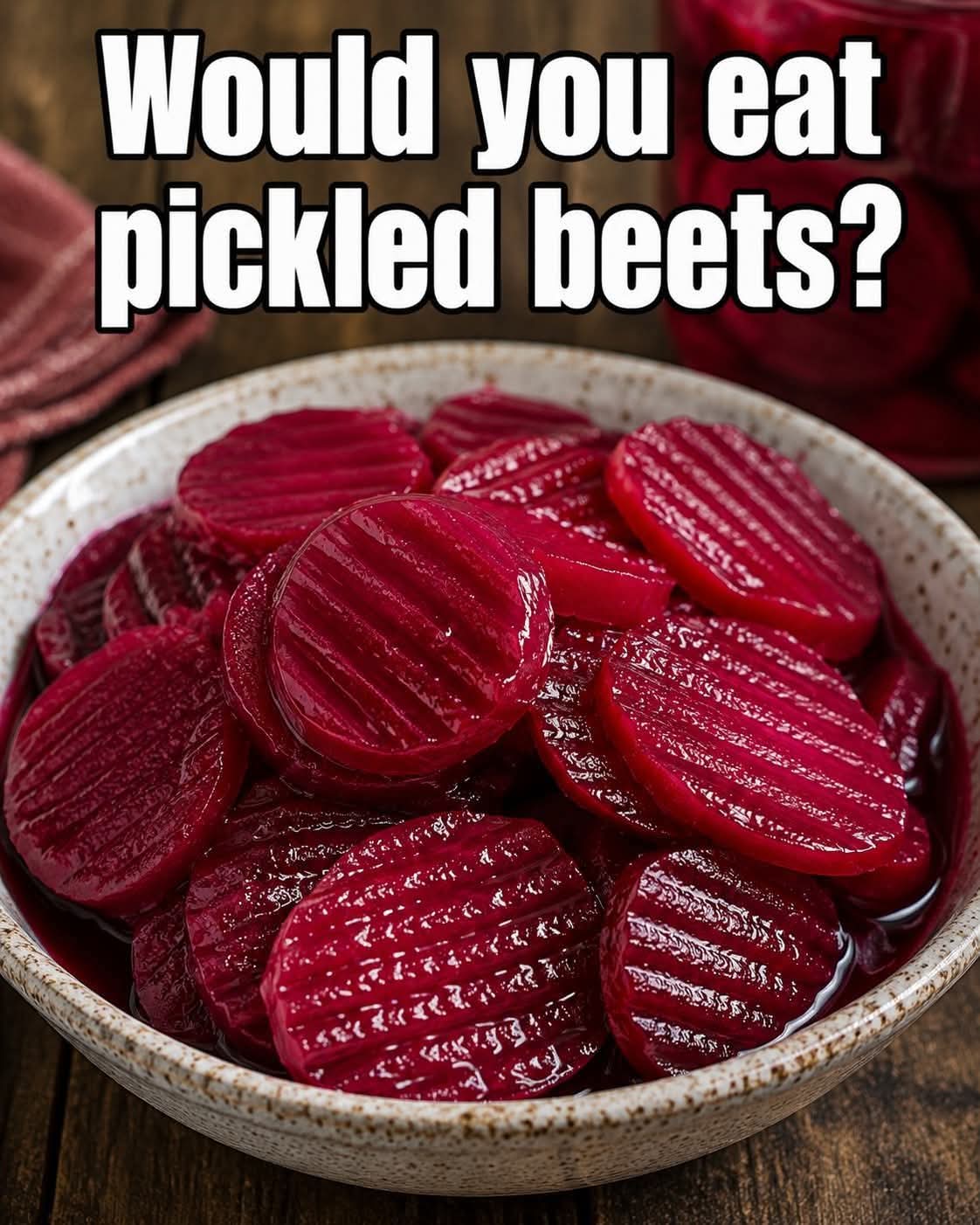
Here is a complete, detailed guide to Homemade Pickled Beets — from history to serving suggestions.
—
🫙 Introduction
Pickled beets are a beloved preserve in Eastern European, American, and German cuisines. The practice of pickling began as a way to preserve vegetables through harsh winters, but the sweet-sour combination quickly became a delicacy in its own right. Today, pickled beets are enjoyed as a side, salad topping, or straight from the jar — loved for their jewel-like color and complex flavor.
—
📝 Ingredients
Makes about 4 pints
· 3 lbs fresh beets (about 8–10 medium)
· 2 cups apple cider vinegar (or white vinegar)
· 1 cup water
· 1 cup granulated sugar
· 1 tbsp salt (pickling or kosher)
· 1 cinnamon stick
· 4 whole cloves
· 2 star anise (optional)
· 1 tsp black peppercorns
—
🥣 Method & Instructions
Step 1 – Cook the Beets
Trim beet tops, leaving 1 inch of stem (prevents bleeding). Scrub well. Boil in water for 30–50 min until fork-tender. Cool, peel, and slice (1/4-inch rounds or wedges).
Step 2 – Prepare Jars
Sterilize 4 pint jars and lids in boiling water or a dishwasher.
Step 3 – Make Pickling Brine
In a pot, combine vinegar, water, sugar, salt, and spices. Bring to a boil, then reduce heat and simmer 5 min.
Step 4 – Pack Jars
Fill jars tightly with beet slices. Pour hot brine over beets, leaving 1/2-inch headspace. Remove air bubbles with a chopstick.
Step 5 – Process for Storage
Wipe rims, seal with lids, and process in a boiling water bath for 30 min (adjust for altitude). Let cool — check seals after 12 hours.
Step 6 – Wait
Store in a cool, dark place for at least 2 weeks before eating. Refrigerate after opening.
—
📜 History
Pickling dates back over 4,000 years to Mesopotamia. Beets, native to the Mediterranean, were pickled in ancient Rome. Eastern European Jews popularized sweet-and-sour pickled beets (often with horseradish) in the 19th century. German and Pennsylvania Dutch communities brought the recipe to America, where it remains a staple at delis and holiday tables.
—
💪 Health Benefits
· Rich in nitrates – may support healthy blood pressure
· High in fiber & folate – good for digestion and cell growth
· Antioxidants (betalains) – reduce inflammation
· Probiotic potential – if naturally fermented, but vinegar-pickled are still low-calorie and nutrient-dense
—
🍽️ Formation (How to Use / Serve)
· Salads – slice over arugula with goat cheese and walnuts
· Sandwiches – layer on rye with pastrami or hummus
· Charcuterie boards – alongside sharp cheese, pickles, and olives
· Straight from the jar – as a tangy snack
· Deviled eggs – chop finely into the yolk mix for pink eggs
—
💬 What Lovers Say
“The perfect balance of sweet and sour — I can’t stop eating them!”
“Better than any store-bought jar. The spices make all the difference.”
“I put them on everything — burgers, bowls, even pizza.”
—
🧪 Nutrition (per 1/2 cup serving, approx.)
Nutrient Amount
Calories 70
Carbohydrates 17g
Fiber 2g
Sugar 13g
Protein 1g
Sodium 300mg
Vitamin C 4% DV
Iron 6% DV
Note: Sugar content varies based on brine.
—
✅ Conclusion
Homemade pickled beets are a simple, rewarding project that transforms an earthy root vegetable into a vibrant, versatile condiment. With just a few hours of effort, you’ll have months of jewel-toned flavor — far superior to any supermarket version.
—
😍 Who Loves Pickled Beets?
· Home canners & food preservers
· Vegetarians & vegans (for color and tang)
· Chefs & foodies – gourmet salads & boards
· Eastern European & German families – traditionalists
· Health-conscious eaters – nutrient boost without fat
· Kids – surprisingly, many love the sweetness!
—
Let me know if you’d like a low-sugar version, fermented (probiotic) method, or canning time chart by altitude!