🥖 The Easiest Homemade French Bread You’ll Ever Make
There is something deeply comforting about fresh French bread—the crackle of a golden crust, the soft airy inside, and that warm bakery smell filling your kitchen. This version is designed to be simple enough for beginners but still gives you that classic bakery-style result. It’s the kind of recipe you’ll keep coming back to whenever you want something homemade, warm, and satisfying.
🥖 A Little History of French Bread
Traditional French bread, especially the famous baguette, comes from centuries of baking culture in France. French bakers refined bread-making into an art form, focusing on just four essential ingredients: flour, water, salt, and yeast. The magic lies not in complexity, but in technique—kneading, fermentation, and baking at high heat.
This simplified home version follows the same spirit, but adds a little butter or shortening for softness and ease, making it perfect for everyday baking.
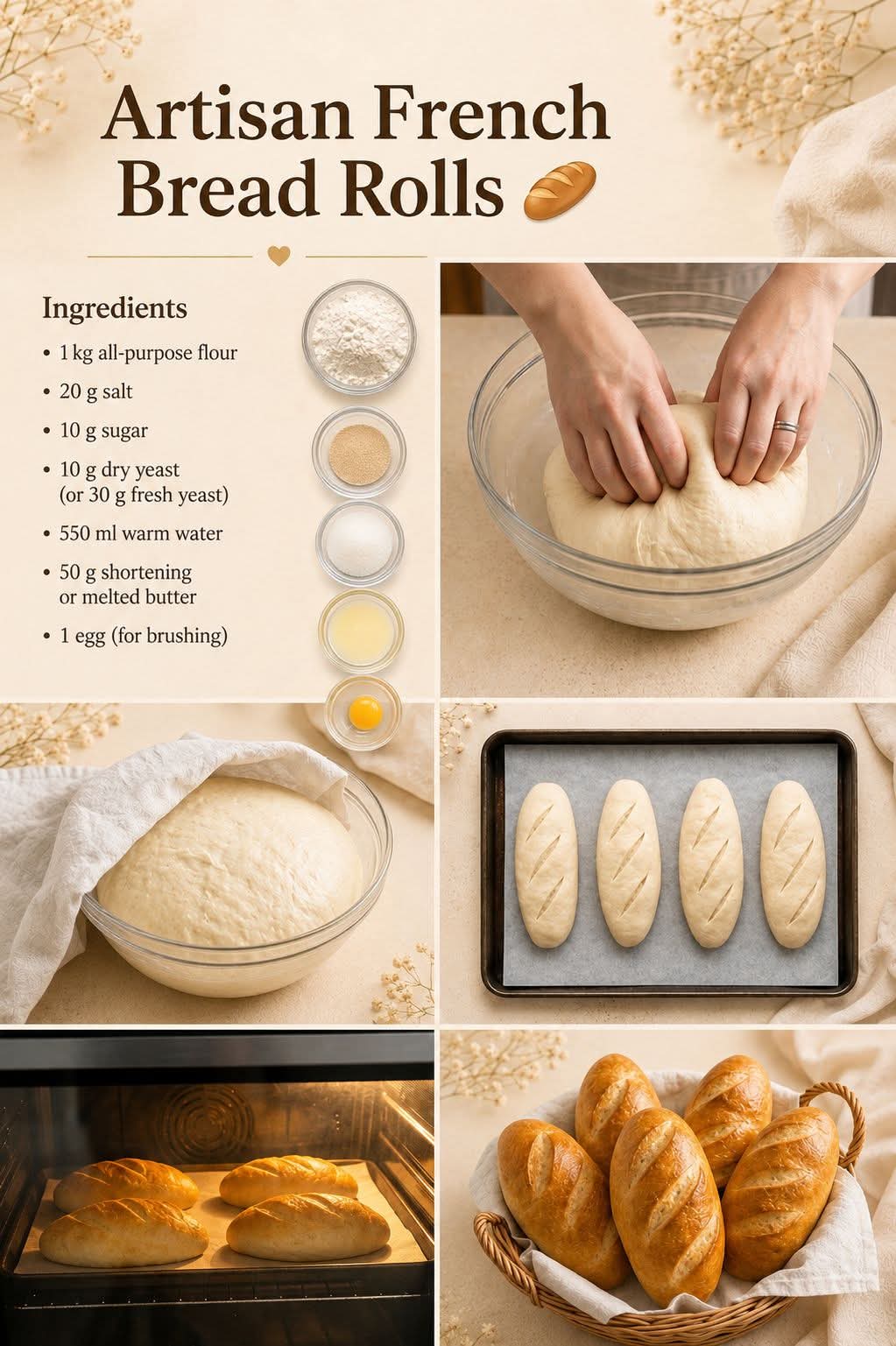
🥖 Ingredients
- 1 kg all-purpose flour
- 20 g salt
- 10 g sugar
- 10 g dry yeast (or 30 g fresh yeast)
- 550 ml warm water
- 50 g shortening or melted butter
- 1 egg (for brushing)
🥖 Step-by-Step Instructions
1. Activate the yeast
In a bowl, dissolve yeast and sugar in warm water. Let it rest for 5–10 minutes until it becomes foamy. This step wakes up the yeast and ensures a good rise.
2. Prepare the dry base
In a large mixing bowl, combine flour and salt. Mix evenly so the salt is well distributed.
3. Form the dough
Pour in the yeast mixture and melted butter. Stir until a rough dough begins to form.
4. Knead to perfection
Transfer the dough onto a clean surface and knead for 10–15 minutes. The dough should become smooth, elastic, and slightly springy. If it feels too sticky, sprinkle a little extra flour—but avoid overdoing it.
5. First rise
Shape the dough into a ball and place it in a lightly floured bowl. Cover and let it rise for about 1 hour, or until it doubles in size.
6. Shape the bread
Punch down the dough gently and divide it into 8 equal pieces. Roll each piece into a long breadstick or mini baguette shape.
7. Second rise
Place the shaped dough on a baking tray with space between each piece. Cover and let them rest for 30 minutes.
8. Prepare for baking
Preheat your oven to 220°C (425°F). Make a long slash on each roll using a sharp knife or bread lame.
9. Egg wash
Beat the egg and brush it lightly over the tops for a glossy golden finish.
10. Bake
Bake for 20–25 minutes until golden brown. Tap the bottom—if it sounds hollow, the bread is ready.
11. Cool down
Let the bread cool on a wire rack before serving to keep the crust crisp.
🥖 Baking Methods Explained
This recipe uses a double-rise fermentation method, which develops flavor and airy texture. Kneading builds gluten structure, while resting allows the yeast to produce gas bubbles that make the bread soft inside.
The high-temperature baking creates a rapid oven spring, giving the bread its signature crust.
🥖 Formation of the Dough (What’s Really Happening)
When flour meets water, gluten strands begin to form. Kneading strengthens these strands into a network that traps air from yeast fermentation. That trapped air is what creates fluffy, soft bread inside a crisp crust.
Butter or shortening slightly weakens the gluten, making the texture softer and more tender than traditional French baguettes.
🥖 Serving Ideas
- With butter and jam for breakfast
- As sandwich bread
- With soups and stews
- Toasted with garlic butter
- Dipped in olive oil and herbs
🥖 For Lovers of Fresh Bread ❤️
This bread is for people who love:
- The smell of baking dough filling the kitchen
- Warm crust breaking under your fingers
- Simple homemade comfort food
- Sharing fresh bread straight from the oven
It’s not just food—it’s a small moment of happiness baked into every loaf.
🥖 Conclusion
This easy French bread recipe proves that you don’t need complicated techniques to make bakery-quality bread at home. With just a few basic ingredients and a little patience, you can create soft, golden rolls that feel warm, comforting, and deeply satisfying.
Once you try it fresh from the oven, you’ll understand why homemade bread never lasts long.
If you want, I can also turn this into a , a , or a .