🍞 Ultimate Homemade Dinner Rolls Collection (Classic, Garlic, Honey Butter & More)
🌿 Introduction
Dinner rolls are one of the most comforting staples in global home baking. Soft, warm, and slightly sweet or savory depending on the variation, they’ve been a centerpiece on family tables for generations. From European bakery traditions to modern home kitchens, rolls evolved as a way to stretch simple pantry ingredients—flour, yeast, milk, and fat—into something luxurious and shareable.
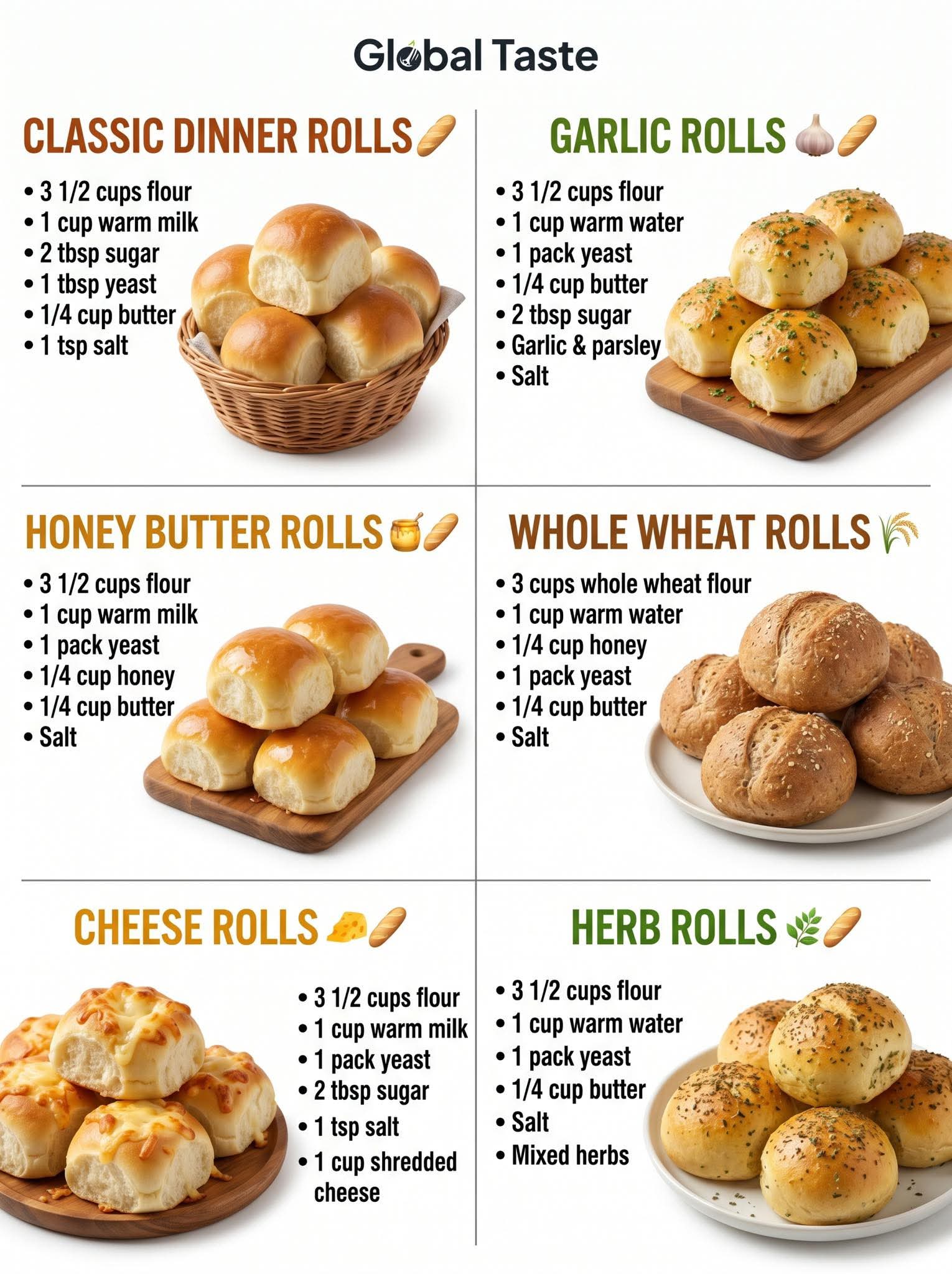
This guide brings together a full “roll system” you can master once and adapt endlessly: classic rolls, garlic rolls, honey butter rolls, whole wheat rolls, cheese rolls, and herb rolls. Each variation starts from a similar dough base but transforms through small ingredient shifts.
🧂 Core Dough Philosophy (Formation of All Rolls)
At the heart of every great dinner roll is a balanced dough:
- Flour = structure
- Liquid (milk/water) = hydration & softness
- Yeast = rise & airiness
- Sugar/honey = flavor + browning
- Butter = tenderness
- Salt = balance
Once you understand this structure, every variation becomes creative expression rather than a new recipe.
🥛 Ingredients (Master Base Dough Concept)
This is the shared foundation used across most of your rolls:
- 3 1/2 cups all-purpose flour
- 1 cup warm milk or water
- 1 tbsp yeast (or 1 packet)
- 2 tbsp sugar (or honey for variation)
- 1/4 cup butter (softened or melted)
- 1 tsp salt
From here, you customize.
🍞 1. Classic Dinner Rolls (The Original)
🧾 Ingredients
- Flour, warm milk, sugar, yeast, butter, salt
👨🍳 Method
- Activate yeast in warm milk + sugar until foamy.
- Mix in butter, salt, and flour gradually.
- Knead 8–10 minutes until smooth and elastic.
- Cover and let rise 1 hour.
- Shape into even balls.
- Let rise again 30 minutes.
- Bake at 190°C (375°F) for 15–18 minutes.
🧠 Technique Insight
Proper kneading develops gluten, which traps gas and creates that soft, fluffy texture.
🧄 2. Garlic Rolls (Savory Favorite)
🧾 Ingredients
- Base dough
- Garlic, parsley
- Butter, sugar, yeast, salt
👨🍳 Method
- Prepare dough and let it rise.
- Shape into rolls.
- Brush with garlic butter (garlic + melted butter + parsley).
- Bake at 190°C for ~15 minutes.
- Brush again after baking for extra aroma.
🧠 Technique Insight
Double butter brushing locks in moisture and enhances aroma release.
🍯 3. Honey Butter Rolls (Sweet Soft Style)
🧾 Ingredients
- Flour, warm milk
- Yeast
- Honey
- Butter
- Salt
👨🍳 Method
- Mix ingredients into a soft dough.
- Knead until smooth.
- Let rise until doubled.
- Shape and proof again.
- Bake until golden brown.
🧠 Technique Insight
Honey keeps rolls moist longer than sugar and creates a deeper golden crust.
🌾 4. Whole Wheat Rolls (Rustic Healthy Version)
🧾 Ingredients
- Whole wheat flour
- Warm water
- Honey
- Yeast
- Butter
- Salt
👨🍳 Method
- Combine and knead thoroughly (wheat needs more hydration).
- Let rise until doubled (may take longer).
- Shape rolls.
- Bake at 190°C for ~18 minutes.
🧠 Technique Insight
Whole wheat absorbs more liquid, so dough should feel slightly softer than white flour dough.
🧀 5. Cheese Rolls (Melty Center Comfort)
🧾 Ingredients
- Base dough
- Shredded cheese (cheddar, mozzarella, or mix)
- Sugar, salt, yeast, milk
👨🍳 Method
- Prepare dough and knead.
- Fold cheese into dough or stuff centers.
- Shape into rolls.
- Let rise and bake until golden and cheesy.
🧠 Technique Insight
Stuffed cheese creates steam pockets inside, making rolls extra soft and rich.
🌿 6. Herb Rolls (Aromatic & Savory)
🧾 Ingredients
- Base dough
- Mixed herbs (oregano, thyme, parsley, rosemary)
- Butter, salt, yeast
👨🍳 Method
- Mix herbs directly into dough.
- Knead until evenly distributed.
- Let rise and shape.
- Bake until fragrant and golden.
🧠 Technique Insight
Adding herbs during kneading infuses the dough evenly rather than just surface flavor.
🔥 Baking Method Summary (Universal)
- Temperature: 190°C (375°F)
- Time: 15–18 minutes
- Goal: golden top + hollow sound when tapped
📜 Brief History of Dinner Rolls
Bread rolls trace back thousands of years to early leavened bread in ancient Egypt. As baking techniques spread through Europe, smaller individual bread portions became popular for portion control and sharing. By the 19th century, dinner rolls became a symbol of hospitality in Western dining culture—served warm at nearly every formal meal.
Today, they remain a universal comfort food across cultures.
🧩 Formation Science (Why They Work)
Soft rolls rely on three key transformations:
- Yeast fermentation → produces carbon dioxide
- Gluten network → traps gas bubbles
- Fat integration → softens crumb structure
This combination creates the airy, pull-apart texture people love.
🍽️ Serving Ideas (“Lovers” Style Pairings)
These rolls shine when paired with:
- Butter + jam for breakfast
- Soups (tomato, chicken, lentil)
- Roast meats and gravy
- Cheese dips and garlic spreads
- Tea or coffee for sweet versions
They’re also excellent for sliders or mini sandwiches.
💛 Conclusion
Dinner rolls are more than just bread—they are a flexible baking language. Once you master one dough, you unlock dozens of variations: sweet, savory, rustic, cheesy, or herby. The magic lies in simplicity—small ingredient changes creating completely different experiences.
Whether you bake them for family dinners, celebrations, or casual comfort food moments, these rolls always deliver warmth in every bite.
If you want, I can turn this into:
- or