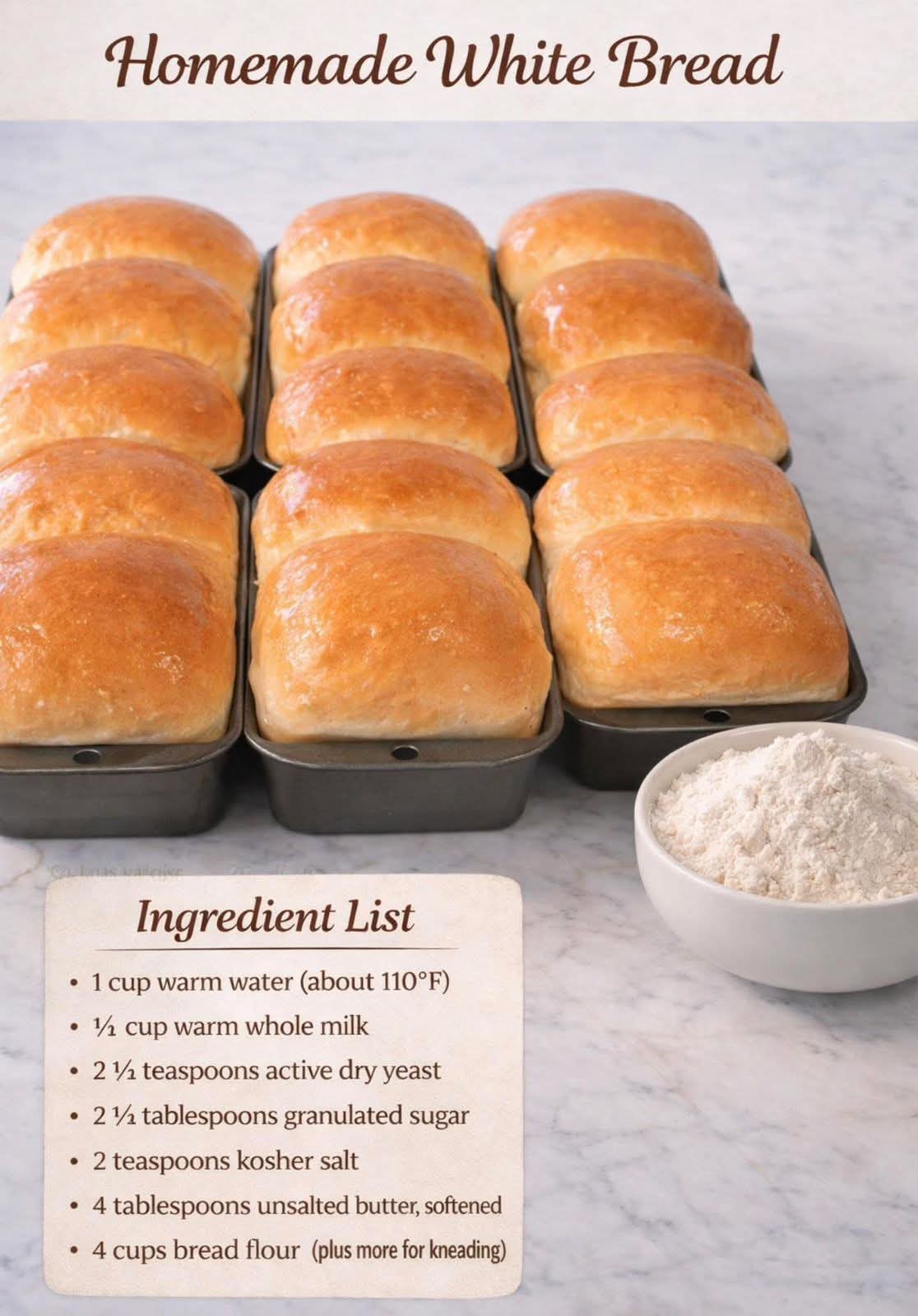
Homemade White Bread
There is something truly comforting about the smell of fresh homemade bread filling the kitchen. Homemade white bread is soft, fluffy, golden on the outside, and tender on the inside. It is one of the oldest and most loved foods in the world, bringing families together around the table for generations. Whether served warm with butter, used for sandwiches, or toasted for breakfast, this classic bread recipe is simple, delicious, and made with love.
The History of White Bread
Bread has been a staple food for thousands of years. Ancient civilizations such as the Egyptians were among the first to discover how yeast could make bread rise, creating a lighter and softer loaf. Over time, white bread became a symbol of comfort and home cooking across many cultures. Families often passed recipes from generation to generation, making bread baking a treasured tradition.
Homemade white bread became especially popular because of its soft texture, beautiful golden crust, and wonderful aroma. Today, many people still enjoy baking bread at home because it feels warm, comforting, and rewarding.
Ingredients
For the Bread Dough
- 1 1/2 cups warm water
- 1 1/2 teaspoons sugar
- 1 packet active dry yeast
- 6 cups warm water
- 1/4 cup sugar
- 2 tablespoons salt
- 1/4 cup vegetable oil or melted butter
- 8–10 cups all-purpose flour or bread flour
Optional Toppings
- Melted butter for brushing
- Sesame seeds
- Poppy seeds
- Oats for decoration
Equipment Needed
- Large mixing bowl
- Measuring cups and spoons
- Wooden spoon or dough hook
- Clean kitchen towel
- Loaf pans
- Oven
Step-by-Step Instructions
Step 1: Activate the Yeast
In a large bowl, combine:
- 1 1/2 cups warm water
- 1 1/2 teaspoons sugar
- 1 packet active dry yeast
Stir gently and let it sit for 5–10 minutes until foamy. This means the yeast is active and ready.
Step 2: Prepare the Dough
Add:
- 6 cups warm water
- 1/4 cup sugar
- Salt
- Oil or melted butter
Mix well. Slowly add the flour one cup at a time while stirring continuously until a soft dough forms.
Step 3: Kneading Method
Place the dough on a lightly floured surface. Knead for 8–10 minutes until smooth and elastic.
Hand Kneading Method
Push the dough away with the heel of your hand, fold it back, rotate, and repeat.
Stand Mixer Method
Use a dough hook on medium speed for about 6 minutes.
Proper kneading develops gluten, giving the bread its soft and chewy texture.
Step 4: First Rise
Place the dough in a greased bowl and cover with a clean towel.
Let rise in a warm place for 1–2 hours or until doubled in size.
Step 5: Shape the Bread
Punch down the dough gently to remove air bubbles.
Divide into equal portions and shape into loaves. Place into greased loaf pans.
Step 6: Second Rise
Cover again and allow the dough to rise for another 30–45 minutes until puffy.
Step 7: Baking
Preheat oven to 375°F (190°C).
Bake the bread for 25–35 minutes until golden brown and hollow-sounding when tapped.
Brush tops with melted butter for a soft crust.
Bread-Making Methods
Traditional Method
Made completely by hand for an authentic bakery-style experience.
Fast-Rise Method
Use instant yeast and a slightly warmer environment to shorten rising time.
Overnight Method
Allow the dough to rise slowly in the refrigerator overnight for deeper flavor.
Formation and Texture
A perfect homemade white bread should have:
- A golden crust
- Soft fluffy interior
- Light airy texture
- Rich buttery aroma
The structure forms from gluten development and yeast fermentation, creating beautiful air pockets inside the loaf.
Tips for Perfect Bread
- Always use warm, not hot, water.
- Measure flour carefully.
- Knead thoroughly for soft bread.
- Allow enough time for rising.
- Do not overbake.
Serving Ideas
Homemade white bread is wonderful with:
- Butter and jam
- Soups and stews
- Sandwiches
- French toast
- Garlic bread
Why Bread Lovers Adore Homemade White Bread
Bread lovers everywhere cherish homemade white bread because it brings warmth, comfort, and happiness. The aroma alone can make a house feel cozy and welcoming. Sharing fresh bread with family and friends creates special memories around the table.
Some enjoy it for nostalgia, remembering childhood kitchens filled with the smell of baking bread. Others love the creativity of shaping and baking their own loaves.
Conclusion
Homemade white bread is more than just a recipe — it is a timeless tradition filled with comfort, love, and simple goodness. With a soft texture, rich flavor, and beautiful aroma, this classic bread is perfect for beginners and experienced bakers alike. Once you bake your own fresh loaf, you will understand why homemade bread has remained a beloved favorite for generations.
Fresh from the oven, sliced warm, and spread with butter — few things in life are more satisfying than homemade white bread.