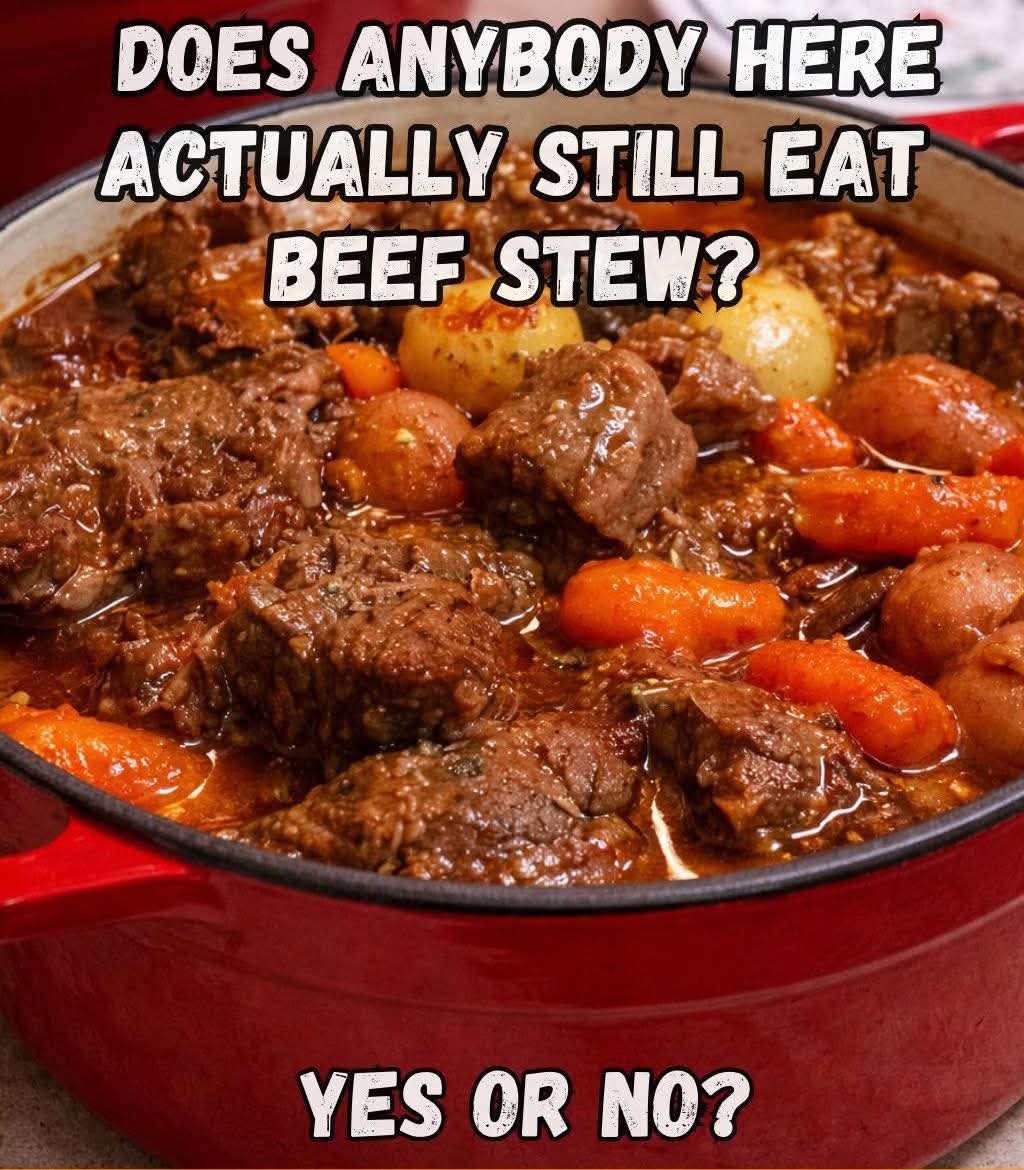
Here’s your big, hearty YES — because any lover of classic comfort food would dive into that old-fashioned beef stew. Below is a complete, enriched recipe as requested.
—
Introduction
Old-fashioned beef stew is a timeless one-pot meal, born from the need to transform tough cuts of beef and humble root vegetables into something deeply satisfying. Simmered low and slow, it fills the kitchen with an aroma that promises warmth and nourishment. This version stays true to tradition: tender beef, soft potatoes, sweet carrots, and a rich, savory broth that clings to every spoonful.
History
Stews date back to prehistoric times—once clay pots became available, humans simmered meat with water and whatever plants were on hand. The French pot-au-feu (17th century) and Irish stew evolved into what Americans call “old-fashioned beef stew” in the 19th and 20th centuries, thanks to affordable chuck cuts and the rise of cast-iron Dutch ovens. It became a Depression-era staple and remains a cold-weather classic.
Benefits
· High protein from beef (supports muscle repair)
· Vitamins A & C from carrots and potatoes (immune & vision health)
· Iron & zinc from red meat (energy and immune function)
· Collagen from slow-cooked beef (joint and skin health)
· Hydration & electrolytes from broth-based meals
Nutrition (per serving, ~1.5 cups)
Nutrient Amount
Calories ~380
Protein 32g
Fat 14g
Carbs 28g
Fiber 5g
Sodium ~650mg
Ingredients
· 2 lbs beef chuck, cut into 1.5-inch cubes
· 3 tbsp all-purpose flour
· 2 tbsp olive or vegetable oil
· 1 large onion, chopped
· 3 garlic cloves, minced
· 4 cups beef broth
· 1 cup red wine (optional, or extra broth)
· 4 medium potatoes, peeled and cubed
· 4 large carrots, cut into 1-inch chunks
· 2 celery stalks, sliced
· 2 tbsp tomato paste
· 2 bay leaves
· 1 tsp dried thyme
· Salt & black pepper to taste
· Fresh parsley for garnish
Methods (Step-by-Step)
1. Prep beef – Pat dry, season with salt/pepper, then toss in flour to coat.
2. Brown – Heat oil in a Dutch oven over medium-high. Brown beef on all sides (do in batches). Remove and set aside.
3. Sauté aromatics – Lower heat to medium. Add onion, celery, carrots. Cook 5 min. Add garlic and tomato paste; cook 1 min.
4. Deglaze – Pour in wine (or ½ cup broth), scraping browned bits off the bottom.
5. Simmer – Return beef to pot. Add broth, bay leaves, thyme, and more salt/pepper. Bring to a boil, then reduce to low.
6. Low & slow – Cover and simmer 1.5 hours. Add potatoes and cook another 45–60 min until beef is fork-tender.
7. Adjust – Remove bay leaves. Taste and adjust seasoning. Thicken with cornstarch slurry if desired.
8. Rest – Let sit 10 min before serving.
Method (Cooking Style)
This is a braising method – searing first for Maillard reaction flavor, then slow-cooking in liquid at low temperature (180–205°F / 82–96°C). This breaks down connective tissue in the chuck into gelatin, creating silky richness.
Formation (How the Dish Comes Together)
The flour on the beef, plus natural starches from potatoes, form the stew’s body. Tomato paste adds umami depth. Wine acidity balances fat and tenderizes meat. Layering flavors – browning, deglazing, long simmering – transforms simple ingredients into a complex, cohesive whole.
Lovers
This stew is adored by:
· Home cooks seeking reliable comfort food
· Winter warriors needing warming meals
· Meal preppers (tastes better the next day)
· Beef lovers who appreciate economical cuts
· Slow-food advocates rejecting fast, processed meals
Conclusion
Old-fashioned beef stew isn’t just food – it’s edible nostalgia. Every tender bite and velvety spoonful reminds us that patience at the stove yields the deepest rewards. Serve with crusty bread or buttered noodles. YES – always yes.
—
So: YES or NO?
(If you said NO, try a spoonful first — it might convert you.)